
By Jide Akinseye

Ogun as the most industrialised state in Nigeria judging by available data over the years have continued to show steady progress on agricultural transformation in Nigeria.
Across Ogun State, a quiet but significant transformation is taking place in agriculture. From rice fields in Magboro to cassava farms in Ipokia, and from greenhouse training centres to farm settlements receiving subsidised inputs, the state is positioning agriculture as a major driver of food production, employment and economic growth.

The transformation is being driven by a combination of government intervention, private-sector innovation, strategic partnerships and the increasing participation of young people and women.For the administration of Governor Dapo Abiodun, agriculture and food security are central to the ISEYA development agenda, alongside infrastructure, social welfare and well-being, education and human capital development, and youth empowerment.
The emphasis is significant at a time when rising food prices and concerns over food access have placed food security at the centre of national discourse. Beyond its role in feeding the population, agriculture provides employment, generates income, supplies raw materials to industries and supports the stability of rural communities.Ogun, with a landmass of approximately 16,000 square kilometres and substantial arable land, possesses the natural resources to support both large-scale and subsistence farming.
The challenge, however, is to convert that potential into sustainable production through access to land, finance, inputs, technology, markets and reliable infrastructure.The state government’s agricultural strategy is therefore built around productivity, food security, farmer empowerment and the development of value chains.
Rice Production:
From 200 Hectares to a Larger VisionOne of the most visible expressions of this strategy is the Alubarika Rice Cluster in Magboro, Obafemi Owode Local Government Area.The 200-hectare rice farm, developed under the Ogun State Economic Transformation Project (OGSTEP), a World Bank-assisted initiative, brought together 200 farmers, each cultivating one hectare.At the harvest ceremony, Governor Abiodun declared that Ogun was ready to serve as a food basket for Nigeria, pointing to the project’s potential to expand rice production, create jobs and generate income for participating farmers.
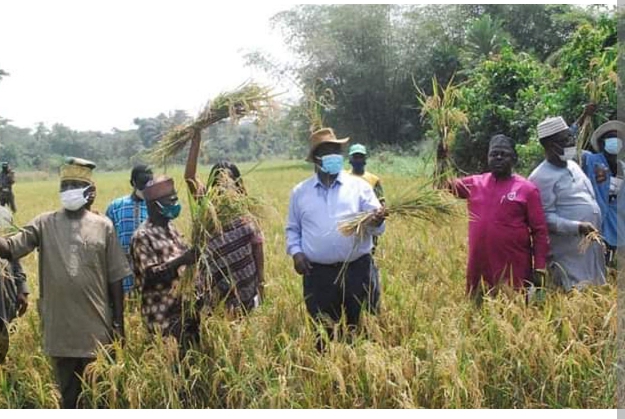
According to the governor, the farm recorded an average yield of seven metric tonnes per hectare. With 200 hectares under cultivation, the projected output was 1,400 metric tonnes of paddy rice per cycle, translating to approximately 20,000 bags of milled rice after processing.
The governor said the farmers, predominantly youths and women from different parts of the country, began planting in May after the project commenced in April, making the first harvest possible within about three months.“Our vision for Ogun State is one where agriculture drives economic growth, creates jobs, and sustains our local communities,” Abiodun said.
He explained that the state intended to scale up the project from 200 hectares to 2,000 hectares, adding that the larger scheme could generate an estimated ₦30 billion in revenue.“We have no business being hungry in Nigeria,” the governor declared, stressing the need to expand local food production.
The Alubarika project also illustrates the importance of organised farming. Beneficiaries received training and access to premium agro-inputs at 50 per cent of the cost, including improved rice seeds, fertilisers and environmentally friendly pest-control products.
The government also established off-taker arrangements through binding memoranda of understanding between farmer groups and buyers, helping to address one of the persistent challenges facing Nigerian agriculture: access to markets.OGSTEP and the Drive to Empower FarmersBeyond rice, OGSTEP has become a major platform for agricultural intervention across Ogun State.The programme combines financial support, capacity building, mechanisation services, access to inputs and market-oriented solutions designed to improve productivity and strengthen farmers’ livelihoods.
At Ifonyintedo in Ipokia Local Government Area, the harvest of 80 hectares of cassava farmland provided another example of the programme’s impact.
The cassava project involved 80 farmers, each cultivating one hectare. Beneficiaries received a 65 per cent subsidy on land clearing and 50 per cent discounts on essential inputs, including cassava stems, herbicides, pesticides and fertilisers.State investment in agricultural interventions under the broader programme was reported to have exceeded ₦600 million, covering mechanisation, agrochemicals, day-old chicks, fish feeds and poultry feed.Each farmer participating in the cassava project was expected to earn at least ₦2.4 million from the harvest, according to the figures provided by the programme.
The initiative has also extended its reach to more than 20,000 farmers across the state, reflecting an approach that seeks to address not only production but also the financial and market constraints that often limit agricultural growth.Commissioner for Agriculture and Food Security, Hon. Bolu Owotomo, has identified market access as a major barrier to agricultural development.
The government’s partnership with reliable off-takers is intended to reduce post-harvest losses and provide farmers with more predictable income.Dr. Ope Adejuwon, representing the Agricultural Sector Project Manager, stressed that the programme was designed for genuine farmers.“Only those who are actively engaged in farming are empowered under this scheme,” he said.
The emphasis on active farmers is intended to ensure that resources reach people capable of putting them to productive use and generating benefits within their communities.
Investing in Young Agripreneurs:
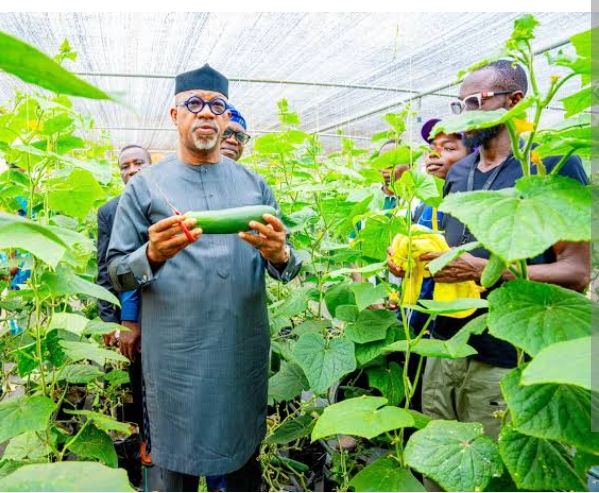
Another major component of Ogun’s agricultural transformation is the effort to attract young people into farming through training, technology and enterprise development.The Soilless Farm Lab at Awowo in Ewekoro Local Government Area, founded by young agripreneur Samson Ogbole, has become an example of how modern farming techniques can be used to train a new generation of agricultural entrepreneurs.
The farm’s work-and-learn programme, which began in September 2020, has reportedly trained more than 1,000 young people between the ages of 18 and 35 every three months.The programme combines practical work with training in soilless farming techniques, allowing participants to acquire skills without paying for the training.
Impressed by the model, Governor Abiodun announced plans to replicate the initiative across the state through the Ogun Youth Agricultural Programme.The programme is expected to begin in Remoland, where the government plans to train 2,000 youths every quarter, amounting to 8,000 trainees annually.
The governor said the initiative would go beyond training by supporting participants to establish their own greenhouses and providing access to land and markets.“We are taking you, training you, and turning you into agripreneurs,” Abiodun said. “We will support you to set up your greenhouses, and the government will off-take your produce from you.”The planned expansion is significant because it presents agriculture not merely as subsistence activity but as a viable business opportunity for young Nigerians.
It also demonstrates the potential of public-private partnerships in agricultural development, with the state government leveraging the expertise and experience of an existing private agricultural enterprise.Beyond the Rainy SeasonFor decades, farming in much of southwestern Nigeria has been closely associated with the rainy season. Ogun State is now seeking to change that pattern through increased investment in wet- and dry-season farming.
The objective is to extend the production cycle, improve food availability and increase farmers’ earning opportunities throughout the year.Speaking during the inauguration of the 13-member State Working Committee of the National Agricultural Growth Scheme–AGRO POCKET, Governor Abiodun said the state had identified viable financing opportunities through partnerships with the Federal Government and the African Development Bank under the Policy-Based Operation.Ogun was among the 15 states that participated in the pilot dry-season farming scheme in 2023. According to the governor, the initiative contributed to a significant increase in wheat production nationally.
He cited an estimated 277,000 hectares of wheat planted in Nigeria during the 2023–2024 season, representing a 139 per cent increase over the previous year.Under the scheme, Ogun was expected to receive support for cassava, maize and rice value chains, involving 2,400 smallholder farmers cultivating 1,200 hectares. Farmers were to contribute 25 per cent of input costs, while the Federal Government would cover the remaining 75 per cent during the wet season.The move towards all-year farming is expected to improve production efficiency and reduce the pressure placed on farmers by seasonal limitations.
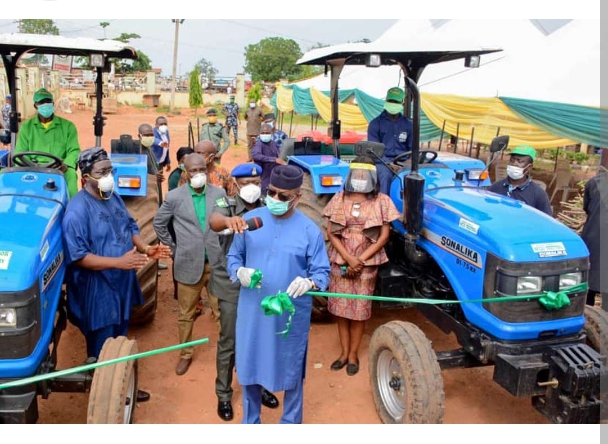
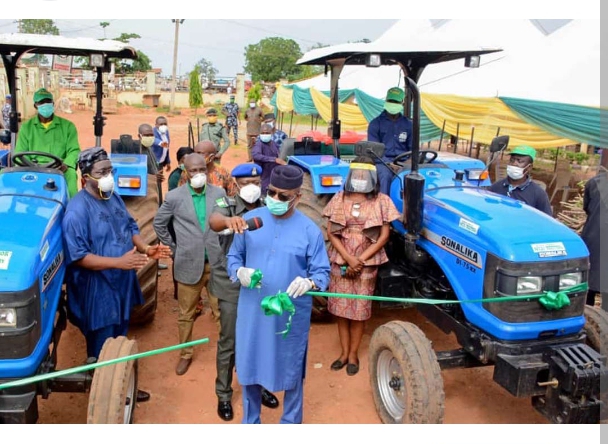
Fertiliser Support and the Role of PartnershipsAccess to affordable and quality inputs remains one of the most important factors determining farm productivity.In June 2026, the Ogun State Government, in partnership with the National Agricultural Development Fund (NADF), launched a fertiliser distribution programme in Asero, Abeokuta.The initiative was designed to reduce the burden of rising production costs and improve farmers’ access to fertilisers.
Representing the Commissioner for Agriculture and Food Security, Special Adviser on Agriculture and Food Security, Dr. Leke Otegbeye, said the intervention aligned with the state’s agricultural development agenda and would help improve yields, incomes and rural livelihoods.
He assured stakeholders that the distribution would be transparent and fair, with priority given to smallholder farmers.Representing NADF, Mr. Oluwatoyin Vaughn said the initiative supported the Renewed Hope Agenda of President Bola Ahmed Tinubu by increasing food production in Ogun and across Nigeria.
The Chairman of Ajegunle Farm Settlement, Mr. Rotimi Sogunle, described the fertiliser support as timely, saying it would reduce production costs and improve farm output.The state government has also reported the distribution of 24,000 bags of fertiliser to 12,000 farmers, alongside a 50 per cent subsidy on selected inputs, including cassava and maize seeds and agrochemicals.Other planned interventions include support for youths interested in poultry farming through the provision of broiler birds.
Governor Abiodun said the fertiliser initiative represented more than the distribution of farm inputs.“It represents our collective resolve to support the agriculture sector and ensure that farmers have the resources they need to cultivate their land effectively and efficiently,” he said.Strengthening Value Chains and Rural LivelihoodsAgricultural transformation is not limited to production alone. It also requires the development of value chains, the empowerment of rural communities and the inclusion of women and men in decision-making.
The Ogun State Government says more than 28 agricultural projects are ongoing across eight farm settlements as part of efforts to improve food security and economic prosperity.The projects are being implemented alongside the Value Chain Development Programme (VCDP), which has reportedly benefited more than 17,000 farmers across eight local government areas.At a policy dialogue on scaling the Gender Action Learning System (GALS), Commissioner Bolu Owotomo said the state was committed to sustaining and expanding the programme’s impact.
GALS is a community-led empowerment model designed to give men and women greater control over their lives while promoting gender justice.
The dialogue brought together stakeholders to discuss ways of strengthening agricultural livelihoods, rural empowerment and inclusive development.The National Programme Coordinator of VCDP, Dr. Fatimah Aliyu, represented by the Knowledge Management Adviser, Mrs. Vera Onyeaka-Onyilo, emphasised the importance of capacity building among farmers.The Chairman of the House Committee on Agriculture, Mr. Owoade Waliu, pledged legislative backing for gender-related initiatives.Participants, including Mr. Jubril Adeleye, Mrs. Ademolu Adedayo and Mr. Joseph Ajala, testified to the positive impact of GALS on their lives.
These interventions underscore the growing recognition that food security depends not only on farm output but also on the strength of the communities, institutions and value chains supporting agriculture.
The Road Ahead:
Ogun State’s agricultural strategy reflects a broader attempt to reposition farming as a central pillar of economic development.From rice and cassava production to greenhouse farming, dry-season cultivation, fertiliser distribution and value-chain development, the state is combining infrastructure, technology, financing and partnerships to address the constraints facing farmers.The figures from the Alubarika Rice Cluster and the Ipokia cassava project demonstrate the economic possibilities of organised agriculture when farmers have access to land, inputs, training and markets.
However, sustaining the gains will require continued investment in irrigation, rural roads, storage, processing facilities, finance and market access. It will also require transparent implementation, accurate monitoring and the consistent participation of genuine farmers.For Ogun, the ambition is clear: to move from agricultural potential to agricultural productivity, and from productivity to food sufficiency and economic prosperity.As the state continues along that path, its experience may offer useful lessons for other parts of Nigeria seeking to strengthen food production, create jobs and build more resilient agricultural communities.