



By Lanre Shodimu

For Elder Ope Agbesi, farming is more than an occupation; it is a means of survival. But after decades of cultivating crops, the Ogun State-based farmer says the increasing cost of farm inputs and lack of financial support are making it increasingly difficult for him to sustain his agricultural activities.
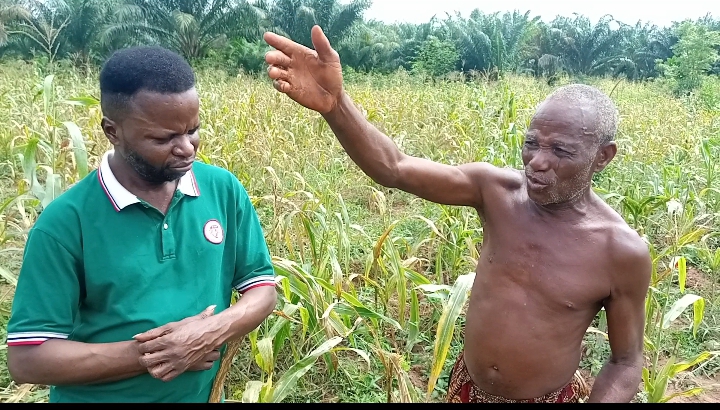
Farmlife Media encountered the farmer during an assessment tour of community-based farms in Ipokia around Idiroko border areas of Ogun State, where attention was drawn to his maize farm.
The maize plants appeared stunted, prompting the media team to engage him on the condition of the farm and the challenges confronting his agricultural activities.

Speaking with Farmlife Media at Elder Ope Agbesi Farm in Ipokia around Idiroko border areas of Ogun State, the farmer said he had been involved in farming at the location since 1988, following his retrenchment from an insurance company.
According to him, returning to farming became necessary because he needed a means of livelihood and could not afford to remain idle.“I have been here since 1988,” he said, explaining that farming had remained one of the ways through which he had managed to sustain himself over the years.
Although maize remains one of his major crops, Elder Ope Agbesi said he also engages in other agricultural activities and sometimes assists his family members with their farms.However, he said labour shortages and the cost of hiring farm workers have added to his difficulties.
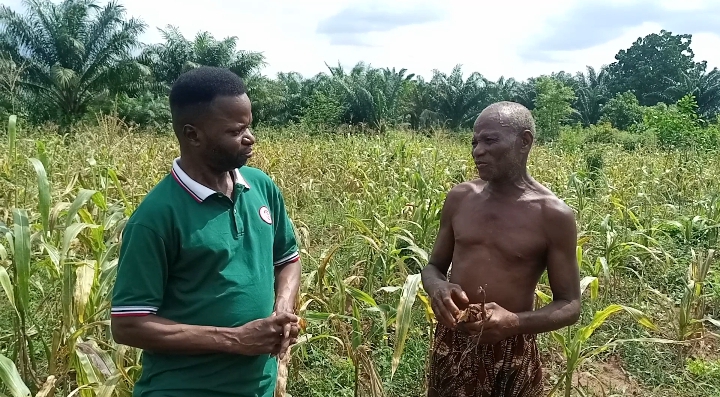
The farmer explained that he largely struggles to cultivate the farm himself because of his inability to consistently pay workers.“I just struggle,” he said, expressing concern that paying farm workers without adequate financial returns could further worsen his situation.His biggest challenge, however, appears to be access to farm inputs, particularly fertiliser.Pointing to the maize crop, he said the poor growth was largely connected to his inability to afford the inputs needed to improve the farm.
He lamented that if he had sufficient money to purchase and apply fertiliser, the condition of the maize would be considerably better.“I don’t have money to buy fertiliser,” he said.The farmer also explained that financial constraints had affected his ability to properly maintain the farm and maximise its potential.For him, farming remains a viable means of livelihood, but the absence of adequate support makes it increasingly difficult to continue.
He therefore appealed to individuals, agricultural stakeholders and relevant authorities to consider supporting smallholder farmers like him with farm inputs and other forms of assistance.“If you can help me, I will continue,” he said.
His story highlights the challenges confronting some community-based farmers who continue to depend on agriculture for their livelihood despite rising production costs and limited access to essential inputs.For farmers such as Elder Ope Agbesi, access to fertiliser, affordable labour and other production resources could make the difference between a poor harvest and a productive farming season.
As Nigeria continues to place emphasis on food production and agricultural development, the experience of farmers at the grassroots underscores the importance of ensuring that support reaches those actively cultivating the land.
For Elder Ope Agbesi, the message is simple: with the right assistance, he is willing to keep farming.