





By Jide Akinseye

As the demand for housing and urban infrastructure continues to grow across Nigeria, concerns are mounting over the impact of rapid development on agricultural communities whose livelihoods depend on access to land.
While housing remains one of humanity’s basic needs, agriculture is equally indispensable. Yet, as urban expansion spreads into rural areas, farmlands are increasingly being converted for residential and commercial developments, often at the expense of local farming communities.
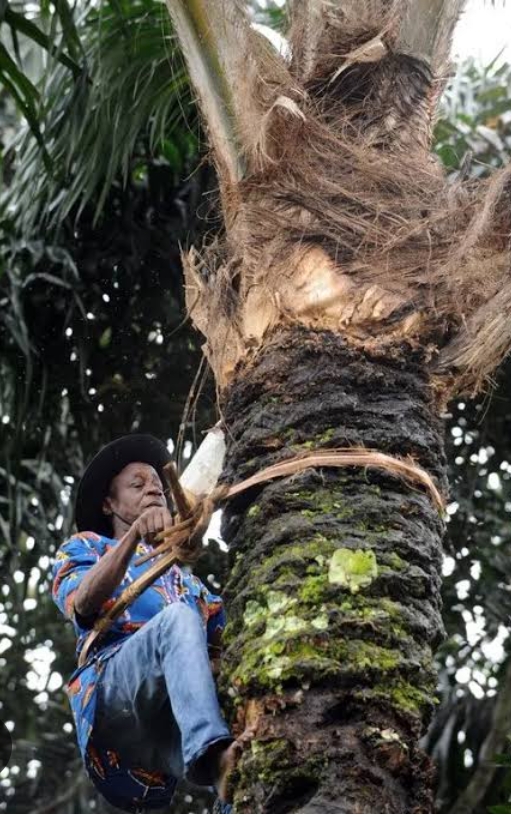
A recent visit to palm wine tapping settlements in Epe revealed a troubling situation that requires urgent attention from government authorities, traditional institutions, and other stakeholders.

For generations, palm wine tapping has been the primary source of livelihood for many families in Epe. The occupation, handed down by their forebears, has sustained households and contributed significantly to the local economy. Today, however, that way of life is under threat.
The rapid emergence of housing estates within farming corridors is making it increasingly difficult for palm wine tappers to access the palm trees from which they earn their living. In many cases, lands where these trees are located have been fenced off as part of private estate developments, effectively cutting off access to the farmers.
As a result, many palm wine tappers are suffering significant economic losses, with some fearing that their businesses may soon become unsustainable. What was once a thriving occupation is gradually being pushed to the brink by unchecked development.
Epe is renowned for its abundance of palm trees, which form an integral part of its cultural identity, tourism appeal, and agricultural heritage. It would therefore be unfortunate if the very communities that have preserved this heritage for decades are displaced in the name of development.
Government authorities must strengthen and enforce land-use regulations to prevent indiscriminate encroachment on agricultural lands. Developers who disregard existing planning laws should be held accountable, while measures should be put in place to protect the rights and livelihoods of local farmers.

Traditional institutions, community leaders, and relevant government agencies must also work together to address the growing tension between development and agricultural sustainability. Failure to act promptly could not only threaten the survival of palm wine tapping in Epe but also create conditions for avoidable communal disputes.
Development and agriculture need not be mutually exclusive. With proper planning, regulation, and stakeholder engagement, both can coexist for the benefit of present and future generations.
As the saying goes, a stitch in time saves nine.