

By: Lanre Shodimu

After years of fragmented fertiliser practices and declining soil productivity, Nigeria is taking a decisive step toward transforming its agricultural sector. With the unveiling of the country’s first Harmonised Fertiliser Recommendations Manual, stakeholders believe farmers across the nation could finally gain access to unified, science-driven guidance capable of improving yields, restoring soil fertility, and strengthening food security.

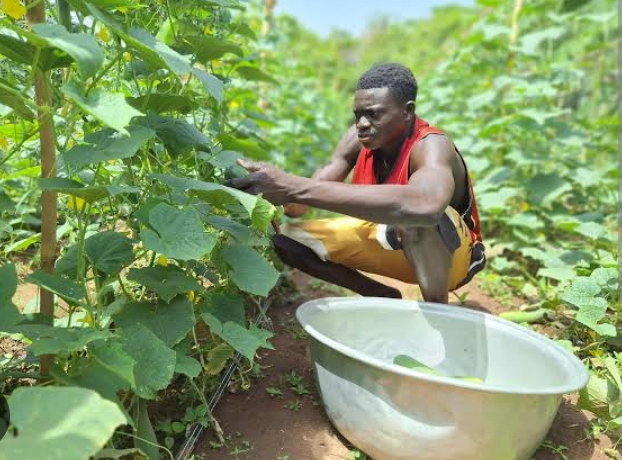
For decades, Nigerian farmers have battled poor harvests, declining soil fertility, and inconsistent fertiliser practices worsened by inadequate extension services and outdated recommendations. Across many farming communities, growers often relied on guesswork or obsolete application methods, leading to wasted inputs, reduced productivity, and financial losses.
Now, in what stakeholders describe as a landmark intervention for the nation’s agricultural future, the National Agricultural Development Fund (NADF), in collaboration with the Federal Ministry of Agriculture and Food Security, has unveiled Nigeria’s first-ever Harmonised Fertiliser Recommendations Manual — a comprehensive national guide aimed at standardising fertiliser use and improving productivity across the country.
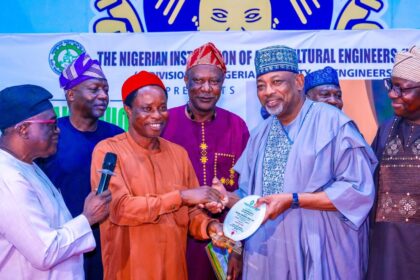
Presented in Abuja to the Minister of Agriculture and Food Security, Senator Abubakar Kyari, the manual represents a significant shift in Nigeria’s agricultural policy direction, particularly as the country intensifies efforts to tackle food insecurity, improve farmer profitability, and maximise the nation’s vast agricultural potential.

Speaking during the unveiling, NADF Executive Secretary, Mohammed Ibrahim, described the document as the foundation of a broader national agricultural input framework designed to support farmers with accurate, science-based recommendations tailored to Nigeria’s diverse ecological realities.
According to Ibrahim, the initiative was conceived in April 2025 after agricultural stakeholders identified the urgent need for a unified fertiliser application system capable of addressing inconsistencies in nutrient management across the country.
The project brought together critical stakeholders within the agricultural sector, including the Department of Farm Input Support Services (FISS), the Fertilizer Producers and Suppliers Association of Nigeria (FEPSAN), OCP Group, and the International Fertilizer Development Center (IFDC), all of whom collaborated to scientifically develop and validate fertiliser recommendations suitable for Nigeria’s different soil and climatic conditions.
The first edition of the manual focuses on five strategic staple crops — maize, rice, wheat, cassava, and cowpea — which are central to Nigeria’s food security and economic stability. Authorities, however, disclosed that plans are already underway to expand the recommendations to cover additional crops and farming systems nationwide.
Chairman of the Editorial Committee and Food Systems and Agricultural Advisory Specialist, Professor Christogonus Daudu, explained that the new guide addresses a longstanding vacuum created since Nigeria’s last national fertiliser manual was issued in 2012.
According to him, the absence of updated recommendations over the years left many farmers dependent on outdated fertiliser application methods that failed to reflect current soil realities, technological advancements, and changing environmental conditions.
The consequences, he noted, have been severe.
“Farmers were not getting optimum yields, fertiliser-use efficiency remained low, and both government and farmers did not receive adequate returns on subsidy investments,” Daudu stated.
He explained that beyond serving as a technical document, the manual was intentionally designed as a practical field guide accessible to both extension workers and farmers at the grassroots level.
To ensure scientific accuracy, the recommendations were developed using extensive research data sourced from leading agricultural institutions, including the Institute for Agricultural Research (IAR) and the Institute of Agricultural Research and Training (IAR&T), among others.
The manual also reflects Nigeria’s ecological diversity by incorporating fertiliser recommendations specific to the country’s six agroecological zones, covering all 36 states and the Federal Capital Territory.
In a move aligned with global sustainable agriculture practices, the guide introduces Integrated Soil Fertility Management (ISFM) principles and promotes the internationally recognised “4Rs” of nutrient stewardship — applying the right fertiliser source, at the right rate, at the right time, and in the right place.
The manual equally advocates deep fertiliser placement technologies aimed at improving nutrient efficiency while reducing wastage and environmental degradation.
Recognising literacy and accessibility challenges faced by many rural farmers, the editorial committee adopted simplified approaches to make the document more user-friendly. Fertiliser recommendations were converted into bag equivalents instead of technical kilogram measurements, while nutrient deficiency guides and extension glossaries were added to simplify understanding.
The committee further proposed translating the guide into major Nigerian languages and deploying digital extension systems such as interactive voice response platforms to bridge persistent gaps in agricultural extension services.
Responding to the presentation, Minister Kyari welcomed the initiative as a major milestone for Nigeria’s agricultural transformation but stressed that increased productivity must also translate into economic gains for farmers.
“If we increase yields but farmers spend more than the value they gain, then the economic objective is defeated,” the minister cautioned.
Kyari emphasised that fertiliser recommendations must take into account cost realities, profitability, and varying soil conditions, especially in degraded agricultural environments where farmers face additional production challenges.
He also lamented the weakening of agricultural extension systems at the state level, describing extension workers as vital links between scientific innovation and farm-level productivity.
The minister urged stakeholders to align the fertiliser manual with ongoing soil health programmes while expanding future editions to address climate-related threats such as flooding, drought, and erratic rainfall patterns that continue to threaten food production nationwide.
He further highlighted the urgent need to improve agricultural efficiency, noting that although Nigeria possesses nearly 70 million hectares of arable land, only about 30 million hectares are currently under cultivation.
For many observers, the harmonised fertiliser manual signals more than just a technical intervention. It represents a strategic attempt to reposition Nigerian agriculture through data-driven practices capable of improving yields, restoring degraded soils, reducing fertiliser misuse, and strengthening national food security.
As Nigeria grapples with rising food prices, climate pressures, and increasing demand for agricultural productivity, the success of the initiative may ultimately depend on how effectively the recommendations reach millions of farmers whose livelihoods depend on the land.