




By: Simeon Shodimu

Three years into President Bola Ahmed Tinubu’s administration, the Federal Government says its agricultural reforms are beginning to deliver tangible results. From declining food prices and increased crop yields to expanded mechanisation and rural infrastructure, the Ministry of Agriculture and Food Security argues that a combination of targeted interventions, farmer support programmes, and value chain development is laying the foundation for a more resilient and productive food system. At a recent stakeholders’ forum, Minister of Agriculture and Food Security, Abubakar Kyari outlined the achievements recorded so far and the challenges that still lie ahead.
Nigeria’s quest for food security has remained one of the defining policy priorities of the current administration. Faced with rising food inflation, climate-related disruptions, insecurity in farming communities, and low productivity across several agricultural value chains, the government embarked on a series of reforms aimed at transforming the sector and improving food availability.
According to the Minister of Agriculture and Food Security, Senator Abubakar Kyari, those efforts are beginning to yield positive outcomes.
Speaking at a stakeholders’ engagement forum on Agricultural and Food Systems Transformation, Kyari said the administration of Bola Ahmed Tinubu has recorded significant progress in strengthening agricultural productivity and improving food security over the past three years.
One of the most notable developments, according to the minister, is the decline in the prices of key food commodities. He revealed that prices of some staple food items have fallen by as much as 50 per cent in certain parts of the country, signalling a gradual reversal of the food inflation pressures that have burdened households in recent years.
The government attributes this improvement to a combination of interventions focused on boosting production, supporting farmers, and improving access to agricultural inputs.
Central to these efforts has been the strengthening of strategic agricultural value chains. Crops such as rice, maize, wheat, millet, sorghum, cassava, yam, soybeans, cocoa, cotton, and oil palm have received targeted attention through various support programmes designed to increase productivity and enhance farmer incomes.
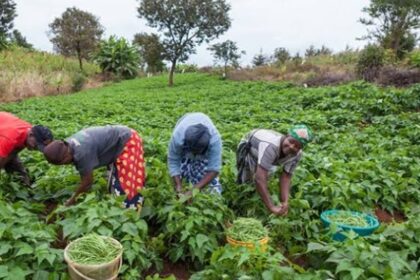
Over the last two years, millions of smallholder farmers have benefited from the distribution of improved seeds, agrochemicals, safety equipment, and pest-control materials. Training programmes have also been implemented to help farmers transition from subsistence farming to commercially oriented agribusiness operations.
Evidence of increased production is beginning to emerge. The 2025 Agricultural Performance Survey conducted by the National Agricultural Extension and Research Liaison Services reportedly recorded higher output levels for major crops, including rice, maize, sorghum, millet, cowpea, yam, and cassava compared with the previous year.


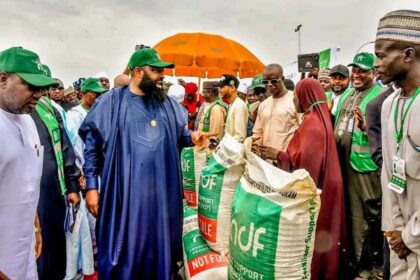
Input support has also remained a key pillar of government intervention. The ministry disclosed that more than 1.9 million bags of fertiliser were distributed to nearly one million farmers nationwide. Alongside this, authorities introduced organic fertiliser initiatives and strengthened regulatory oversight through training programmes for inspectors and industry stakeholders aimed at eliminating counterfeit agricultural inputs.
To improve quality assurance, the government established a National Reference Laboratory and upgraded the fertiliser management platform. Thousands of farmers have also received training on sustainable soil management practices intended to improve productivity while protecting the environment.
Beyond farm inputs, the administration has invested in rural infrastructure to support agricultural development. The ministry reported the construction of approximately 170 kilometres of asphalt roads and 57 kilometres of earth roads, as well as the provision of boreholes, solar-powered streetlights, market facilities, and housing projects in rural communities.

These projects are expected to reduce post-harvest losses, improve market access, and enhance living conditions for farming households.
Mechanisation has equally emerged as a major focus area. In 2025, the government launched the Renewed Hope Agricultural Mechanization Programme, deploying 2,000 tractors and other agricultural equipment across the country to reduce labour constraints and improve farm efficiency.
The push for value addition has also gained momentum. Processing plants have been established across the six geopolitical zones, while composite flour mills have been introduced to encourage local processing and reduce dependence on imports. Agribusiness incubation centres at Federal University Lokoja and Michael Okpara University of Agriculture, Umudike, are also expected to nurture innovation and entrepreneurship among young agribusiness professionals.
Further progress has been recorded under the Special Agro-Industrial Processing Zones initiative. The programme has expanded climate-smart agricultural practices, improved farmer registration systems, and helped raise average rice yields to about five metric tonnes per hectare in participating areas.
Similarly, the National Agricultural Growth Scheme–Agro-Pocket programme has registered more than 647,000 farmers, with over 622,000 receiving subsidised agricultural inputs. Officials say the intervention has contributed to increased production levels in beneficiary states.
Recognising the vulnerability of agriculture to climate change and natural disasters, the government has expanded support through agricultural insurance schemes, soil health programmes, and funding mechanisms designed to assist farmers affected by flooding and other environmental challenges.
Access to finance has also improved through initiatives implemented in collaboration with the Bank of Agriculture, enabling more farmers and agribusiness operators to secure credit for production and expansion.
Importantly, women and young people remain at the centre of the government’s agricultural agenda. Through specialised training programmes, climate-smart agriculture initiatives, and improved access to credit, the administration hopes to attract a new generation of agricultural entrepreneurs capable of driving long-term sector growth.
The “Every Home a Garden” campaign further reflects efforts to encourage household food production and strengthen community-level food security.
Despite these achievements, significant challenges remain. Food inflation, though easing in some areas, continues to affect many households. Climate risks, infrastructure gaps, insecurity, and limited access to modern technologies still pose obstacles to sustained growth.
Nevertheless, government officials remain optimistic that continued investment, stronger partnerships, and consistent policy implementation will deepen the gains already recorded.
As Nigeria seeks to build a more resilient agricultural sector, the coming years will determine whether these reforms can translate into lasting improvements in food availability, affordability, and rural prosperity.
Caption
Minister of Agriculture and Food Security, Senator Abubakar Kyari, addressing stakeholders on agricultural and food systems transformation, highlighting the Federal Government’s efforts to boost productivity, improve food security, and strengthen Nigeria’s agricultural value chains.