




By : Simeon Shodimu

As climate change continues to disrupt farming activities across Nigeria through erratic rainfall, floods, droughts, and rising temperatures, experts are calling for urgent investments in climate-resilient agriculture to safeguard food production. Agricultural economist and agribusiness expert, Daniel David Bolorunduro, argues that building a resilient agricultural system is no longer optional but essential for ensuring national food security and economic stability.
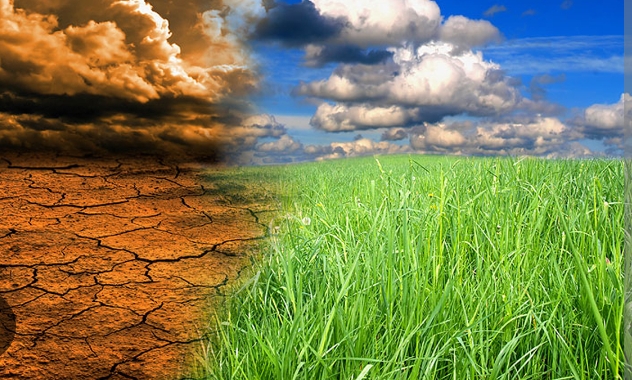
Nigeria’s quest for food security is increasingly being shaped by a challenge that extends beyond the farm gate—climate change. Across the country, farmers are grappling with unpredictable weather patterns, prolonged dry spells, devastating floods, and declining agricultural productivity, all of which threaten the nation’s ability to feed its growing population.
For agricultural economist and agribusiness expert, Daniel David Bolorunduro, the solution lies in embracing climate-resilient agriculture, a strategy he describes as “farming with uncertainty in mind.”
Bolorunduro, a master’s student in the Department of Agricultural Economics and Rural Sociology at Auburn University in the United States, believes that climate-resilient agriculture offers Nigeria a practical pathway to securing food supplies while protecting farmers’ livelihoods from increasing environmental shocks.

According to him, the connection between climate change and food security is not merely an environmental concern but an economic issue that requires deliberate policy actions, sustained investments, and scientific research.
He notes that Nigeria’s agricultural sector remains heavily dependent on rainfall, making it particularly vulnerable to climate-related disruptions. As a result, building resilience at the farm level is critical to creating a stable food system.
“A resilient food system begins at the farm level. When farmers can withstand climate shocks, the supply of food becomes more stable,” he said.
The expert explained that climate-resilient agriculture helps farmers reduce losses caused by droughts and floods, maintain more consistent yields, and secure more predictable incomes. Rather than responding to crises after they occur, farmers can anticipate risks and adopt measures that enable them to continue producing despite changing weather conditions.
For Bolorunduro, climate-smart agriculture does not happen by chance. It requires intentional planning, practical interventions, and the deployment of technologies that enable farmers to adapt to evolving climate realities without sacrificing productivity.
This transformation, he said, depends on the collective efforts of farmers, institutions, and government agencies. Farmers must be willing to adopt improved agricultural practices, while support institutions must provide technical assistance, financing, and extension services. Policymakers, meanwhile, must ensure consistency in agricultural programmes and long-term commitment to resilience-building initiatives.
He stressed that agricultural policies should be evaluated not only by the number of participants enrolled but by the actual impact on farmers’ livelihoods.
“It is not enough for farmers to be enrolled in insurance programmes. The real question is whether these programmes actually stabilise farmers’ income,” he stated.
Bolorunduro argued that successful climate resilience goes beyond insurance schemes. Instead, it requires an integrated agricultural system that connects risk management, production, storage, financing, and market access.
According to him, one of Nigeria’s biggest challenges is not the absence of interventions but the lack of coordination among existing initiatives. Farmers often struggle with inadequate storage facilities, poor market access, limited financing, and insufficient risk protection, making it difficult to build sustainable agricultural enterprises.
He advocated for systems that provide farmers with access to insurance, organised aggregation centres, storage infrastructure, stronger market linkages, and financing models tailored to agricultural realities.
“When these elements are aligned, farmers are not just producing; they are participating in a functioning economic system,” he said.
Looking ahead, Bolorunduro believes Nigeria is approaching a decisive moment. While climate pressures and economic uncertainties continue to intensify, the country also has an opportunity to reposition agriculture as a driver of economic growth and national stability.
He warned that without deliberate investments in resilience-focused systems and market-oriented policies, progress in the sector may remain uneven.
“The direction Nigeria takes over the next five years will determine whether agriculture becomes a driver of stability or continues to struggle under existing constraints,” he concluded.
Caption:
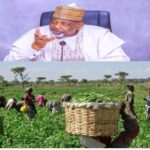
Agricultural economist and agribusiness expert, Daniel David Bolorunduro, says Nigeria must embrace climate-resilient agriculture, strengthen risk management systems, and invest in market-driven farming solutions to ensure long-term food security amid growing climate challenges.