




By S David Prince

The International Water Management Institute (IWMI) and the International Food Policy Research Institute (IFPRI) have launched an intervention to connect irrigation farmers in Kano, Jigawa and Gombe states with financing options for solar-powered irrigation equipment, aimed at boosting dry-season food production.
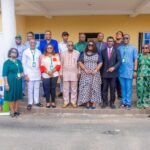
The two research institutes unveiled the initiative during a two-day Demand-Supply Linkage Workshop and field demonstration of solar-based irrigation systems held in Kano.

Mr. Oke Adebayo, Senior Regional Researcher at IWMI, said the intervention is designed to bridge the gap between farmers, equipment suppliers and financial institutions, making modern irrigation technology more accessible to smallholders across the three states. He identified limited access to finance for irrigation equipment as one of the biggest barriers farmers in the region currently face.

“As we may know, the world today is confronted with climate change and we are not an exception. We have challenges with the cost of fuel for pumping for irrigation and even for home use. When you interact with farmers, you see that’s quite a challenge for them when it comes to their irrigation practices and dry season agriculture,” Mr. Adebayo stated.
He added that solar irrigation technology allows farmers to expand dry-season cultivation while cutting the cost of fuel-powered pumping, positioning it as a more sustainable, energy-friendly option for crop production.
Dr. Oliver Kirui, IFPRI Country Director, said the workshop was structured to move research findings into practical, working partnerships between the actors needed to scale adoption.
“Solar irrigation technologies already exist, and our research shows that farmers see their value. The challenge is ensuring that demand and supply meet in a way that makes adoption feasible, affordable, and sustainable. We have brought together farmers, suppliers, financial institutions, government agencies, and technical partners because each of these actors is essential to making solar irrigation work at scale,” Dr. Kirui explained.
Mr. Sadisu Ibrahim, President of the Groundnut Association, commended the organisers, describing the intervention as a genuine commitment to the future of small-scale farmers in the region.

Equipment suppliers also outlined the criteria farmers would need to meet to acquire solar irrigation systems. Mr. Don Ekesiobi, Managing Director of Farm World Technologies Limited, an agro-equipment supplier, was among those who presented acquisition requirements at the event, while representatives of participating financial institutions confirmed their willingness to extend financing solutions to qualifying farmers.
The workshop drew farmers, agricultural researchers, academics and government officials from across the three benefiting states and beyond.
This intervention adds to a growing list of irrigation and water-access investments across Northern Nigeria this year, including the drilling of tube wells and distribution of solar and gasoline-powered pumps recently reported under Katsina’s agricultural revival programme.