


By: Simeon Shodimu

For decades, Northern Nigeria’s agricultural landscape stands at a defining crossroads as millions of smallholder farmers have battled an increasingly unforgiving combination of climate change, destructive crop pests, declining soil productivity and rising production costs.What was once a dependable farming calendar according to the report has become increasingly unpredictable, with prolonged dry spells, erratic rainfall and devastating pest invasions turning every planting season into a gamble.The consequences according to the report extend far beyond individual farms. Lower yields translate into reduced household incomes, rising food prices, increasing dependence on food imports and heightened concerns over national food security.Vanguard online publication of 16th July, 2026, identify that across many farming communities, maize, Nigeria’s most widely cultivated cereal crop, has suffered repeated attacks from Fall Armyworm and stem borers, while drought has continued to reduce harvests, particularly in the country’s northern belt where rain-fed agriculture dominates.Adding to these production challenges, the report stated obstacle or barriers of misinformation about new technologies being developed to combat the problems. One of such is Genetic Modification, an aspect of modern Biotechnology that involves the modification of a particular gene to obtain a desirable trait without changing the nature of the affected crop or organism.It identify that for years, discussions about Genetically Modified Organisms (GMOs) generated more controversy than understanding. Scientific evidence often struggled to compete with rumours, conspiracy theories and misconceptions, leaving many farmers hesitant to adopt innovations specifically developed to solve the challenges confronting them. The report stated .
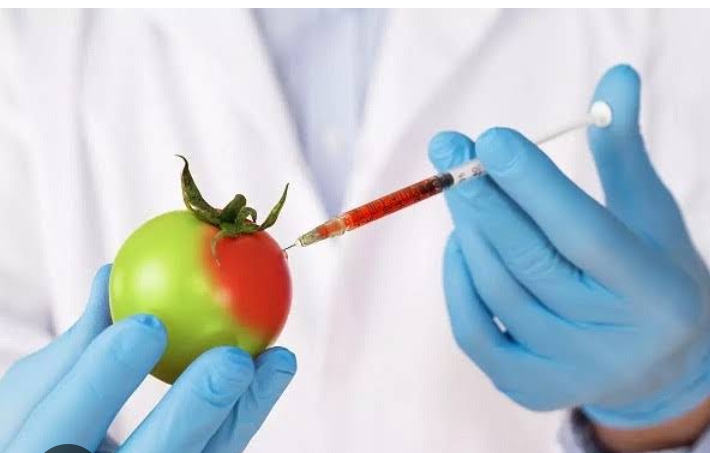
The story according to report is steadily changing, as a combination of sustained public education, stronger regulatory oversight, community engagement and demonstrable results on farmers’ fields is gradually replacing fear with confidence, Vanguard online observed .It further observed that across Northern Nigeria, biotechnology is no longer merely a scientific concept discussed in laboratories and policy meetings. It is becoming an increasingly practical tool helping ordinary farmers improve productivity while adapting to the realities of climate change.One indication of this changing landscape was reflected during a radio programme dedicated to agricultural biotechnology monitored by Vanguard reporter.The programme according to Vanguard reporter brought together experts, regulators and stakeholders who responded directly to public concerns surrounding genetically modified crops.The discussant rather than dismissing public concerns about the subject matter of GMO acknowledged the importance of transparency and emphasised that every genetically modified crop released for cultivation in Nigeria undergoes years of scientific research and multiple layers of safety assessment before approval.The radio discussion according to the report demonstrated that communication is becoming just as important as innovation itself. Scientific breakthroughs alone cannot transform agriculture unless farmers understand them, trust them and are equipped to use them correctly.Yet while conversations on radio are helping reshape public perception, the real story unfolds in farmers’ fields where agriculture truly matters.The Vanguard reporter witnessed the transformation and firsthand community sensitisation and farmer training programmes organised by the African Agricultural Technology Foundation (AATF) in collaboration with Mastrotun Global Agro Allied Limited across Dawakin Tofa and Bunkure Local Government Areas of Kano State.The outreach programmes formed part of efforts to introduce farmers to TELA maize, a climate-smart genetically modified hybrid developed to combine resistance against major insect pests with improved tolerance to drought conditions.Unlike conventional awareness campaigns that rely heavily on lectures, the sessions were deliberately practical.Hundreds of farmers gathered under community leadership to participate in hands-on demonstrations where agricultural experts carefully explained every stage of successful TELA maize cultivation—from land preparation and seed selection to spacing, planting density and crop management.For many participants, the report acknowledged that it represented their first opportunity to interact directly with scientists, seed specialists and extension workers capable of answering long-standing questions about biotechnology.Leading the technical sessions was AATF’s Hybrid Seed Market Development Manager, Mr. Olawale Ojo, whose central message resonated throughout the programme.His presentation challenged farmers to move away from traditional practices driven largely by inherited experience and towards precision agriculture grounded in science, efficiency and profitability.Participants received practical instruction on recommended agronomic practices, including proper seed spacing of 25 centimetres by 75 centimetres, planting one seed per hole and maintaining appropriate plant populations to ensure optimum yields.These recommendations may appear simple, according to the report, yet extension experts explained that poor planting methods remain one of the leading causes of reduced productivity among smallholder farmers.For farmers accustomed to broadcasting seeds or overcrowding planting holes, the demonstrations represented a significant shift towards precision farming.Perhaps the most engaging aspect of the sensitisation programme involved addressing widespread misconceptions surrounding genetically modified crops.For years, false claims linking GM crops to cancer, infertility, declining soil fertility and environmental degradation have circulated widely across communities and social media.Rather than ignoring these rumours, facilitators confronted them directly.Ojo explained that TELA maize is the product of years of scientific research involving multiple institutions and has undergone comprehensive environmental and food safety assessments before being approved for cultivation.Participants were encouraged to ask questions freely, creating an atmosphere of openness rather than persuasion.The sessions also incorporated comparative visual demonstrations between TELA maize and conventional maize fields.The differences were immediately noticeable. The improved varieties displayed stronger plant vigour, greater uniformity and healthier crop establishment despite challenging environmental conditions.For many farmers, seeing the technology perform in real fields proved more convincing than any scientific presentation.Training did not end with classroom discussions. Extension personnel demonstrated correct planting techniques while explaining how proper spacing improves sunlight penetration, nutrient utilisation and air circulation, ultimately translating into higher yields.Women farmers also received special attention during the programme, as community advocate Laima Bashir observed that many female farmers have historically lacked access to extension services and practical agronomic training.By equipping women with modern production techniques, she explained, entire households stand to benefit through improved food availability and increased incomes.The programme therefore sought not merely to distribute seeds but to build capacity.