




By: Simeon Shodimu

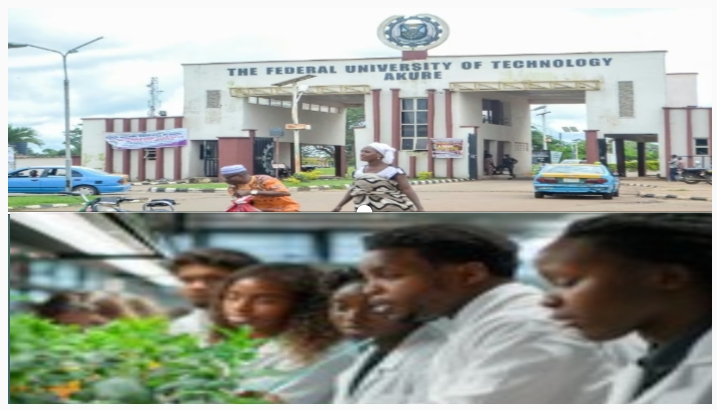
As Nigeria battles rising food insecurity and the growing demand for innovation-driven education, the Federal University of Technology, Akure (FUTA) is strengthening its research, agricultural and healthcare infrastructure to improve food production, enhance practical learning and position the institution as a leading centre for technological advancement.

The Vice Chancellor of the Federal University of Technology, Akure (FUTA), Adenike Oladiji, has disclosed that the institution is intensifying investments in research, agriculture and healthcare infrastructure as part of efforts to tackle food insecurity and improve the quality of teaching and learning.
Oladiji made the disclosure during an inspection tour of ongoing projects and developmental initiatives within the university, where she highlighted several interventions designed to meet the growing academic and research demands of the institution.


According to her, FUTA has recently completed a purpose-built accommodation facility for visiting scholars, accreditation teams and researchers from across the world, in response to inadequate lodging facilities previously available on campus.
“We receive researchers, accreditation teams and scholars from across the world regularly, and we felt the university needed a befitting accommodation facility for such visitors,” she said.
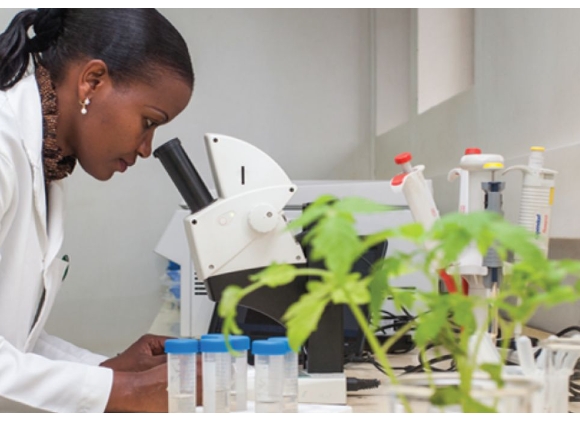
The Vice Chancellor explained that the institution is also expanding its agricultural activities through technology-driven food production initiatives aimed at contributing meaningfully to Nigeria’s food security agenda.
She revealed that with support from the Tertiary Education Trust Fund, the university revived its once-moribund poultry section and scaled up production from an initial 150 birds to several thousands currently being raised.
According to her, the university recently added 4,500 birds to the facility, which now operates with automated feeding and watering systems.
“We started with 150 birds, later acquired another 500, then 1,000 more, and now we are bringing in about 4,500 additional birds. When fully operational, we believe the university will become a major contributor to poultry production in Ondo State and Nigeria,” she said.
Oladiji further disclosed that FUTA’s feed mill now serves both production and academic purposes, exposing students to practical training in feed formulation and value addition in agriculture.
She noted that every 200-level student of the university undergoes practical training in crop production to equip graduates with entrepreneurial and agricultural skills.
“Previously, we produced maize and sold it directly, but we decided that as a university, we should go beyond that. We now teach students how to produce maize, process it into feed through our feed mill, and compound different feeds for broilers, layers, turkey and fish,” she added.
The Vice Chancellor also revealed that the institution has established modern greenhouse facilities for all-year-round cultivation of crops such as bell peppers and habanero peppers, irrespective of seasonal changes.
She explained that some greenhouse components were fabricated locally by the university to reduce operational costs and support expansion of agricultural activities.
Speaking on innovation and technology, Oladiji stated that FUTA remains committed to integrating science and technology into its operations, noting that the institution recently emerged as the AI University of the Year and continues to rank among Nigeria’s leading STEM-focused universities.
She added that several of the ongoing infrastructure projects within the institution were funded through TETFund, internally generated revenue and donations from individuals and organisations.
On healthcare development, the Vice Chancellor disclosed that the university recently secured full accreditation for its medical programme from both the National Universities Commission and the Medical and Dental Council of Nigeria.
She added that plans are underway to upgrade the institution’s health centre into a full-fledged hospital equipped with improved diagnostic and laboratory services.