



By: Simeon Shodimu

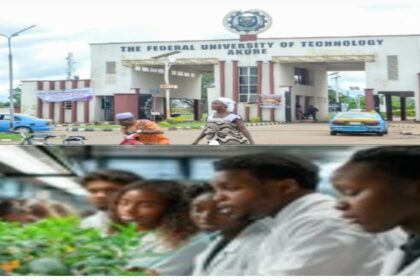
As Nigeria grapples with rising food prices and growing concerns over food security, tertiary institutions are increasingly being called upon to contribute practical solutions. At the Federal University of Technology, Akure (FUTA), investments in modern agriculture, poultry production, greenhouse farming, and value-added agribusiness are emerging as key components of a broader strategy to support national food production while equipping students with hands-on skills for the future.
The Federal University of Technology, Akure (FUTA), Ondo State, is strengthening its role in addressing Nigeria’s food insecurity challenge through increased investment in technology-driven agriculture, poultry production, greenhouse farming, and value-added agribusiness initiatives.

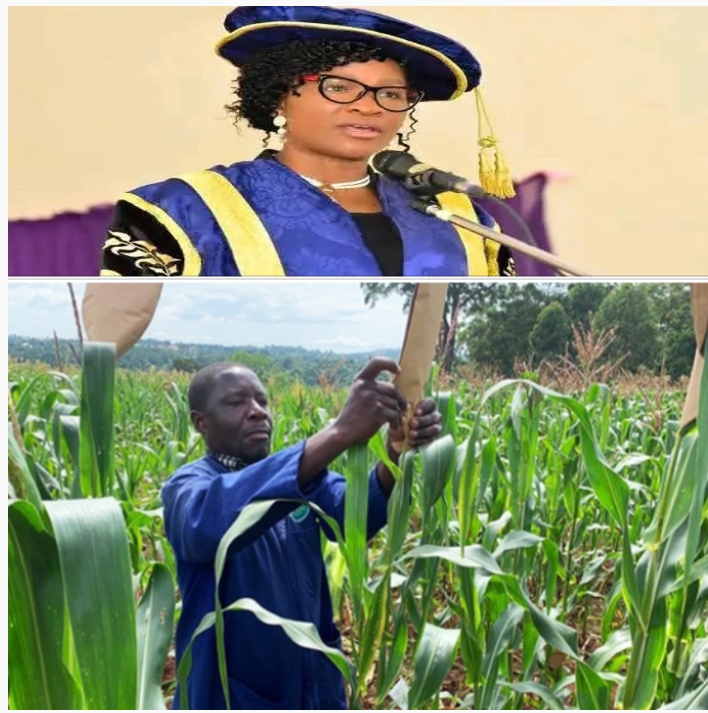
The Vice-Chancellor, Prof. Adenike Oladiji, disclosed this during an inspection tour of ongoing projects across the university campus, many of which were funded by the Tertiary Education Trust Fund (TETFund).
According to Oladiji, FUTA is leveraging its strengths as a technology-focused institution with established schools of agriculture, engineering, and sciences to develop practical solutions to the nation’s food production challenges.
“We must do something different to solve the problem of food insecurity in the country,” she said, emphasizing that the university’s vision is anchored on deploying innovation and technology to improve agricultural productivity.


At the centre of the university’s agricultural expansion is the revival and modernization of its poultry enterprise. Once dormant, the facility has been revitalized and significantly expanded. What began with just 150 birds has grown steadily to 500 and then 1,000 birds, with an additional 4,500 birds now being introduced into the production cycle.
The Vice-Chancellor explained that the expansion is designed not only to boost food production but also to position FUTA as a major contributor to poultry production within Ondo State and beyond.
Beyond poultry farming, the institution has adopted a value-chain approach to agricultural training through the establishment of a feed mill where students receive practical instruction in feed formulation and livestock nutrition.
Rather than limiting students to crop cultivation alone, the university now exposes them to the entire agricultural value chain. Corn produced on the university’s farms is processed into livestock feed, providing students with hands-on experience in feed manufacturing and the formulation of specialised feed for broilers, layers, turkeys, fish, and other livestock.
The initiative reflects a shift from conventional agricultural practices toward agribusiness-oriented learning, where students acquire skills in production, processing, and value addition.
FUTA is also investing in greenhouse technology to ensure year-round crop production. The university’s recently constructed greenhouses are being used for the cultivation of crops such as bell peppers and other high-value vegetables, enabling production beyond traditional growing seasons.
The greenhouse project, according to university authorities, demonstrates how controlled-environment agriculture can help improve productivity while reducing the impact of climatic variations on crop output.
In addition to agricultural development, the institution is upgrading facilities to strengthen research and international collaboration. Oladiji revealed that FUTA has constructed a dedicated accommodation facility for visiting researchers, scholars, and accreditation teams in response to long-standing challenges associated with hosting guests on campus.
She noted that the university regularly receives researchers and academic visitors from different parts of the world and therefore requires infrastructure that reflects its growing status as a centre of excellence in research and innovation.
Among the projects inspected during the tour were a locally fabricated greenhouse, teaching and research farms, student hostel facilities, laboratory infrastructure, museum facilities, and the newly developed accommodation complex for visiting academics.
The projects collectively underscore FUTA’s commitment to integrating research, innovation, and practical agriculture in support of national development goals. As food security remains a pressing concern across the country, the university’s efforts illustrate how higher institutions can contribute not only through teaching and research but also through direct participation in food production and agricultural transformation.