



By: Simeon Shodimu

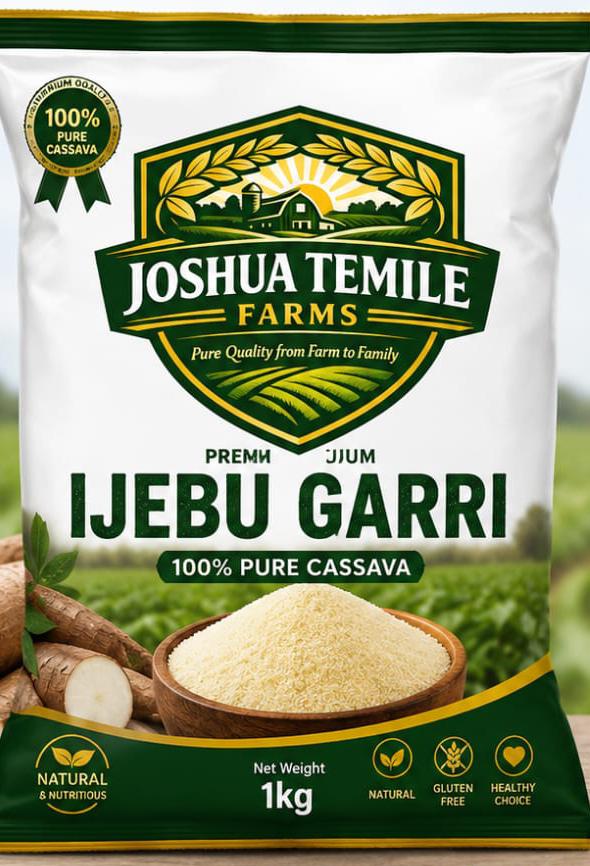
Joshua Temile Farms, one of Nigeria’s leading agribusiness companies, is set to export one of the nation’s most cherished staple foods to the global market in elegantly packaged and professionally branded packs.
Originating from the Yoruba people of Ijebuland in southwestern Nigeria, Joshua Temile Farms’ Ijebu Garri is a fine-grained, premium cassava flake renowned for its distinctive crunch and pleasantly tangy, sour taste.
Made from 100% pure cassava, this natural and nutritious product goes from farm to family while maintaining the highest quality standards. It is highly prized for soaking—often enjoyed with cold water, sugar, milk, and groundnuts—or prepared as eba to accompany a variety of traditional Nigerian soups.

What makes Ijebu Garri unique is its longer fermentation process, which gives it its signature tangy flavour and finer grain texture. These qualities make it ideal for consumption in a variety of ways.
Ijebu Garri can be enjoyed as a quick, refreshing snack or an emergency meal, especially when soaked and complemented with fried fish, suya, kulikuli, or other delicious accompaniments.
Naturally gluten-free and rich in carbohydrates for quick energy, as well as dietary fibre, Joshua Temile Farms’ Ijebu Garri offers exceptional nutritional value. It is poised to introduce the global market to the authentic and delicious taste of one of Nigeria’s most beloved staple foods.
Although garri is already popular among Nigerians in the diaspora and is commonly enjoyed as part of Nigeria’s traditional swallow meals, this premium product from Joshua Temile Farms will provide comfort and nostalgia for Nigerians living abroad while also meeting the growing international demand for authentic African foods.
With its superior quality, elegant packaging, and authentic taste, Joshua Temile Farms’ premium Ijebu Garri is well-positioned to become a preferred choice among non-Nigerian consumers seeking healthy and unique food experiences. As global acceptance continues to grow, the product has the potential to become one of Nigeria’s notable agricultural exports, promoting cultural exchange, strengthening the nation’s export earnings, and introducing millions of consumers around the world to the rich culinary heritage of Nigeria.