



By: Lanre Shodimu

As Nigerian states intensify efforts to strengthen food production and attract industrial investment, Ogun State is repositioning its agricultural economy through strategic infrastructure development and agro-processing initiatives. With renewed backing from development partners, the state is accelerating implementation of the Special Agro-Industrial Processing Zones Programme to unlock productivity, create jobs, and expand economic opportunities for farmers and investors alike.

In a renewed push to transform agriculture into a major economic driver, the Ogun State Government has begun reallocating resources under the Special Agro-Industrial Processing Zones (SAPZ) Programme to strengthen implementation and expand activities within the state’s Agro-Industrial Processing Zone.
The move, according to Governor Dapo Abiodun, is aimed at accelerating industrial agriculture, improving productivity, attracting investment, and stimulating economic growth across the state.

Represented by the Chief Economic Adviser and Chairman of the SAPZ Steering Committee, Mr. Dapo Okubadejo, during the Mid-term Review Mission of the programme in Abeokuta, the governor explained that the reallocation became necessary to ensure optimal utilisation of available funding and maximise the economic potential embedded in Ogun’s agricultural sector.
The review meeting was attended by a delegation from the African Development Bank (AfDB), led by Task Manager, Mr. Bernard Ozinma, alongside top government officials and stakeholders involved in the implementation of the programme.
Abiodun noted that Ogun State possesses enormous agricultural potential, with nearly 75 per cent of its landmass suitable for both food and cash crop cultivation, making the SAPZ initiative central to the administration’s food security and economic development agenda.
According to the governor, agriculture remains one of the strongest pillars capable of driving inclusive growth, industrial expansion, and employment generation in the state.
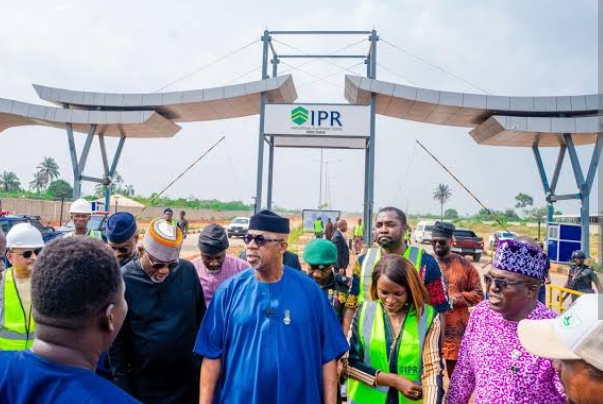
He explained that the SAPZ project is being integrated into the broader development framework of the state through the Integrated Industrial Platform located in Remo, a free trade zone developed through a partnership between the state government and private investors.

The industrial hub, he said, comprises four strategic zones — the Green Agriculture Zone, Logistics and Distribution Zone, Light Industrial Zone, and the Special Agro-Industrial Processing Zone, which occupies over 2,000 hectares within the Arise Integrated Industrial Platform.
The governor further disclosed that his administration was prioritising “quick win” projects capable of generating immediate economic activities and increasing the state’s Gross Domestic Product (GDP) and Gross Metropolitan Product (GMP).
Beyond infrastructure development, Abiodun highlighted several donor-supported intervention programmes currently being implemented across the state to improve agricultural productivity and support farmers.
These include OGSTEP, OG-CARES, the Rural Access and Agricultural Marketing Project (RAAMP), and the Value Chain Development Programme.
Under the initiatives, farmers have received heavily subsidised agricultural inputs such as fertilisers, herbicides, urea, rice seedlings, and cassava cuttings aimed at boosting food production and strengthening agricultural value chains.
Also speaking during the session, Commissioner for Budget and Planning, Olaitan Olabintan, stated that the agro-industrial hub was strategically situated within the state’s aerotropolis corridor to attract both local and international investors.
He added that Agricultural Transformation Centres located in Sawonjo, Yewa-North, and the Technology Park in Ijebu-East were deliberately positioned to support agricultural processing, storage, and value-chain activities linked to the industrial zones.
For the African Development Bank delegation, the review mission was designed to assess the level of implementation achieved under the SAPZ Programme and evaluate infrastructure development within the Remo Industrial Platform.
AfDB Task Manager, Bernard Ozinma, explained that the delegation was particularly interested in reviewing construction progress, investor participation, and the level of traction already achieved since the commencement of the initiative.
He noted that the success of the programme would depend largely on effective implementation, investor confidence, and sustainable infrastructure development capable of supporting agro-industrial growth.
Welcoming the delegation, Ogun State Commissioner for Agriculture and Food Security and Chairman of the Technical Committee, Bolu Owotomo, assured development partners that the state government remained committed to accelerating implementation to ensure timely delivery of the programme’s objectives.
The SAPZ Programme is a collaborative initiative of the Federal Government, state governments, the African Development Bank, the International Fund for Agricultural Development (IFAD), and the Islamic Development Bank (IsDB).
The initiative was designed to create jobs, improve agricultural productivity, encourage export-oriented processing, and enhance the livelihoods of smallholder farmers through integrated agro-industrial development.
For many observers, Ogun State’s aggressive pursuit of agro-industrialisation reflects a growing recognition among subnational governments that agriculture, when linked with industrial processing and infrastructure, can become a major catalyst for economic transformation.
As Nigeria battles rising food prices, unemployment, and supply chain challenges, initiatives such as the SAPZ Programme are increasingly being viewed as strategic pathways toward food security, rural industrialisation, and sustainable economic growth.