



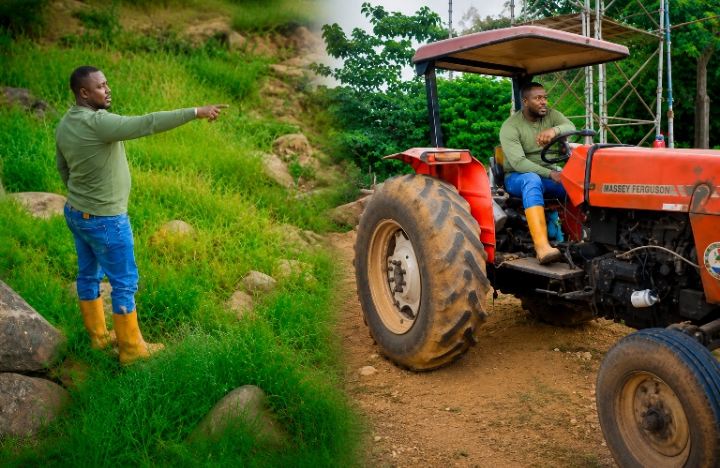
Beyond the shores of Nigeria and far from the comfort of home, an agricultural entrepreneur and media personality set out on a mission across Africa to explore more deeply mankind’s oldest profession — agriculture — and to examine how it can be better harnessed to meet the needs of Africa’s rapidly growing population.


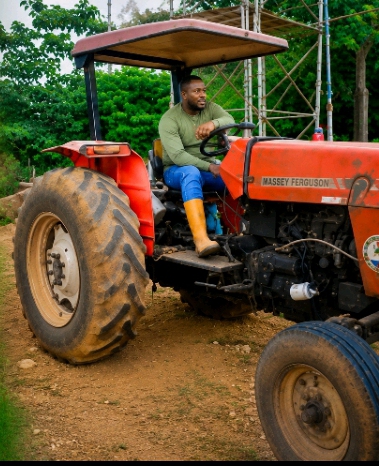
Meet Jide Akinseye, head of the Farmlife Media team, who for years, alongside his dedicated colleagues, has been shaping the agricultural narrative through his media platform.A notable farmer and agropreneur, Akinseye is also the Managing Director and Chief Executive Officer of FLIP Farm Resort, one of Africa’s emerging farm resort centres. Through his work, he has contributed to promoting agricultural development across the nooks and crannies of Nigeria.
This time, however, the mission was not only to teach, but also to learn — to gather practical knowledge and bring fresh ideas to the doorstep of Nigeria’s agricultural policymakers, farmers, and stakeholders.Thus began the Farmlife Rwanda Experience, a strategic media tour focused on engaging critical actors within Rwanda’s agricultural sector.It is so imperative as Africa confronts the pressing realities of food insecurity, climate change, youth unemployment, and the urgent need for sustainable agricultural systems, the role of agricultural journalism has become more important than ever. Beyond reporting farm activities, agricultural media connects innovation with policy, links farmers with governments, and transforms local success stories into lessons for continental development.It is within this context that Farmlife Media, under the leadership of agricultural entrepreneur and media personality Jide Akinseye, embarked on a fact-finding media tour to the Republic of Rwanda.
The initiative, tagged “Farmlife Rwanda Experience,” was designed to explore Rwanda’s agricultural transformation, government support systems, private-sector participation, value-chain development, and the practical innovations driving productivity among farmers.This narration chronicles that journey of learning, engagement, and discovery — a journey aimed at bringing valuable agricultural insights to Nigeria and the wider African continent.
The Vision Behind the Journey:
For Jide Akinseye, the vision behind the mission was clear: to look beyond Nigeria and understand how another African country is confronting the challenges of food production, agricultural development, and farmer empowerment. He wanted to see Rwanda not through statistics or reports, but through the eyes of farmers, agribusiness owners, policymakers, and other stakeholders.The mission was also about discovering opportunities for African agricultural collaboration — because Africa has the land, the people, and the entrepreneurial energy to feed itself, if nations are willing to learn from one another, share technology, and build stronger agricultural value chains.
First Impressions of Rwanda:
Upon arrival in Rwanda, one reality became immediately noticeable: agriculture is deeply woven into everyday life.
From rural communities to household livelihoods and local economic activities, farming is not treated as a distant sector of the economy. Despite Rwanda’s limited land resources, there is a visible determination to make productive use of every available agricultural space.
What stood out most was not merely the presence of farms, but the national attitude toward agriculture — a recognition that farming is central to food security and national development.
Agriculture as Business:
As the Farmlife team conducted interviews across different segments of the agricultural sector, a consistent message emerged.Many Rwandan farmers and entrepreneurs are increasingly viewing agriculture as a business rather than simply a means of subsistence.
They spoke about improving productivity, adding value, accessing markets, and building commercially viable enterprises. For Akinseye, this mindset shift is one of the most important ingredients for the future of African agriculture — moving beyond production alone to building profitable and integrated value chains.
Engagement with Mr. Itamu, a Rwandan Agricultural Enthusiast:

The first day of the tour featured an engagement with Rwandan agricultural enthusiast Mr. Itamu, who provided an overview of government efforts to boost agricultural production and the role of the private sector in supporting farmers.According to him, farmers cultivating crops such as plantain, beans, and other staples receive direct government support through agricultural inputs and financial assistance aimed at increasing yields and improving productivity.
The interaction offered a practical glimpse into how policy support can reach farmers at the grassroots level.
Meeting the CEO of AGRIFOP Rwanda:
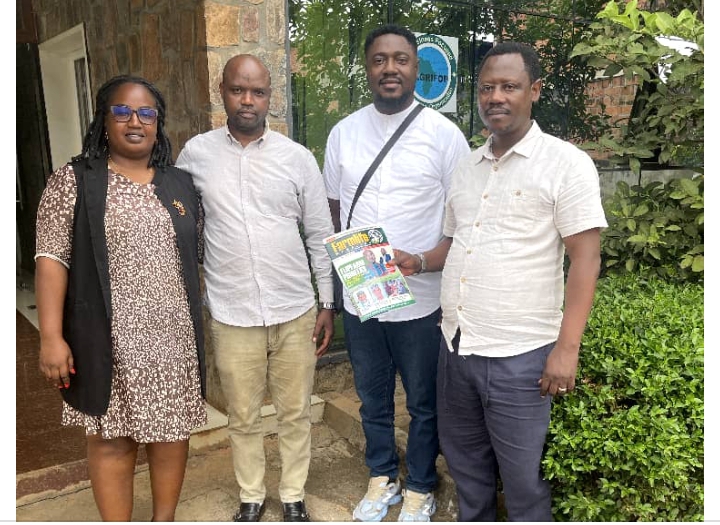
The tour then moved to another important engagement as Jide Akinseye met with Jean Bosco Safari, Chief Executive Officer of AGRIFOP Rwanda.During the discussion, the AGRIFOP CEO spoke extensively on agricultural development, food safety, and farmer support systems.He explained that the company places strong emphasis on ensuring that food produced in Rwanda meets both local and international standards.He explained that the company places strong emphasis on ensuring that food produced in Rwanda meets both local and international standards.The conversation reinforced a broader point: quality assurance, farmer education, and market-oriented production are essential for building a competitive agricultural economy.
For Akinseye, the discussion also highlighted Nigeria’s enormous potential as an agricultural investment frontier.
With its vast market, large labour force, and opportunities across production, processing, logistics, storage, and agricultural technology, Nigeria remains difficult for serious agricultural investors to ignore.
Greenhouse Innovation:
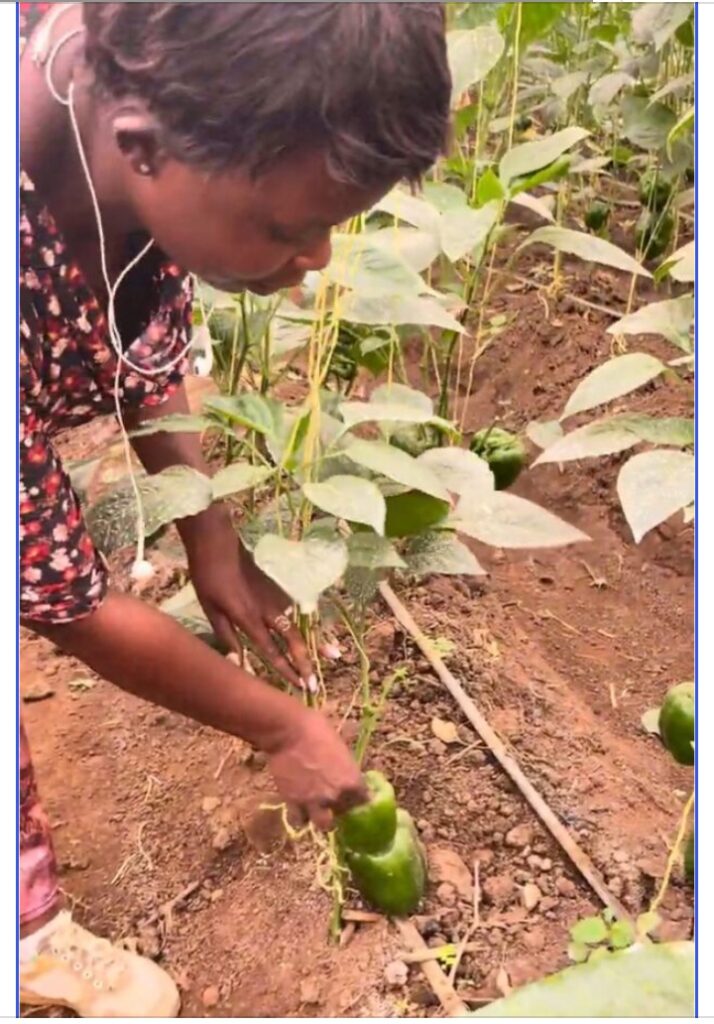
Another significant moment of the tour was the interaction with Rwandan agronomist and greenhouse farmer Olore Nebijira.She shared her experience on the advantages of greenhouse farming over open-field cultivation and highlighted the support provided through a government-backed initiative known as SIDAT.
Under the programme, farmers develop greenhouse projects, while the government contributes part of the funding, making greenhouse technology more accessible to small and medium-scale producers.The encounter demonstrated how targeted public support can accelerate agricultural innovation.
Exploring the Dairy Value Chain:
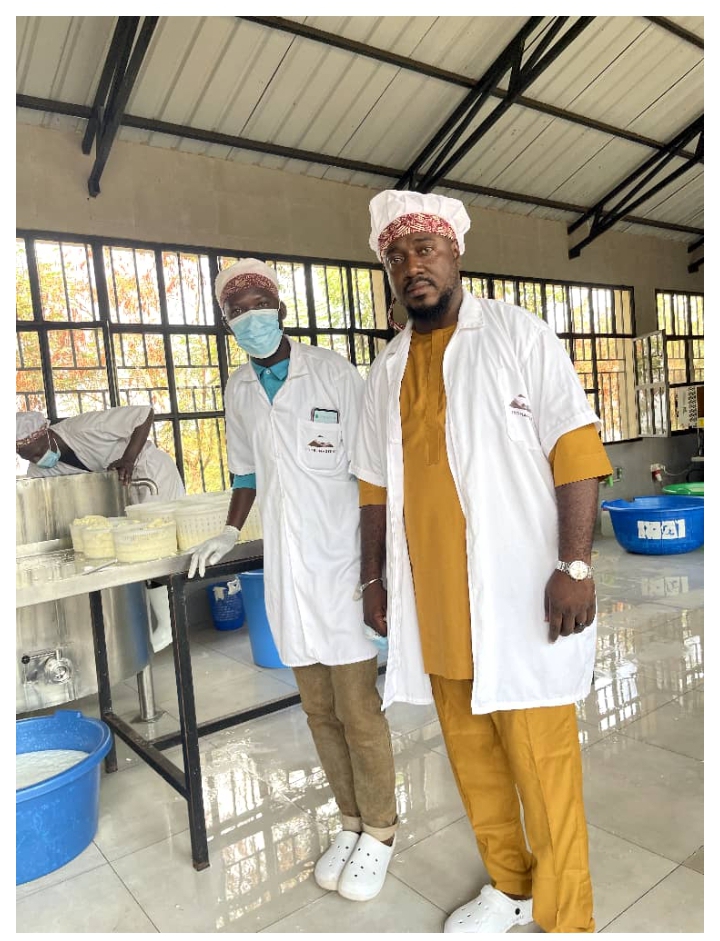
As the assessment tour continued, the Farmlife Media team visited a modern cheese processing facility to gain first-hand insight into Rwanda’s dairy value chain.The visit revealed how fresh milk is transformed into premium-quality cheese through strict quality control, hygienic processing, and carefully managed maturation processes.Guided by the facility’s Cheese Master, the team observed every stage of production — from milk reception and laboratory testing to ageing and packaging.The experience underscored the importance of value addition in creating wealth within the agricultural sector.
Innovation in Mushroom Production:
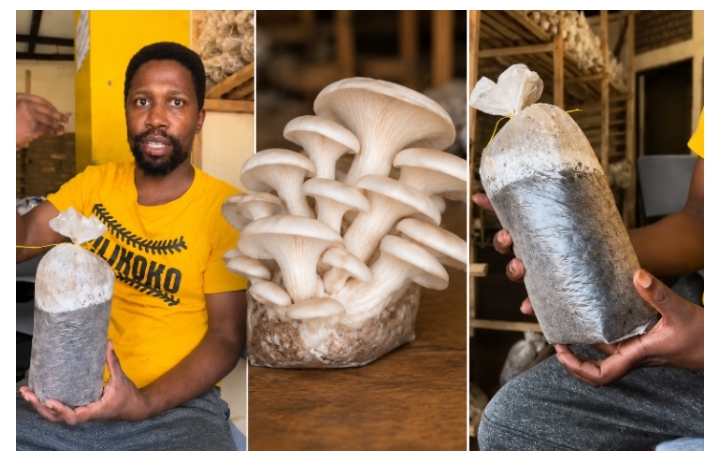
The Kigali, Rwanda media assessment tour also provided an opportunity to engage another critical segment of Rwanda’s farming community — mushroom producers.Particularly noteworthy was the work of Philemoni Atangimana, founder and CEO of Philemoni Farm.He explained how the farm operates across the mushroom value chain using ginseng-based substrate technology, supplying other farmers within Rwanda and beyond.The model showed how innovation can create additional income streams and support the growth of specialised agricultural enterprises.
Lessons for Nigeria:
Reflecting on the journey, Jide Akinseye believes Nigeria has much to learn from Rwanda’s experience.Rwanda demonstrates that limited resources do not necessarily mean limited ambition.Nigeria can draw lessons from Rwanda’s emphasis on organisation, land-use planning, farmer mobilisation, value-chain development, and the connection between policy and implementation.Yet, he is quick to add that Nigeria should not simply copy Rwanda.Nigeria’s scale is different — larger landmass, larger population, larger market, and greater agricultural resources.The challenge is to combine those advantages with stronger planning, infrastructure, extension services, technology, financing, and market access.
Can Africa Overcome Hunger?
The Rwanda experience brought optimism, but also realism.Africa can overcome hunger, but the solution goes beyond producing more food.The continent must also improve processing, storage, transportation, and distribution.Population growth, climate change, post-harvest losses, inadequate infrastructure, financing challenges, and conflict continue to threaten food systems in many regions.The real task is to build sustainable and commercially viable food systems, not temporary responses to food crises.
A Challenge to Nigerian Policymakers:
From Rwanda, Akinseye poses a direct challenge to Nigerian policymakers:Can food security be treated with the same urgency as national security?He argues that food security is national security.Nigeria needs a long-term agricultural framework that survives political administrations.It needs serious investment in irrigation, rural roads, storage, extension services, research, mechanisation, affordable financing, and processing infrastructure.And above all, farmers must be placed at the centre of agricultural policymaking.
The Bigger Message:
Beyond the farm visits and stakeholder engagements, the Farmlife Rwanda Experience carried a deeper message.At a time when much of the media space is dominated by sensationalism, agricultural journalism remains a powerful tool for development.Through the work of Jide Akinseye and Farmlife Media, attention is being directed toward the real issues affecting agriculture in Nigeria and across Africa.By documenting Rwanda’s innovations and bringing these stories to policymakers, investors, and farmers, agricultural media becomes a bridge between information, innovation, policy, and food security.The Rwandan experience changed Jide Akinseye’s perspective.
He travelled to Rwanda as a Nigerian farmer seeking to observe another agricultural system.He returned with a deeper conviction that Africa’s agricultural transformation must be African-led.Nigeria has the resources.
Rwanda has demonstrated what commitment and organisation can achieve.Other African countries possess their own unique strengths.The question is no longer whether Africa can feed itself.
The question is whether Africa is prepared to organise its resources, empower its farmers, attract investment, embrace technology, and build the agricultural systems capable of feeding the continent of tomorrow.
That is the real story behind “The Chronicles of a Nigerian Farmer: The Rwandan Experience.”And in the end, the Farmlife Rwanda Experience stands as a testament to the power of agricultural media — not merely to report events, but to inspire action, influence policy, and contribute meaningfully to the pursuit of food security and sustainable development across Africa.