



By Jide Akinseye

As Nigeria gradually moves towards another electoral moment, the need to take stock of the performance of the present administration becomes increasingly important.
The next political decision will not only attract the attention of Nigerians but will also be closely watched by investors, development partners and the international community.One sector that deserves particular attention in any assessment of the Bola Ahmed Tinubu administration is agriculture.
For decades, agriculture has remained one of Nigeria’s greatest economic opportunities and, simultaneously, one of its most underperforming sectors. Despite possessing vast arable land, a huge population of farmers, favourable climatic conditions and enormous opportunities across crop production, livestock, fisheries and agro-processing, Nigeria has continued to struggle with food insecurity, low productivity, post-harvest losses, inadequate mechanisation, limited access to credit and weak links between farmers and markets.


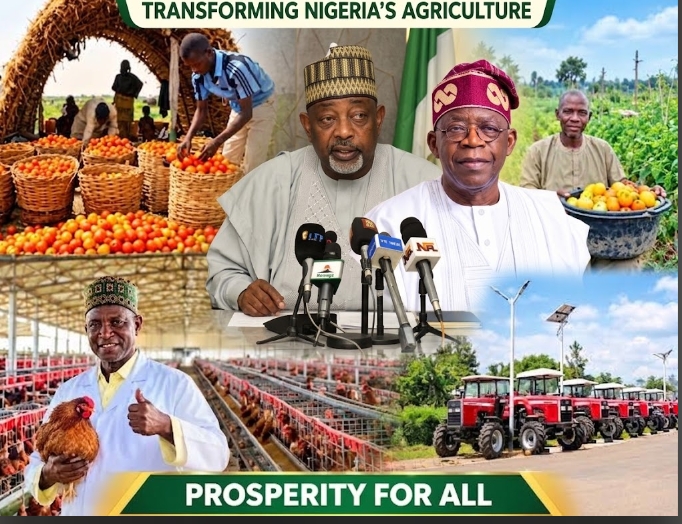
Against this background, the Tinubu administration has attempted to place agriculture and food security closer to the centre of national economic policy.From the declaration of a State of Emergency on Food Security in July 2023, to the establishment of a dedicated Ministry of Livestock Development, the expansion of dry-season farming, agricultural mechanisation, fertilizer and input interventions, the creation of agro-industrial processing zones, renewed agricultural financing and the promotion of soil health, the administration has pursued a broad agricultural transformation agenda.
The results are still a work in progress. Nigerians continue to face affordability challenges, farmers still struggle with insecurity and production costs, and the country remains dependent on imports for several commodities. Yet, there are measurable signs that the structure of agricultural policy is changing.A State of Emergency on Food SecurityOne of the defining moments of the administration’s agricultural policy was President Tinubu’s declaration of a State of Emergency on Food Security in July 2023.The declaration was significant because it elevated food production and affordability beyond the conventional boundaries of agricultural policy and placed them within the broader framework of national security.
The President directed that matters concerning food and water availability and affordability be brought within the purview of the National Security Council.The administration also announced a broad intervention package designed to increase domestic production, reduce food shortages and cushion the effects of rising food prices.Part of the immediate response included the release of strategic grain reserves and the provision of fertilizer, seeds and other inputs to farmers. The President also announced a N500 billion intervention for the cultivation of major staple crops, including rice, maize, wheat and cassava.The intervention represented an acknowledgement that Nigeria’s food crisis could not be solved merely by importing food.
The long-term answer, the administration argued, had to be increased domestic production.From Emergency Response to Agricultural TransformationThe administration’s agricultural strategy has gradually moved beyond emergency food distribution towards a broader attempt to transform the production system.This is reflected in the government’s emphasis on mechanisation, irrigation, improved seeds, fertilizer availability, agricultural finance, processing and market access.
Perhaps one of the clearest indications of this shift is the steady increase in federal budgetary allocations to agriculture.Agriculture received about N228.4 billion in the 2023 budget, rising to N362.94 billion in 2024, while the proposed 2025 allocation rose sharply to N826.5 billion.The increase does not, by itself, guarantee agricultural transformation. Indeed, the allocations remain below the 10 per cent benchmark associated with the Maputo/Malabo agricultural commitments.
Nevertheless, the direction of federal spending demonstrates a stronger fiscal emphasis on agriculture than had been evident in previous years.
Financing Agriculture:
From Promises to InstitutionsOne of the biggest obstacles facing Nigerian agriculture has always been access to affordable financing.The Tinubu administration responded with the establishment of the N100 billion National Agricultural Development Fund (NADF) to address financing bottlenecks and support agricultural investments and value chains.The administration has also moved to strengthen the Bank of Agriculture. According to the Federal Ministry of Agriculture and Food Security, the Bank of Agriculture received a N250 billion facility intended to provide single-digit-interest financing to smallholder farmers.
This is important because agricultural transformation cannot depend entirely on government grants. Farmers need sustainable access to credit that allows them to purchase inputs, acquire machinery, expand their farms and participate in processing and marketing.
The emerging model therefore seeks to move farmers from dependence on emergency interventions towards commercially viable agricultural enterprises.The Dry-Season Farming RevolutionAnother important component of the administration’s strategy has been the expansion of dry-season farming.Nigeria has historically relied heavily on rain-fed agriculture, exposing farmers to climate variability and limiting production to particular periods of the year.
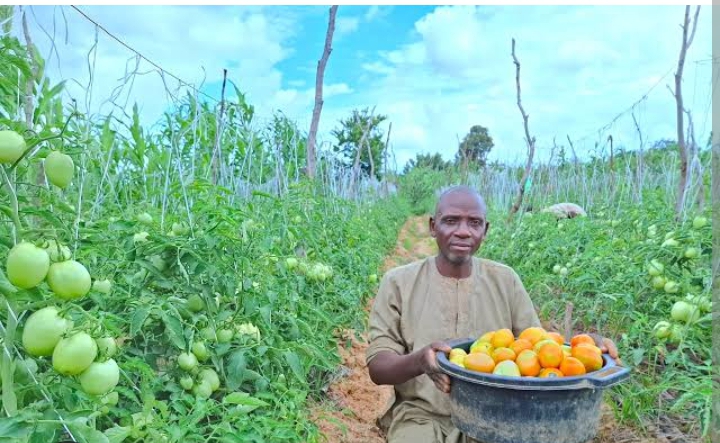
The Federal Government therefore introduced large-scale dry-season farming programmes, particularly for wheat, rice and other staples.Under the 2023/2024 dry-season wheat programme, 107,429 registered farmers were supported with subsidised inputs. During the 2024/2025 season, the number increased to 279,297 farmers, according to the Ministry of Agriculture.The programme has been particularly significant for wheat because Nigeria spends substantial resources importing the commodity and wheat products.
The administration’s objective is to increase domestic wheat production, reduce import dependence and create opportunities for farmers in northern and other suitable parts of the country.An additional development has been the introduction of rain-fed wheat cultivation, including trials in Plateau State, potentially expanding wheat production beyond areas dependent on irrigation.If sustained, the wheat initiative could become one of the most economically important components of Nigeria’s agricultural import-substitution strategy.
Mechanisation: Moving Beyond Hoe-and-Cutlass Agriculture
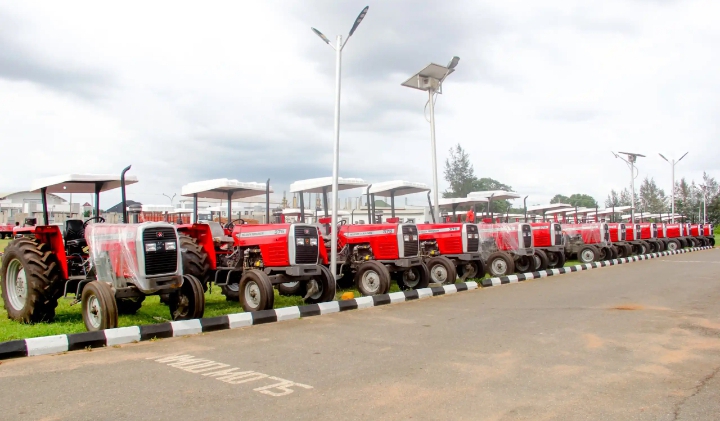
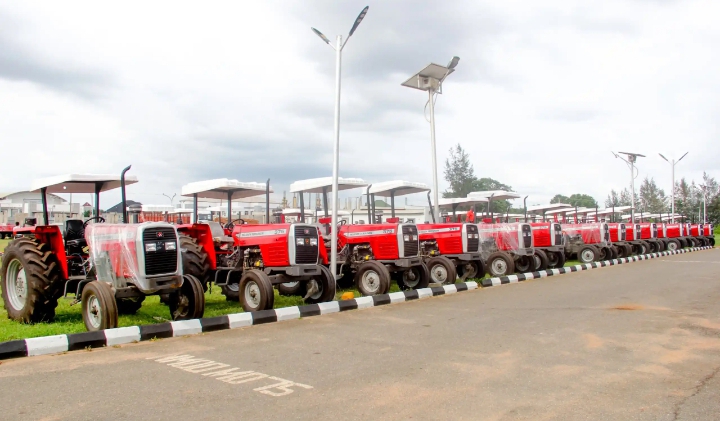
For decades, agricultural mechanisation has been identified as one of Nigeria’s biggest structural weaknesses.The Tinubu administration has attempted to address this through several mechanisation initiatives, including the John Deere partnership, the Green Imperative Programme, the Greener Hope Project and the Renewed Hope Agricultural Mechanisation Programme.In September 2025, President Tinubu launched a major mechanisation initiative involving 2,000 tractors, 10 combine harvesters, 12 mobile workshops, 9,000 implements and 9,000 spare-parts kits supplied through a partnership involving Belarus and AfTrade.
The Federal Government projects that the initiative could facilitate cultivation of more than 550,000 hectares, generate more than two million metric tonnes of staple food and directly benefit hundreds of thousands of farming households.More importantly, the programme is designed not merely around the distribution of tractors but around operator training, equipment tracking, maintenance and service infrastructure.
This is a critical distinction.Nigeria has witnessed agricultural equipment programmes under different administrations, but many machines eventually became unusable because of poor maintenance, inadequate spare parts and lack of trained operators.A sustainable mechanisation system must therefore be built around equipment, operators, maintenance, financing and commercially viable tractor-hiring services.
Fertilizer and Input SupportThe administration has also placed considerable emphasis on improving farmers’ access to fertilizer and other agricultural inputs.The government has reported the distribution of millions of fertilizer bags to farmers, alongside improved seeds, agrochemicals, safety kits and pest-management products.
The Ministry of Agriculture reported that more than 1.9 million bags of fertilizer were distributed to nearly one million farmers under interventions covering 2024 and 2025. It also reported the distribution of more than 12,000 litres of organic fertilizer and the training of fertilizer inspectors and other industry stakeholders.The government has also strengthened fertilizer quality control through the establishment of a National Reference Laboratory and the upgrading of the National Fertilizer Management Platform.
This addresses an often-overlooked agricultural problem: fertilizer availability is meaningless if farmers receive adulterated or poor-quality products.NAGS-Agro-Pocket and the Smallholder FarmerThe National Agricultural Growth Scheme-Agro-Pocket (NAGS-AP) has become another important vehicle for the administration’s agricultural intervention.According to the Ministry, more than 647,500 farmers were registered, while 622,818 received subsidised inputs.
The Ministry says the programme contributed to a 30 per cent increase in crop production among participating states.The significance of NAGS-AP lies in its focus on smallholder farmers.Nigeria’s food system is not dominated by a handful of giant commercial farms. Millions of small and medium-scale farmers collectively determine the availability of rice, maize, cassava, yam, sorghum, millet, vegetables and other staples.Consequently, improving the productivity of the smallholder farmer remains central to solving Nigeria’s food-security problem.Soil Health: Addressing the Foundation of ProductionPerhaps one of the more technically significant initiatives of the administration is the Nigerian Farmers Soil Health Scheme.The initiative seeks to replace the indiscriminate application of fertilizer with soil-specific recommendations.Under the programme, the government plans to establish soil-testing capacity across the country and develop a national soil information system capable of providing data that can guide farmers on the nutrients their soils require.
The objective is straightforward: rather than simply applying more fertilizer, farmers should apply the right fertilizer, in the right quantity, to the right soil.The Ministry has reported that pilot soil assessments have already recorded yield improvements of up to 20 per cent among participating farmers.If successfully implemented nationwide, soil mapping could become one of the quiet but transformative aspects of Nigeria’s agricultural revolution.Special Agro-Industrial Processing ZonesAgricultural transformation cannot end at the farm gate.
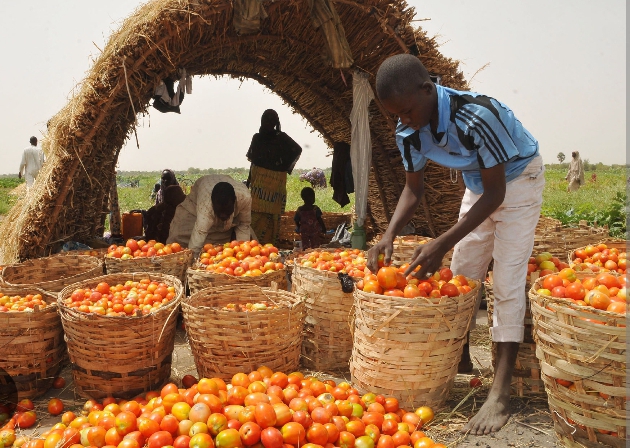
One of the weaknesses of Nigerian agriculture has historically been the disconnect between production and processing. Farmers produce raw materials, but inadequate storage, processing facilities and market linkages often result in post-harvest losses and depressed farm-gate prices.This is where the Special Agro-Industrial Processing Zones (SAPZ) become important.The programme is designed to establish agro-industrial hubs where agricultural production can be connected to processing, storage, logistics and markets.In April 2025, Nigeria launched construction of the $510 million SAPZ programme, backed by the African Development Bank and other development partners.
The first phase covers seven states and the Federal Capital Territory, with the broader programme designed to develop climate-adapted infrastructure, improve agricultural productivity, strengthen value chains and create jobs.The SAPZ model potentially changes the economics of Nigerian agriculture.Instead of asking farmers simply to produce more, it attempts to create an ecosystem in which production is linked to processing and commercial demand.
Rural Infrastructure and Market AccessAgricultural productivity is heavily dependent on infrastructure.A farmer may produce a bumper harvest but still lose money if there is no road to transport the produce, no storage facility to preserve it or no processor to purchase it.The Tinubu administration has therefore increasingly linked agricultural policy with rural infrastructure.The Ministry reported the construction of approximately 170 kilometres of asphalt roads and 57 kilometres of earth roads, alongside the provision of motorised and solar-powered boreholes, rural markets and other facilities.The Federal Government has also secured financing for the Rural Access Agricultural Marketing Project – Scale Up (RAAMP-SU). The World Bank approved $500 million in concessional financing, with an additional $100 million in Nigerian government financing, to improve rural roads and agricultural market access.These investments matter because the agricultural value chain begins long before a commodity reaches the market.Irrigation and Climate ResilienceClimate change is increasingly becoming a direct threat to Nigerian agriculture.Flooding, droughts, changing rainfall patterns and extreme weather events can wipe out entire farming seasons.The administration has consequently pursued irrigation and climate-resilience projects alongside conventional agricultural interventions.In 2024, the World Bank approved $500 million for the Sustainable Power and Irrigation for Nigeria Project (SPIN), which is designed to improve irrigation and drainage services over approximately 40,000 hectares and potentially benefit up to 950,000 people, including farmers and livestock breeders.The significance of irrigation goes beyond increasing production. It gives farmers greater control over the production calendar and makes it possible to cultivate beyond the traditional rainy season.Agriculture and the Livestock QuestionPerhaps no agricultural reform under the Tinubu administration has attracted as much structural attention as the decision to create a Federal Ministry of Livestock Development in 2024.
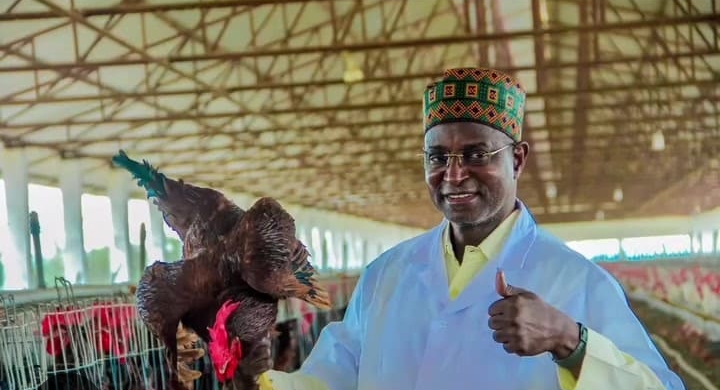
The livestock sector is a major component of Nigeria’s agricultural economy, but it has also been at the centre of some of the country’s most persistent conflicts.Farmer-herder clashes have resulted in deaths, displacement, destruction of farms and disruption of rural economies.The creation of a dedicated ministry represents an attempt to treat livestock as a specialised economic sector rather than simply as an extension of general agricultural administration.The administration’s objective is to modernise livestock production, improve animal health, expand processing, strengthen the dairy and meat value chains and address some of the structural factors contributing to farmer-herder conflict.The Federal Government’s livestock agenda also fits into the broader Livestock Productivity and Resilience Support Project, a $500 million World Bank-supported programme designed to improve livestock productivity, commercialization and resilience while strengthening social cohesion and addressing drivers of farmer-herder conflict.The real test, however, will be implementation.The creation of a ministry alone cannot resolve decades of conflict. Sustainable livestock development will require ranching and grazing solutions appropriate to different regions, veterinary services, water infrastructure, animal identification, disease control, land-use planning and effective conflict-resolution mechanisms.Cocoa and Agricultural Export Diversification.
The administration has also turned attention towards export-oriented agricultural commodities.The government has highlighted cocoa among the strategic value chains receiving renewed attention, alongside rice, maize, wheat, millet, sorghum, yam, cassava, soybean, cotton, oil palm and other commodities.
The Ministry has reported the distribution of one million improved hybrid cocoa seedlings as part of efforts to reposition Nigeria’s cocoa industry for greater competitiveness.This is important because agricultural transformation should not be defined only by the ability to feed Nigerians.Nigeria must also produce agricultural commodities capable of earning foreign exchange, supporting industries and creating internationally competitive value chains.Brazil, Qatar and the International Investment PushAnother feature of the Tinubu administration’s agricultural policy has been the attempt to attract international capital and technical partnerships.The Federal Ministry of Agriculture and Food Security has pursued cooperation with Brazil around agricultural technology, fertilizer production, hybrid seeds and agricultural finance.The administration has also sought greater investment from Gulf countries, including Qatar, into Nigeria’s agriculture and broader food systems.The logic is clear.Nigeria cannot transform agriculture solely through government expenditure. The scale of investment required for irrigation, mechanisation, processing, storage, logistics, biotechnology and agricultural finance is too large.Public policy must therefore create the environment for private capital to participate.Green Imperative and Technology TransferThe administration has also continued to build on international technology-transfer programmes.The Green Imperative Project, involving Nigeria and Brazil, seeks to leverage Brazil’s extensive experience in tropical agriculture and mechanisation.This is particularly relevant because Nigeria’s agricultural conditions are in many respects closer to those of other tropical agricultural economies than to those of temperate countries.Technology that works in Brazil can therefore offer useful lessons for Nigeria in areas such as mechanisation, cassava, soybean, livestock, irrigation and agro-processing.Agriculture’s Emerging Contribution to Economic Growth.
Perhaps one of the strongest indicators that the agricultural sector is beginning to respond is the improvement recorded in recent GDP data.According to the National Bureau of Statistics, Nigeria’s agricultural sector grew by 3.15 per cent year-on-year in real terms in the first quarter of 2026, compared with just 0.07 per cent in Q1 2025.Agriculture contributed 23.16 per cent of real GDP during the quarter, while crop production remained the dominant component, accounting for 66.76 per cent of the sector’s nominal value.The figures should not be interpreted as proof that Nigeria has solved its food crisis. They are, however, evidence of improved agricultural momentum.The challenge is now to sustain that growth over several planting cycles.Food Prices: The Most Important TestFor ordinary Nigerians, however, the ultimate assessment of agricultural policy is not the number of tractors distributed, the size of the agricultural budget or the number of memoranda signed with international partners.It is simple:Can Nigerians afford food?This remains the most difficult test for the Tinubu administration.Food inflation rose sharply during the early period of the administration, reflecting the combined effects of macroeconomic reforms, high transportation costs, insecurity, climate shocks, input costs and disruptions to supply chains.The administration’s agricultural interventions have therefore operated against a difficult economic background.The Ministry of Agriculture now reports that prices of some essential commodities have fallen by as much as 50 per cent from previous peaks and attributes the improvement partly to increased domestic production and targeted market interventions.That claim should be viewed alongside the continuing pressure on household purchasing power.