




By Lanre Shodimu

As part of its commitment to promoting informed agricultural journalism and documenting innovative farming practices across Africa, Farmlife Media embarked on a working visit to the Republic of Rwanda under the initiative known as the Farmlife Rwanda Experience.
The visit was led by the Publisher and Chief Executive Officer of Farmlife Media, Mr. Hide Akinseye, on a fact-finding mission aimed at gaining first-hand knowledge of Rwanda’s agricultural innovations, government support systems, irrigation practices, and export-oriented farming model.
The mission also sought to identify practical lessons that Nigeria can adapt in order to improve food security, enhance farmer productivity, and strengthen agricultural value chains.

The Farmlife Rwanda Experience, which explores the country’s agricultural potentials and farm support systems, provided an opportunity for direct engagement with local farmers, agricultural stakeholders, and community actors involved in Rwanda’s agricultural development process.
During the visit, the Farmlife Media team interacted with local stakeholders and farmers to better understand the policies and practices that have contributed to Rwanda’s agricultural transformation.
Interaction with Rwandan Agricultural Stakeholder
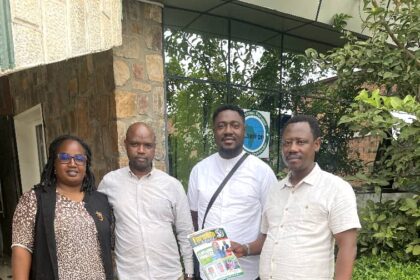
One of the key engagements during the visit was an interaction with Mr. Ernest Itamu, a Rwandan agricultural stakeholder, who provided insights into the structure of government support for farmers and the country’s major agricultural exports.
Government Support for Farmers
According to Mr. Itamu, the Rwandan government plays a central role in agricultural development. He explained that farmers cultivating crops such as plantain, beans, and other staple crops receive direct government support. The support includes agricultural inputs and financial assistance aimed at encouraging production and improving yields.
He noted that the government is deliberately investing substantial energy and resources into agriculture in order to strengthen the sector and improve national food production.
Rwanda’s Major Agricultural Export
In response to questions on Rwanda’s export commodities, Mr. Itamu identified coffee as the country’s leading agricultural export. He described coffee as Rwanda’s number one export product, with major coffee-producing areas including Kibuye and Cyangugu, among other regions known for extensive coffee farming activities.
Incentives and Financial Assistance
Speaking on incentives available to farmers, Mr. Itamu explained that the government provides soil fertility and crop-support inputs, particularly for crops such as beans and plantain. He further disclosed that farmers who present viable cultivation projects can receive financial support from the government.
Importantly, he clarified that the support is not a conventional commercial loan. Rather, it operates as a form of revolving agricultural support in which beneficiaries use the funds for a specified period, after which the money is returned and made available to support other farmers.
Dry Season Farming and Irrigation
On the issue of seasonal farming, Mr. Itamu stated that Rwanda experiences both rainy and dry seasons. While the rainy season naturally supports farming activities, the dry season is managed through irrigation projects. He indicated that irrigation has become an important component of Rwanda’s agricultural system and has helped sustain production beyond the rainy season.
Observations and Lessons for Nigeria
The interaction revealed several important lessons that may be relevant to Nigeria’s agricultural development agenda:
Strong government involvement: Rwanda demonstrates a coordinated approach in which government actively supports farmers through inputs, financing, and technical interventions.
Export-focused agriculture: The country has successfully developed coffee into a strategic export commodity, showing the value of prioritizing high-value crops with international market potential.
Accessible farmer financing: The revolving support model provides farmers with startup capital while ensuring sustainability of the funding scheme.

Investment in irrigation: Expanding irrigation infrastructure enables year-round farming and reduces dependence on rainfall.
Integrated agricultural planning: The linkage between farmer support, productivity enhancement, and export development reflects a well-organized agricultural policy framework.
Conclusion
The Farmlife Rwanda Experience provided valuable insight into how Rwanda has used policy coordination, farmer support mechanisms, irrigation, and export-oriented agriculture to strengthen its agricultural sector.
The interaction with Mr. Ernest Itamu underscored the importance of sustained government commitment, accessible agricultural financing, and investment in productivity-enhancing infrastructure. For Nigeria, these experiences offer practical ideas that could inform efforts to improve food production, empower smallholder farmers, promote dry-season farming, and develop competitive agricultural exports.
Farmlife Media, under the leadership of Mr. Hide Akinseye, will continue to document and share such experiences in order to contribute to evidence-based discussions on agricultural transformation in Nigeria and across Africa.