




By Simeon Shodimu

Nigeria’s economy grew by 3.89 per cent in real terms during the first quarter of 2026, driven largely by a stronger performance in agriculture, according to the latest Gross Domestic Product (GDP) report released by the National Bureau of Statistics (NBS).
The report, titled National Gross Domestic Product Report Q1 2026, showed that economic growth surpassed the 3.13 per cent recorded in the corresponding period of 2025, reflecting improved performance across key sectors of the economy.

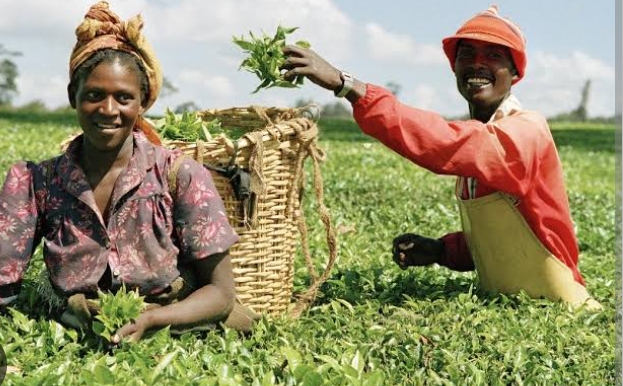
Agriculture, which remains one of Nigeria’s largest employers and a critical contributor to food security, expanded by 3.15 per cent year-on-year in real terms during the quarter. This represented a significant improvement from the marginal growth of 0.07 per cent recorded in the first quarter of 2025.
According to the NBS, the agricultural sector consists of four major sub-sectors: crop production, livestock, forestry and fishing. Crop production continued to dominate the sector, accounting for 66.76 per cent of its overall nominal value during the period under review.
The bureau reported that agriculture recorded nominal growth of 9.93 per cent year-on-year in Q1 2026. Although this was slightly lower than the growth recorded in the corresponding quarter of 2025, it represented a notable increase compared to the 6.82 per cent growth achieved in the fourth quarter of 2025.
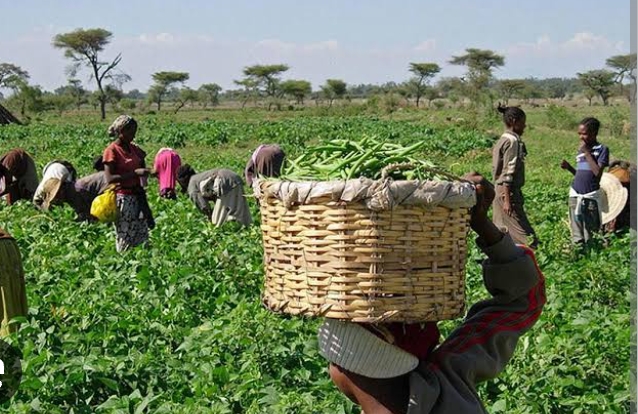
Despite the improvement in output, agriculture’s contribution to nominal GDP declined to 18.11 per cent, compared with 19.40 per cent in Q1 2025 and 25.67 per cent in the final quarter of 2025. In real terms, the sector contributed 23.16 per cent to aggregate GDP, slightly below the 23.33 per cent recorded a year earlier.
Overall, Nigeria’s GDP at basic prices stood at N110.79 trillion in nominal terms during the first quarter, compared with N94.05 trillion in the corresponding period of 2025, representing a year-on-year nominal growth rate of 17.79 per cent.
The services sector remained the largest contributor to economic activity, accounting for 57.73 per cent of total GDP, marginally higher than the 57.50 per cent recorded in the same period of 2025. The sector grew by 4.31 per cent during the quarter.
Meanwhile, the industry sector posted a growth rate of 3.50 per cent, slightly above the 3.42 per cent recorded in Q1 2025.
The oil sector also showed signs of recovery. Real growth in the sector stood at 2.57 per cent year-on-year, compared with 1.87 per cent in the corresponding quarter of 2025. However, growth moderated when compared with the 6.79 per cent recorded in the fourth quarter of 2025.
Nigeria’s average daily crude oil production stood at 1.55 million barrels per day during the quarter, lower than the 1.62 million barrels per day recorded in the same period of 2025 and slightly below the 1.58 million barrels per day produced in the preceding quarter.
The oil sector contributed 3.92 per cent to total real GDP during the period, marginally lower than the 3.97 per cent recorded in the first quarter of 2025 but significantly higher than the 2.87 per cent contribution posted in the fourth quarter of 2025.
The manufacturing sector also recorded improved performance. Real GDP growth in manufacturing stood at 3.29 per cent year-on-year, surpassing both the corresponding quarter of 2025 and the preceding quarter. The sector contributed 9.57 per cent to real GDP during the first quarter of 2026.
Analysts say the stronger agricultural performance is particularly significant as the sector continues to play a central role in Nigeria’s efforts to boost food production, tame inflation and strengthen rural livelihoods. However, the decline in agriculture’s share of GDP suggests that sustained investments in productivity, mechanisation, livestock development and value addition will be required to accelerate growth and enhance the sector’s contribution to the broader economy.
The latest GDP figures indicate that despite persistent economic challenges, Nigeria’s economy entered 2026 on a stronger footing, with agriculture, industry and services all posting positive growth and supporting overall economic expansion.