





By Lanre Shodimu

In a move poised to reshape Nigeria’s agricultural and industrial landscape, the Bank of Industry (BOI) and the Raw Materials Research and Development Council (RMRDC) have formalised a partnership aimed at unlocking value across the nation’s vast raw material base. Punchonline of 21st April, 2026 learnt.
The collaboration, sealed through a Memorandum of Understanding signed on April 17, 2026, signals a renewed push to strengthen agricultural value chains by addressing longstanding inefficiencies that have hindered productivity and industrial growth.
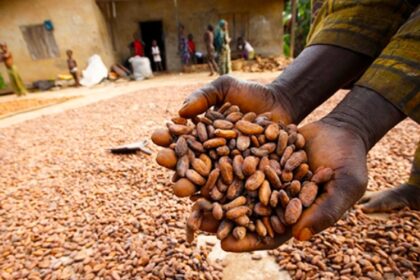
At the heart of the agreement is a shared ambition to move Nigeria away from exporting unprocessed commodities toward producing finished and semi-finished goods. Both institutions say the partnership will tackle critical gaps across the value chain—from seedlings and cultivation to harvesting, storage, processing, packaging, logistics, and marketing.
The initiative comes at a time when post-harvest losses, weak processing capacity, and poor logistics continue to erode farmers’ incomes and limit the country’s competitiveness. By aligning research expertise with financing capacity, the BOI and RMRDC aim to bridge the divide between innovation and commercial execution.
To ensure effective implementation, BOI has established a Joint Steering Committee tasked with overseeing strategy development for both agricultural and mineral value chains. The committee will also promote the adoption of locally developed machinery, a move expected to deepen local content and reduce reliance on imported technologies.
Beyond policy alignment, the partnership will be driven by concrete interventions, including joint feasibility studies and pilot projects. These will focus on key commodities such as cassava, onions, kenaf, leather, and kaolin—sectors identified for their strong potential to generate jobs, stimulate rural economies, and enhance export earnings.
Managing Director of BOI, Olasupo Olusi, described the collaboration as a convergence of complementary strengths. He noted that while RMRDC brings deep technical and research expertise, BOI provides the financial backbone needed to turn viable ideas into scalable industrial ventures.
According to him, the partnership is designed to convert research outcomes into bankable projects capable of attracting investment, creating employment, and retaining wealth within the domestic economy. He stressed that Nigeria’s raw materials should no longer leave its shores in their primary state but as value-added products that contribute meaningfully to GDP.
On his part, the Director-General of RMRDC, Nnanyelugo Martin Ike-Muonso, emphasised the broader developmental impact of the agreement. He described the collaboration as a critical step toward advancing industrialisation, promoting process technologies, and improving livelihoods.
Industry observers say the partnership aligns with national priorities around import substitution, job creation, and entrepreneurship development. By strengthening linkages between research, financing, and production, the initiative is expected to stimulate industrial capacity and foster a more resilient economy.
If effectively implemented, the BOI–RMRDC alliance could mark a turning point in Nigeria’s quest to harness its raw material wealth—transforming it from a supplier of commodities into a hub for value-added production and sustainable economic growth.