

By Falade Adesewa

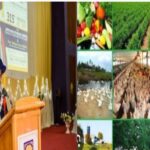
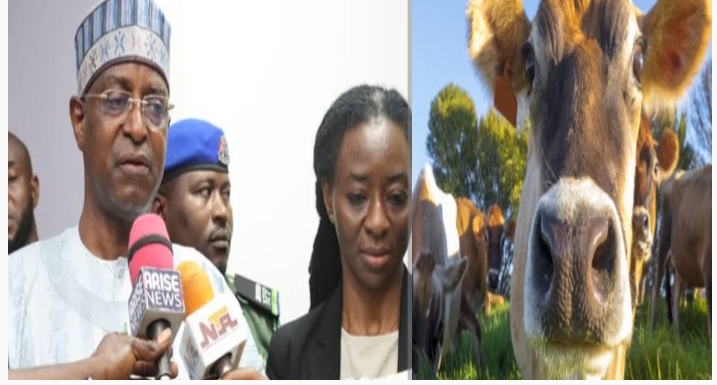
The Federal Government has made known it’s commitments to reforms in the agricultural sector with the announcement of decisive steps to address the role of middlemen in driving price distortions and artificial scarcity within Nigeria’s livestock sector, as part of broader reforms to improve food affordability and strengthen value chain efficiency.
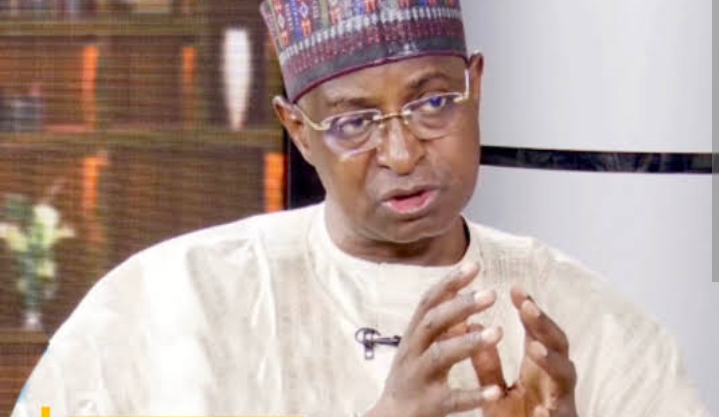
The was made known by the Minister of Livestock Development, Idi Mukhtar Maiha, at the maiden edition of the Minister–Livestock Farmers’ Connect held recently.
The minister identified the dominance of middlemen in the livestock value chain as a major challenge, noting that producers earn less while intermediaries capture disproportionate margins before products reach processors and consumers.

“In many cases, the producer does the hard work, but earns the least, while the middleman takes the highest margin. This ultimately drives up prices and creates artificial scarcity in the market,” Maiha said.
“to address this imbalance, the Ministry of Livestock Development is encouraging a shift towards end-to-end business models, where producers establish direct relationships with processors, abattoirs, and large-scale buyers” . He said .
This approach, according to the Minister will not only improve farmer incomes but also stabilise prices and enhance overall market transparency.
He further pointed to critical gaps in pasture seed production, fodder supply, dairy aggregation, leather processing, and livestock by-products, noting that these areas present viable entry points for entrepreneurs, particularly the youth population.
He made known Government’s commitment to transition from open grazing to more organised livestock production systems, explaining that the move is aimed at reducing transhumance, improving productivity, mitigating farmer-herder conflicts, and strengthening animal health management.
“While humans can move, animals perform better when they are properly managed in structured environments. This improves productivity, reduces disease spread, and enhances overall sector efficiency,” the minister said.
“While humans can move, animals perform better when they are properly managed in structured environments. This improves productivity, reduces disease spread, and enhances overall sector efficiency,” he said.
Maiha further disclosed that Nigeria’s fodder market is rapidly expanding, with increasing domestic trade and strong export potential to Gulf countries, where demand remains high.
Similarly, he noted that the leather industry alone has the capacity to generate up to 700,000 jobs, reinforcing the sector’s role in economic empowerment and industrial development.
He further noted that the leather industry alone has the capacity to generate up to 700,000 jobs, reinforcing the sector’s role in economic empowerment and industrial development.
While addressing access to finance, the minister outlined multiple funding channels available to investors, including the recapitalised Bank of Agriculture, the Nigeria Incentive-Based Risk Sharing System for Agricultural Lending (NIRSAL)-supported facilities, the Development Bank of Nigeria, and intervention funds under World Bank-backed programmes.
On security, Maiha acknowledged the challenges posed by cattle rustling and rural insecurity, announcing plans to deploy digital livestock tagging and traceability systems. The initiative will enable proof of ownership, real-time tracking, and recovery of stolen animals, with pilot implementation expected to commence in select states within six months.