

By Simeon Shodimu

A renewed push to close gender gaps in Nigeria’s agriculture is taking shape, as the Federal Government rolls out a policy framework designed to put inclusion at the centre of food systems transformation.
In a decisive move to reshape the country’s agricultural landscape, Nigeria has unveiled a revised National Gender Policy on Agrifood Systems Transformation (NGPAST) alongside a Strategic Plan of Action for 2025–2030—signaling a stronger commitment to equity, productivity, and sustainability in the sector.
Presenting the policy in Abuja, the Minister of Agriculture and Food Security, Abubakar Kyari, described the initiative as a critical milestone in addressing longstanding imbalances that have limited the full potential of Nigeria’s agrifood systems. Represented by the Minister of State, Sabi Abdullahi, the minister underscored the need to dismantle systemic barriers that disproportionately affect women—key players across farming, processing, and distribution.

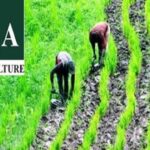
Despite their central role, women in agriculture often face restricted access to land, finance, inputs, and decision-making platforms. The new policy aims to change that narrative by offering a practical framework to ensure equitable access to resources and opportunities for all, while embedding gender-responsive strategies across agricultural programmes nationwide.
Beyond policy intent, the government stressed implementation as the true test. Kyari commended development partners including ActionAid Nigeria, AGRA, and GIZ for their collaboration, but maintained that tangible results will depend on how effectively institutions integrate the framework into their budgets, plans, and operations. He also pledged strong monitoring and accountability mechanisms to track progress.
Speaking on behalf of the National Gender Steering Committee, Andrew Mamedu emphasized that the policy marks a shift from token inclusion to meaningful participation. According to him, it positions women, men, youth, and persons with disabilities not as peripheral beneficiaries but as central drivers of food security, innovation, and national development.
Mamedu noted that the document reflects extensive nationwide consultations and evidence-based inputs from stakeholders spanning government, civil society, private sector actors, and farming communities across Nigeria’s six geopolitical zones.
Echoing this sentiment, Rufus Idris reaffirmed support from AGRA, stressing that Africa’s food systems cannot be transformed without prioritizing gender inclusion. He described the policy as part of a broader continental effort to ensure that agricultural growth is both inclusive and sustainable.
As Nigeria grapples with food security challenges and the need to modernize its agricultural sector, the NGPAST framework offers a pathway to harness the full contributions of its population. If effectively implemented, it could redefine not just who participates in agriculture, but who benefits from its growth.