




By Simeon Shodimu

In its quest to boost agricultural development, a new proposal seeks to bring mechanisation to the heart of Nigeria’s farming communities—leveraging political constituencies as engines of agricultural transformation.
In a bold attempt to reshape Nigeria’s agricultural landscape, the Bank of Agriculture Nigeria has unveiled a nationwide mechanisation plan that could redefine food production and rural development across the country.

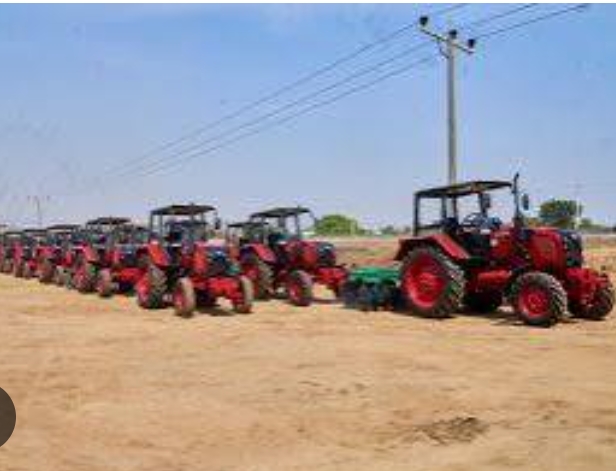
Presented before the House of Representatives Nigeria during plenary in Abuja, the initiative outlines a partnership model aimed at deploying tractors and integrated farming services across all 360 federal constituencies. At its core is an ambitious target: to mechanise up to 1.2 million hectares of farmland annually.
Managing Director Ayo Sotinriade described the programme as a strategic shift from subsistence farming to a more commercialised, productivity-driven agricultural system. The proposal hinges on a cost-sharing arrangement in which lawmakers contribute 60 per cent toward acquiring tractors for their constituencies—an approach designed to decentralise access to modern farming tools.
Each tractor, according to the plan, is capable of covering up to 600 hectares per year. With an estimated rollout of 2,000 tractors nationwide, the scale of the intervention could significantly expand cultivated land and improve efficiency in food production.

Beyond machinery, the proposal introduces a network of constituency-based farming hubs. These centres are envisioned as one-stop service points where farmers can access inputs, irrigation systems, financing, extension services, and aggregation facilities. A structured booking system for tractors is also expected to ensure equitable and efficient usage.
The inclusion of irrigation infrastructure is particularly critical, as it would enable year-round farming and potentially allow for three production cycles annually—an upgrade from the largely seasonal patterns that currently define Nigerian agriculture. With improved inputs and mechanisation, the initiative aims to push yields beyond two tonnes per hectare.
The broader implications extend beyond food production. By creating jobs, boosting incomes, and expanding access to agricultural services, the programme is positioned as a tool for tackling multidimensional poverty and reducing insecurity—particularly in rural areas where unemployment and low productivity often fuel social unrest.
There is also a humanitarian dimension. Internally displaced persons, especially in conflict-affected states like Borno and Benue, could benefit from structured reintegration through access to farming tools and organised support systems.
Nigeria’s mechanisation gap remains stark. Despite possessing over 30 million hectares of arable land, the country relies heavily on manual farming, with tractor density among the lowest globally—fewer than one per 1,000 hectares. This deficit has long constrained productivity, leaving farmers vulnerable to climate variability and labour shortages.
Previous government efforts to bridge this gap have struggled with inconsistent implementation, inadequate funding, and weak maintenance systems. Meanwhile, the Bank of Agriculture itself has faced persistent challenges, including undercapitalisation and limited reach—prompting growing calls for its reform and recapitalisation.
Sotinriade’s proposal signals a potential turning point. By harnessing the grassroots reach of lawmakers and embedding services within constituencies, the initiative attempts to bypass longstanding bottlenecks and deliver impact directly at the community level.
With food inflation rising and pressure mounting to diversify the economy beyond oil, the success of this partnership could prove pivotal. If effectively executed, it may not only boost Nigeria’s food security but also reposition the country as a competitive player in global agricultural markets.