




By Kemi Akinseye

As Nigeria intensifies efforts to boost agricultural production and achieve food sufficiency, stakeholders continue to raise concerns about deep structural challenges undermining progress. In this exclusive interview with Farmlife, the Founder and Chief Executive Officer of Noba Africa Agro Allied Limited, Abdulrazak Najim, offers a candid assessment of government policies, market realities, and the urgent reforms needed to unlock the sector’s full potential.
For Abdulrazak Najim, the conversation around Nigeria’s food security goes beyond surface-level interventions. As the Founder and CEO of Noba Africa Agro Allied Limited, he sits at a critical junction of the agricultural value chain—working directly with farmers, markets, and inputs. From this vantage point, his assessment is both measured and deeply concerning.
“Agriculture is not failing because of lack of effort,” he says. “It is struggling because of inconsistency and structural gaps.”
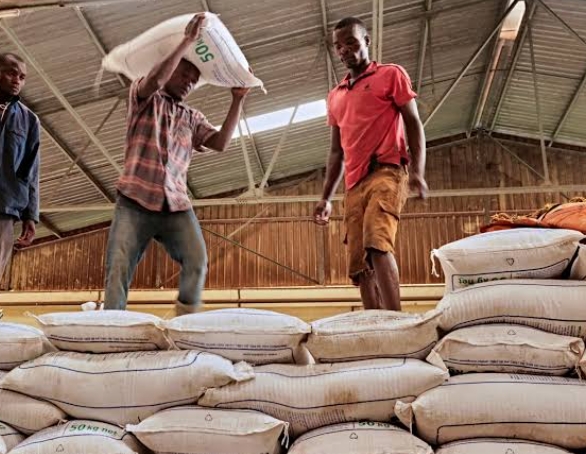
Najim’s company operates across commodity trading, seed development, and agricultural consultancy, with active operations in Niger, Kaduna, and Nasarawa states. Through these channels, Noba Africa aggregates staple crops such as maize, rice, soybeans, and sesame, while also investing in improved seed systems designed to boost productivity.
At the heart of its operations is a simple but critical mission: connecting farmers to reliable markets while improving yields through better inputs and structured systems.
But even with these interventions, Najim insists that the broader operating environment remains fragile.
One of the most pressing concerns, he notes, is insecurity in farming regions. According to him, the impact is immediate and devastating—farmers are abandoning fields, cultivation is shrinking, and the entire supply chain is under strain.
“Insecurity is not just a social issue; it is an economic one,” he explains. “When farmers cannot access their land, production drops, and everything else in the value chain begins to weaken.”
Closely tied to this is the issue of policy inconsistency. While the government has shown commitment to agriculture through various interventions, Najim argues that frequent shifts—particularly around trade and border policies—have created uncertainty that discourages long-term investment.
For agribusinesses, he says, stability is everything.
“You cannot build a sustainable agricultural system when the policy environment keeps changing. The private sector needs predictability to plan, invest, and scale.”
Beyond policy concerns, Najim points to a deeper flaw in the way agricultural support is structured. Contrary to popular belief, he argues that the biggest challenge facing farmers is not just the high cost of inputs, but the instability of output prices.
Even when fertilizers or seeds are subsidized, farmers often struggle to sell their produce at profitable rates. The result is a cycle of losses that discourages reinvestment and weakens the entire ecosystem.
“If farmers cannot sell profitably, they will not produce,” he says bluntly. “And when production declines, food security becomes a distant goal.”
He stresses that addressing this imbalance requires a more holistic approach—one that goes beyond input subsidies to include price stabilization mechanisms, structured offtake systems, and stronger market regulation.
Najim is also cautious in his assessment of the current administration’s performance in the agricultural sector. While acknowledging increased attention and some progress in financing support, he describes the overall impact as “moderate at best,” citing inconsistency as a recurring challenge.
“Agriculture cannot be measured in short political cycles,” he notes. “What the sector needs are policies that are consistent, predictable, and sustained over time.”
Looking ahead, however, Najim remains optimistic—provided the right conditions are put in place.
His company’s future plans are anchored on scaling productivity through climate-resilient seeds, expanding farmer support systems, and strengthening market linkages. By aligning production with real demand and improving efficiency across the value chain, he believes Nigeria can move closer to food sufficiency.
“Our focus is on helping farmers produce more per hectare and at greater scale,” he says. “That is how we close the food gap.”
Still, he returns to what he considers the most critical foundation for progress: security and stability.
Without them, even the best-designed interventions may fall short.
Until then, Nigeria’s ambition of achieving lasting food security, he suggests, will remain a work in progress.