



By: Simeon Shodimu

As Nigeria battles rising food prices, insecurity and declining agricultural productivity, non-state actors across the agricultural value chain are intensifying efforts to ensure the country does not fall behind in implementing the African Union’s Kampala Declaration on food security. At a strategic workshop in Abuja, stakeholders called for stronger coordination, inclusive policies and improved support for farmers as critical steps toward achieving sustainable food security and agricultural transformation.
Non-State Actors Rally Support for Nigeria’s Food Security Agenda
Stakeholders under the Community of Agriculture Non-State Actors in Nigeria (CONSA) have begun developing a comprehensive strategy to support Nigeria’s implementation of the Kampala Declaration on food security adopted by the African Union.
The move comes amid growing concerns over food insecurity, rising production costs, insecurity in farming communities and limited access to agricultural resources affecting farmers across the country.
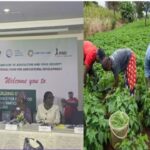
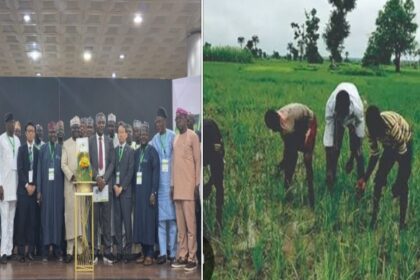
At a workshop organised in Abuja by CARE International in collaboration with Nigerian non-state actors, participants stressed the need for stronger coordination and policy alignment in implementing the Comprehensive Africa Agriculture Development Programme (CAADP).
The workshop focused on strengthening coordination and enhancing policy influence to ensure Nigeria effectively aligns with the goals of the African Union under the Kampala Declaration framework.
Policy and Advocacy Coordinator at CARE International, Nasser Mitchell Ngaro, explained that the engagement was designed to develop a roadmap for implementing the CAADP/Kampala Declaration in Nigeria.
According to him, the initiative is being implemented in partnership with COANSA, GIZ and ActionAid to strengthen advocacy and ensure government commitments translate into measurable outcomes for farmers and rural communities.
Ngaro identified access to land, finance and improved farm inputs as major priorities requiring urgent attention to improve productivity and strengthen food systems.
He also emphasised the need for policies that encourage fair trade and create an enabling environment for agricultural growth.
According to him, effective collaboration between government institutions and non-state actors remains essential to overcoming the challenges confronting farmers and achieving sustainable food security in Nigeria.
A member of the House of Representatives, John Onyeokoro, said the National Assembly is intensifying legislative efforts to tackle food insecurity and malnutrition through improved oversight, funding and coordinated policy action.
He revealed that the parliament had established Committees on Nutrition and Food Security across the 36 states under the National Legislative Network on Nutrition and Food Security, inaugurated on July 20, 2024.
The network, he said, is expected to drive a coordinated national response to food and nutrition challenges facing the country.
Chairperson of the Community of Agriculture Food System Non-State Actors, Rosemary F. Young, said stakeholders are working to bridge the gap between policy formulation and implementation by simplifying agricultural policies for farmers and promoting inclusiveness.
She explained that the coalition comprises researchers, farmers, agro-processors and private sector players working collaboratively to support agricultural development.
Young noted that previous phases of CAADP implementation were weakened by fragmented efforts and poor coordination among stakeholders.
However, she expressed optimism that the current phase under the Kampala Declaration would foster stronger collaboration, reduce duplication and maximise impact across the agricultural sector.
She nevertheless warned that certain government policies, including food importation measures aimed at lowering prices, could undermine local farmers by making their products less competitive in the market.
Also speaking, Chikwanji Chaufitamkawa from Malawi stressed the importance of addressing fragmentation among stakeholders across the continent.
She observed that although non-state actors have played significant roles in implementing food system initiatives, weak coordination has continued to limit their effectiveness.
According to her, the adoption of the Kampala Declaration by both the African Union and the Nigerian government offers an opportunity for a more unified and systems-based approach to agriculture, nutrition and trade.
She added that aligning national policies and encouraging collective action among governments, parliamentarians and non-state actors would be critical to achieving food security and self-reliance in Africa.
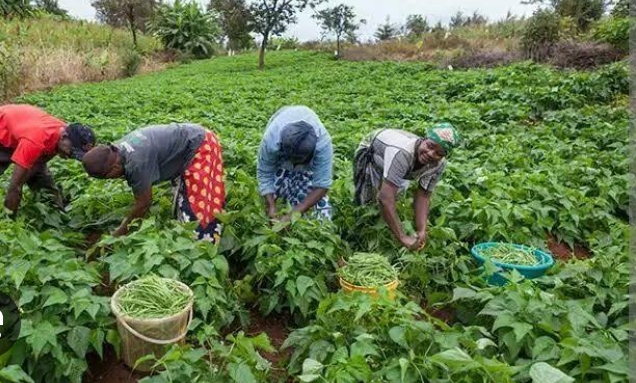
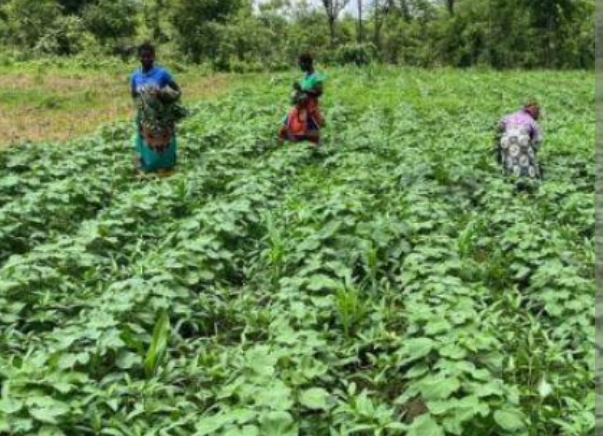
Coordinator of the Small-Scale Women Farmers Association in Nigeria, Olabisi Ogedengbe, highlighted some of the pressing challenges facing farmers, including limited access to land, high transportation costs and insecurity.
She urged government at all levels to provide accessible farmland and create a safer, more supportive environment for agricultural activities.
Ogedengbe maintained that improving access to land and guaranteeing security for farmers would significantly boost food production and strengthen national food security efforts.