



By Simeon Shodimu

A coordinated push to scale investment, deepen mechanisation, and strengthen agricultural value chains is gaining momentum as the Federal Government, Japan, and development partners move to reposition Nigeria’s agriculture sector for productivity-led growth.
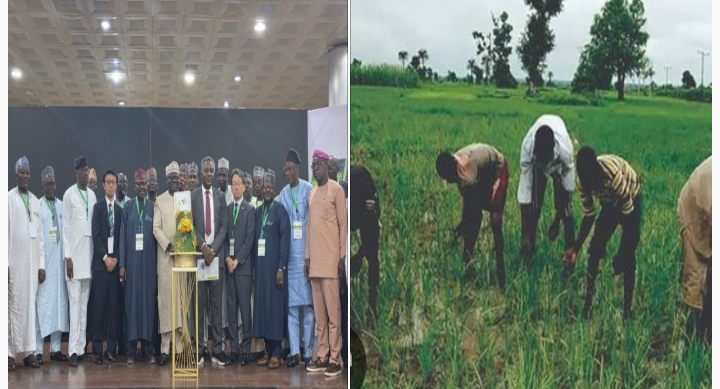
At the Sasakawa Africa Association, 2026 Annual Stakeholders’ Workshop, tagged ‘SAA@40’, held in Abuja, on Thursday, stakeholders outlined a transition from project-based interventions to system-wide transformation, with a sharp focus on finance, technology deployment, and market integration.
Shuichi Suzuki, president, Sasakawa Africa Association, set the tone for the next phase of intervention, declaring that scale must now be matched with measurable outcomes and sustainability.
“Forty years is a testament to resilience, relevance, and results… while our ambition has evolved, our mission remains. Working with farmers, we have transformed lives, strengthened communities, and improved systems” he said.
Suzuki stressed that long-term partnerships and adaptability have been central to SAA’s growth.
“Our journey has taught us that nothing replaces long-term partnerships and the ability to adapt to global crises from COVID-19 to climate change. This trust has enabled us to scale significantly.”
He pointed to expanding impact across geographies. “In Nigeria, our programmes are now being integrated into state budgets and we are empowering hundreds of thousands of farmers through development finance processes.”
However, he cautioned that the next phase requires a shift in strategy. “It is not just about how many people we reach, but how well we serve. Our focus is shifting toward the quality of outcomes, the sustainability of innovation, and long-term systemic change.”
On execution, Suzuki emphasized data and partnerships. “By investing in monitoring and evaluation, we use data to define our impact and ensure the best result. No organization can scale impact alone. ”he added.
He called for deeper alignment across stakeholders. “We call for deeper strategic collaboration, public-private partnerships and global alignment are vital. We must invest strategically, partner for scale, and advocate for innovative policies.”
In his welcome remarks, Godwin Atser, country director of Sasakawa Africa Association Nigeria framed the urgency, pointing to a persistent mismatch between domestic production and consumption.
He said “In spite of efforts by the government to transform agriculture, Nigeria spends $10 billion on food imports… and the truth is that our country’s production capacity is behind demand.”
Atser linked the gap to weak extension systems and limited technology penetration. “There is the need to take appropriate technologies to farmers through effective extension and advisory services.”
He added that SAA’s annual themes have evolved in response to sector realities. “Each theme reflects current and emerging challenges… from climate resilience to decarbonization and digital extension, helping us situate our interventions and align strategy.”
On the milestone, he said: “While we take pride in the progress made over the years, we are equally mindful of climate variability, population pressures, and shifting economic realities.”
Meanwhile presenting the ministerial remarks, Aliyu Sabi Abdullahi minister of state for agriculture and food security, represented by Marcus Olaniyi Ogunbiyi permanent secretary, said agriculture remains central to Nigeria’s economic diversification and employment strategy.
He said“Agriculture remains central to our economic diversification agenda, food security aspirations, and job creation efforts particularly for our teeming youth population.”
The government described SAA as a critical partner in driving measurable impact.“The Sasakawa Africa Association has remained a steadfast partner… improving productivity, incomes, and livelihoods of smallholder farmers across the country.”
Highlighting outcomes, he added “Its interventions in regenerative agriculture, nutrition-sensitive agriculture, and market-oriented agriculture have delivered measurable and impactful results.”
On policy and programme execution, the ministry pointed to soil health reforms.“The development of the Soil Health Card and Nigerian Soil Information System, integration into the ECOWAS Regional Fertilizer Hub, and provision of modern laboratory equipment across 12 states underscore the impact of coordinated action.”
He linked reforms to investment inflows “These efforts are yielding positive outcomes attracting both local and international investments into Nigeria’s agricultural value chains.”
However, he acknowledged persistent risks. “Climate change, soil degradation, post-harvest losses, and limited access to finance require even stronger collaboration, innovation, and commitment from all stakeholders.”
Also speaking, Suzuki Hideo, ambassador of Japan to Nigeria reinforced the case for structural upgrades across Nigeria’s agricultural system. “Nigeria’s agriculture is underpinned by millions of smallholder farmers… the modernization and improvement of agricultural productivity are the foundation of Nigeria’s sustainable economic development.” he said
He highlighted the country’s latent potential. “Nigeria has vast agricultural land and fertile soil covering about 76.6 percent of its territory… the sector employs about 34 percent of the labour force and contributes around 25 percent to GDP.”
On priorities, he added: “It is crucial to advance mechanization, reduce post-harvest losses, and strengthen links to markets.”Japan, he said, will continue deploying technology and expertise.
“My government is proud that the Sasakawa Africa Association continues to work hand in hand with farmers in Nigeria and looks forward to further agricultural development through Japanese technology.”
Presenting the keynote address, Ishigame Keiji, chief country, representative of the Japan International Cooperation Agency said productivity constraints remain deeply structural.