




“Fix food first and fast or forget it”

By: Lanre Shodimu
Those words, attributed to Indian independence leader Mahatma Gandhi during a period of severe food shortages in the Indian subcontinent, remain relevant today. They serve as a reminder that no nation can achieve sustainable development without first addressing the basic need of feeding its people.
Nigeria’s current food security challenges have renewed concerns about the country’s ability to provide affordable food for its growing population. Rising inflation, insecurity in farming communities, climate-related disruptions and economic pressures have combined to push food prices beyond the reach of many households.

Ironically, this was not always the case.
In the years following independence, Nigeria was largely self-sufficient in food production and even exported agricultural products. At a time when educational opportunities were limited and the number of university graduates was relatively small, farming remained the backbone of the economy. Today, despite producing thousands of graduates annually and possessing greater technological capabilities, the country increasingly relies on food imports to bridge supply gaps.
A useful comparison can be drawn with India. Once regarded as a food-deficit nation, India transformed its agricultural sector through investments in research, technology, irrigation and farmer support programmes. The result was a dramatic increase in productivity that turned the country into one of the world’s leading food producers and exporters.
Food security experts frequently emphasize that food is far more than a commodity. It is tied directly to national security, employment, economic growth and social stability. Simply put, no society can function effectively when a large proportion of its population struggles to eat.
One area receiving increasing attention globally is urban agriculture. Decades ago, the idea of growing food in cities appeared impractical. However, population growth and urban expansion have made innovative farming methods increasingly necessary.
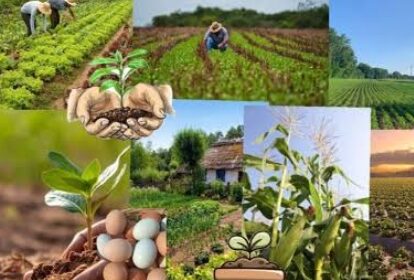
Across the world today, urban and suburban farming is helping supplement food supplies. Vegetables, fruits and herbs are being grown in backyards, rooftops, balconies and community gardens. Advances in container farming, hydroponics and vertical agriculture have enabled food production even in densely populated environments where conventional farmland is scarce.
For Nigeria, urban farming presents a significant opportunity.
Many homes, schools, institutions and government facilities possess unused spaces that could support small-scale food production. Tomatoes, peppers, vegetables, cucumbers and other crops can be cultivated with relatively modest investments. Poultry and small livestock production can also contribute to household nutrition and income.
Yet cultural attitudes remain a challenge.
For many urban residents, farming is still viewed as an occupation reserved for rural communities. This perception persists despite growing evidence that household food production can reduce costs, improve nutrition and strengthen resilience during periods of economic hardship.
The consequences of maintaining such attitudes are becoming increasingly evident. In many parts of the country, insecurity has disrupted agricultural activities. Thousands of farmers have been displaced from their lands, reducing food supply and contributing to higher prices. Under such circumstances, reliance solely on large-scale rural production may no longer be sufficient.
Urban agriculture should not be viewed as a replacement for commercial farming. Rather, it should serve as a complementary strategy that enhances food availability while encouraging self-reliance among households and communities.
Government also has a critical role to play. Beyond implementing agricultural policies and supporting rural farmers, authorities can encourage urban agriculture through public awareness campaigns, training programmes, access to seedlings and inputs, and demonstration projects in schools and public institutions.
Local governments can allocate community spaces for food production, while state governments can incorporate urban agriculture into broader food security plans. Partnerships with agricultural extension services, universities and private sector organizations could further accelerate adoption.
The food challenge confronting Nigeria requires action on multiple fronts. Increasing rural production, improving security, strengthening supply chains and investing in agricultural innovation remain essential. However, households and communities must also recognize that food security begins at the local level.
As food prices continue to rise, the message becomes increasingly clear: producing even a portion of what we consume may no longer be a lifestyle choice but an economic necessity.
For a nation seeking lasting solutions to hunger, the journey may begin not only on vast farmlands but also in backyards, rooftops and balconies across its cities.