
By: Simeon Shodimu

As Nigeria battles food insecurity, unemployment, and economic diversification challenges, experts are urging young people to rethink agriculture beyond the narrow perception of subsistence farming. Across the sector, opportunities are rapidly expanding in processing, logistics, agritech, marketing, finance, and value-added production — areas many stakeholders say hold the real future of agriculture.

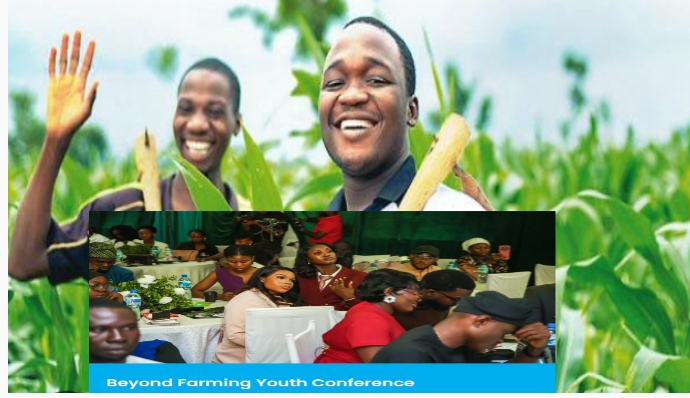
This was the focus of the “Beyond Farming” conference held in Lagos, where industry experts, policymakers, and development advocates challenged youths to embrace the wider agricultural value chain rather than limiting their ambitions to conventional farming alone.
Convener of the conference, Chy Nwakanma, said agriculture has for too long been misunderstood as merely cultivating crops or rearing animals, whereas the sector operates as a vast ecosystem with multiple entry points for innovation and enterprise.
According to her, many young Nigerians are interested in agriculture but often lack direction on where they fit into the industry. She noted that while youths possess the curiosity and willingness to participate, they frequently struggle with questions surrounding access, relevance, and practical pathways into the sector.

Nwakanma explained that the conference was designed to bridge that gap by exposing participants to real opportunities across the agricultural value chain and moving conversations from inspiration to practical engagement.
In her keynote address, the Lagos State Commissioner for Agriculture and Food Systems, Abisola Olusanya, said modern agriculture has evolved far beyond manual cultivation.
Represented by Gboyega Idris of the ministry’s veterinary department, the commissioner stated that agriculture in 2026 is now driven by technology, logistics, finance, innovation, climate resilience, and food enterprise.
She pointed to initiatives by the Lagos State Government aimed at modernising food systems, including the Lagos Central Food Systems and Logistics Hub, described as one of the largest food aggregation and logistics projects in sub-Saharan Africa. According to her, the initiative is expected to reduce post-harvest losses, improve food quality, and create stronger links between producers, processors, and consumers.


Olusanya also highlighted youth-focused programmes such as the Lagos Agricultural Programme, which offers practical training, internship opportunities, and enterprise support for young Nigerians seeking careers in agribusiness.
She stressed that the future of agriculture may not necessarily involve carrying hoes to farms, noting that tomorrow’s agricultural entrepreneurs could be software developers building farm management systems, innovators creating AI-powered production tools, or digital entrepreneurs connecting farmers to consumers through online marketplaces.
Also speaking at the conference, the Minister of Livestock Development, Idi Maiha, underscored the importance of youth participation in transforming Nigeria’s food systems and livestock economy.
Represented by Mariat Soleye of the Federal Ministry of Livestock Development, the minister described the conference as a movement aimed at repositioning agriculture and livestock development with young Nigerians at its centre.
Maiha said the Federal Government’s Renewed Hope Agenda prioritises food security, job creation, and economic diversification, adding that agriculture and livestock development remain critical to achieving those objectives.
He noted that the livestock value chain alone offers enormous opportunities for youths in areas such as processing, traceability systems, exports, animal health technology, feed production, and agribusiness services.
The minister further revealed that ongoing policy reforms and partnerships are being designed to support youth-led agribusinesses through improved access to land, finance, technology, and markets.

According to him, technology and data deployment are already improving livestock productivity and traceability, while value-added processing is opening new export opportunities within the sector.
Maiha encouraged young Nigerians to take advantage of the emerging opportunities, insisting that the future transformation of the agricultural sector would largely depend on the creativity, resilience, and entrepreneurial drive of the youth population.
For many participants at the conference, the message was clear: agriculture is no longer just about farming — it is increasingly becoming a technology-driven business ecosystem capable of creating jobs, wealth, innovation, and sustainable economic growth for a new generation of Nigerians.