




By: Jide Akinseye

The era of easy money for agri-food start-ups appears to be fading. After more than a decade of strong investor interest in food systems innovation, agricultural entrepreneurs across Africa and the world are encountering a far more demanding fundraising environment as financiers adopt a cautious approach to new investments.
The shift reflects a combination of factors, including rising global interest rates, economic uncertainty, market corrections and the fallout from several high-profile business failures that have prompted investors to reassess risk. While agriculture and food technology remain attractive sectors, investors are no longer willing to back ambitious ideas without clear evidence of commercial viability and sustainable growth.
Recent findings from the Financing Agri-SMEs in Africa initiative illustrate both the opportunities and challenges facing the sector. The study, which examined 175 Africa-focused agricultural SME funds, found that investor interest remains substantial. A total of 117 funds are currently seeking capital, with combined fundraising targets approaching $6 billion.

Yet beneath those headline figures lies a more sobering reality. Nearly $4.6 billion of the targeted funding has not yet been secured, underscoring the persistent financing gap confronting agricultural enterprises across the continent. For many start-ups and growing agribusinesses, access to capital remains one of the greatest barriers to expansion.
Researchers estimate that the market could eventually settle between $3.2 billion and $4.9 billion, depending largely on the availability of catalytic funding capable of attracting additional private-sector investors. Such funding, often provided by development finance institutions and impact investors, plays a crucial role in reducing risks and encouraging commercial capital to enter agricultural markets.
Despite fundraising challenges, the report points to encouraging structural changes within Africa’s investment ecosystem. Fund management is becoming increasingly localised, with African professionals taking greater ownership of investment decisions. Two-thirds of emerging fund managers are now based on the continent, a significant increase from just 21 per cent among previous generations of funds.
Similarly, the proportion of fund managers of African nationality has risen from 26 per cent to 44 per cent. Women’s participation is also growing. Women-led funds now account for nearly one-third of funds currently raising capital, a remarkable increase from only nine per cent among earlier fully-funded investment vehicles.
These developments suggest a maturing investment landscape that is gradually becoming more representative of the markets it seeks to serve.
However, major obstacles continue to limit the flow of capital to local agribusinesses. One of the most significant challenges is currency mismatch. The report found that 86 per cent of fundraising funds intend to invest primarily in hard currencies, while 94 per cent are denominated in either US dollars or euros.
Only a small fraction of investors plan to provide financing in local currencies. This creates difficulties for agricultural businesses whose revenues are earned in domestic currencies but whose obligations may be tied to foreign exchange rates. For Nigerian agri-food enterprises and many others across Africa, currency volatility can significantly increase borrowing costs and financial risk.
Another notable trend is the growing preference for smaller investment sizes. Nearly 60 per cent of targeted capital is being directed toward investments below $2 million. This signals a renewed focus on early-stage enterprises and smaller businesses that have traditionally struggled to attract mainstream investment.
Industry experts argue that strategic use of blended finance could help unlock much larger capital flows. According to the study, approximately $1.15 billion in anchor investments could potentially mobilise the wider $6 billion fundraising pipeline through leverage mechanisms and risk-sharing structures.
“Our work is not just about deploying more capital; it is about making capital work better,” the report noted, highlighting the growing emphasis on efficiency and impact rather than simply increasing investment volumes.
The more cautious investment climate is not unique to Africa. Discussions at the recent F&A NEXT Summit in Wageningen, Netherlands, revealed similar concerns among entrepreneurs and investors worldwide. Participants acknowledged that while funding remains available, the standards for securing investment have become considerably higher.
Some industry leaders contend that the current slowdown represents a natural correction rather than a crisis. Following years of rapid growth and aggressive valuations, investors are now prioritising disciplined business models and sustainable returns.
Global investment data appears to support that interpretation. According to AgFunder’s 2026 Global AgriFoodTech Investment Report, worldwide agrifood technology funding reached $16.2 billion in 2025, remaining largely unchanged from the previous year. However, the composition of investment is changing significantly.
Capital is increasingly flowing toward upstream technologies that improve agricultural production and farm-level efficiency. Investments in these areas rose seven per cent to $9 billion in 2025. In contrast, sectors that once dominated investor attention, particularly grocery delivery platforms, have experienced a sharp decline. The largest grocery delivery deal completed in 2025 was reportedly 80 per cent smaller than the record transactions seen in 2021.
Debt financing is also assuming a larger role in the sector. It accounted for 18.2 per cent of total agrifood technology funding in 2025, the highest share recorded in a decade. Analysts attribute this trend to the growing maturity of many agritech companies, which now generate predictable revenues capable of supporting debt-based financing structures.
At the same time, investors are increasingly attracted to science-driven innovations. Technologies such as artificial intelligence, biotechnology and gene editing now represent between 21 and 32 per cent of global agrifood investments, signalling a shift toward solutions with the potential to reshape agricultural productivity and sustainability.
The financing landscape is evolving in other ways as well. Digital platforms are creating new pathways for small and medium-sized enterprises to access capital. According to the World Bank Group, embedded finance models integrated into e-commerce and payment systems are increasingly enabling lenders to assess businesses using transaction histories, supply-chain records and digital footprints rather than relying solely on traditional collateral requirements.
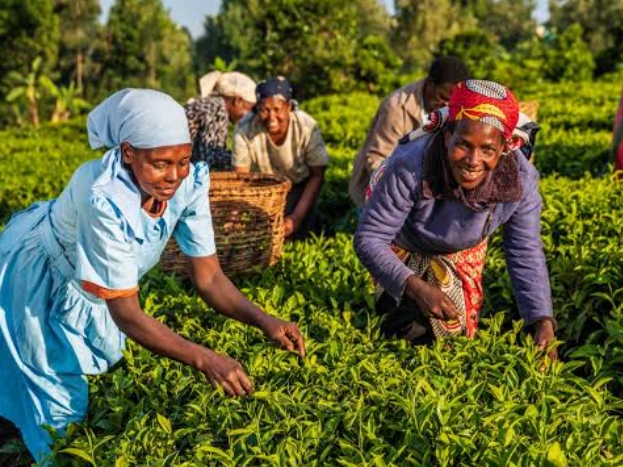
For Africa’s agri-food entrepreneurs, the message is clear: funding opportunities remain, but the rules have changed. Investors are demanding stronger governance, clearer business strategies and measurable impact. In a market where capital is no longer abundant, only the most resilient and well-prepared ventures are likely to secure the financing needed to scale.
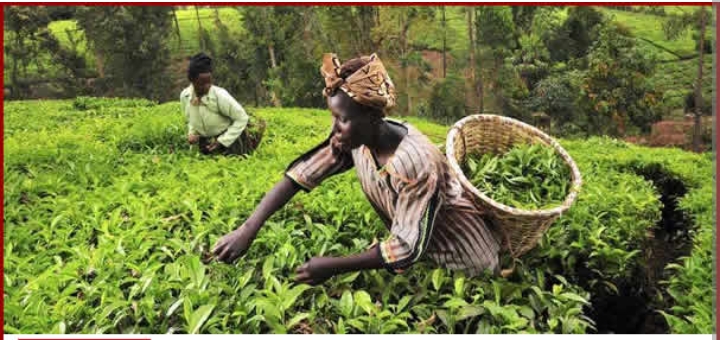
The challenge for start-ups is no longer simply finding investors. It is convincing increasingly selective financiers that they can thrive in an uncertain and rapidly changing agricultural economy.