




By: Jide Akinseye

As food security concerns deepen across Africa, Nigeria is intensifying efforts to protect its crops from devastating plant diseases through stronger scientific collaboration, improved surveillance systems, and policy-driven interventions aimed at safeguarding agricultural productivity and national food security.

The Federal Government has reaffirmed its commitment to strengthening Nigeria’s plant health management system through a strategic partnership with the Central and West African Virus Epidemiology Project (WAVE), as part of broader efforts to secure the nation’s food supply and improve agricultural resilience.
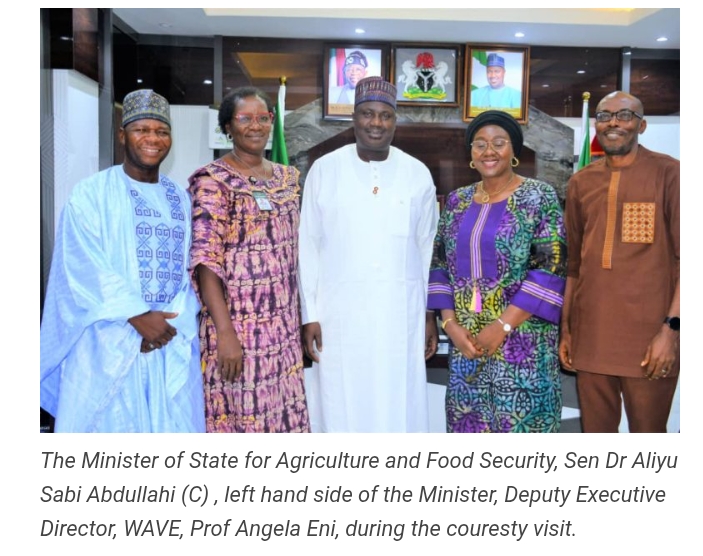
The renewed commitment was disclosed during a familiarisation visit by a delegation from WAVE, led by its Deputy Executive Director, Angela Obiageli Eni, to the Federal Ministry of Agriculture and Food Security in Abuja.
Speaking during the meeting, the Minister of State for Agriculture and Food Security, Aliyu Sabi Abdullahi, described the engagement as both timely and strategic, stressing the urgent need to confront the growing threat posed by emerging and transboundary plant diseases to Nigeria’s agricultural sector.
According to the Minister, strengthening plant disease surveillance and rapid response mechanisms has become critical to sustaining agricultural productivity and ensuring long-term food and nutrition security for the country.
He noted that the Ministry is prepared to deepen collaboration with WAVE and other stakeholders to revalidate key agricultural and plant health policy documents and align them with international governance frameworks for effective implementation.

Senator Abdullahi further advised that the Department of Plant Health and Pest Control and WAVE formalise their partnership through a Memorandum of Understanding (MoU), which he said would institutionalise cooperation and enhance coordination in combating crop diseases.
He emphasized the importance of national ownership and inclusiveness in policy implementation, noting that relevant frameworks and documents must undergo broad national validation to align with Nigeria’s agricultural priorities and development agenda.
The Minister also underscored the need for stronger collaboration among researchers, scientists, economists, and policymakers to drive evidence-based interventions capable of addressing evolving agricultural challenges.
He explained that the current administration had repositioned the Ministry with a renewed mandate focused on food security and increased agricultural productivity, reflecting government’s determination to tackle hunger and strengthen the nation’s food systems.
In her remarks, Prof. Eni highlighted WAVE’s role in strengthening early warning systems and preparedness for the management of transboundary plant pathogens across West and Central Africa.
She revealed that the proposed collaboration would leverage WAVE’s existing nationwide cassava viral disease epidemiological database to support Nigeria’s plant health surveillance architecture and enhance food security planning.


According to her, the initiative is expected to improve data-driven decision-making, disease monitoring, and rapid response capabilities in the agricultural sector.
Earlier in her welcome address, the Director of the Department of Plant Health and Pest Control, Mrs. Grace Iwendi, stated that the engagement was aimed at deepening institutional collaboration toward the establishment of a national plant disease monitoring and rapid response database for Nigeria.
She commended the leadership of the Ministry for supporting the department through policies and partnerships targeted at improving plant health management, strengthening disease surveillance systems, and boosting agricultural productivity nationwide.
Agricultural experts believe that improved plant health systems remain essential to Nigeria’s quest for food sufficiency, especially as climate change, pest infestations, and viral crop diseases continue to threaten farmers’ yields and rural livelihoods across the country.