



By Simeon Shodimu

As Africa intensifies efforts to achieve food security, industrial self-reliance, and regional economic integration, billionaire industrialist Aliko.
Dangote is once again positioning himself at the centre of the continent’s transformation agenda. From fertiliser production in Ethiopia to refinery expansion in Nigeria, Dangote’s latest multibillion-dollar investments are redefining Africa’s industrial ambitions and strengthening the push for value addition across key sectors.
Aliko Dangote and Ethiopian Prime Minister Abiy Ahmed during an inspection visit to the proposed fertiliser plant site in Ethiopia’s Somali region, where the investment has now risen to over $4 billion amid plans for major infrastructure expansion.


Africa’s richest industrialist, Aliko Dangote, has significantly expanded his planned fertiliser investment in Ethiopia, increasing the project value from an initial $2.5 billion to more than $4 billion in what is shaping up to become one of Africa’s most ambitious industrial agriculture projects.
The development was disclosed during Dangote’s recent visit to Ethiopia, where he met with Ethiopian Prime Minister Abiy Ahmed and conducted an inspection tour of the proposed fertiliser plant site located in the country’s eastern Somali region.

Originally unveiled last year as a large-scale fertiliser production initiative, the project has now evolved into a broader industrial ecosystem designed to strengthen Ethiopia’s agricultural value chain, energy capacity, and manufacturing base.
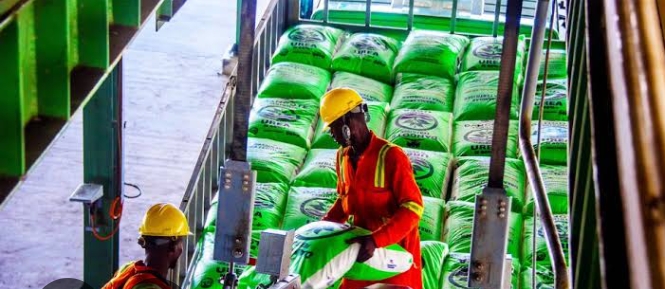
According to statements released after the visit, the expanded investment scope will now include a 110-kilometre gas pipeline, a 120-megawatt power plant, a polypropylene packaging facility, and a two-million-tonne NPK blending plant — all intended to support long-term fertiliser production and supply efficiency.
The fertiliser complex itself is projected to produce approximately three million metric tonnes of urea annually, positioning Ethiopia as a major fertiliser producer within Africa and potentially reducing the continent’s dependence on imported agricultural inputs.
Prime Minister Abiy Ahmed reportedly described the project as a strategic national investment capable of transforming Ethiopia’s agricultural sector, improving food security, and generating substantial economic opportunities for farmers and local communities.
He also expressed optimism about the pace of construction and the broader economic impact the facility could deliver once operational, particularly in job creation and industrial growth.
Strategic Partnership and Long-Term Energy Security
The Ethiopia fertiliser project emerged from a multibillion-dollar agreement signed in August 2025 between Dangote Group and the Ethiopian government. Under the arrangement, Dangote Group holds a 60 per cent controlling stake in the venture, while the remaining 40 per cent belongs to the state-owned Ethiopian Investment Holdings.
To secure uninterrupted operations for the fertiliser plant, Dangote Industries Limited earlier this year signed a $4.2 billion natural gas supply agreement with GCL Group. The 25-year supply deal is expected to provide the long-term energy stability required to sustain continuous production at the facility once completed.
Industry analysts view the agreement as a critical component of the project, given the central role of natural gas in fertiliser manufacturing and the importance of reliable energy infrastructure in large-scale industrial operations.
Dangote’s Wider Vision for African Industrialisation
The Ethiopia fertiliser project is the latest addition to Dangote’s growing industrial footprint across Africa, reflecting his long-standing commitment to value addition, manufacturing, and regional economic integration.
Beyond fertiliser production, Dangote is simultaneously pursuing an aggressive expansion of his refining operations in Nigeria. His refinery complex on the outskirts of Lagos — currently recognised as Africa’s largest refinery — is expected to undergo a major scale-up that could increase processing capacity from about 650,000 barrels per day to nearly 1.4 million barrels daily.
Such an expansion would potentially elevate the facility into the ranks of the world’s largest refining complexes and significantly alter Africa’s energy landscape by reducing dependence on imported petroleum products.
The refinery project has also drawn attention from regional leaders, including Ugandan President Yoweri Museveni, who recently reaffirmed Uganda’s commitment to value addition and regional industrial cooperation.
Speaking on the importance of refining capacity within Africa, Museveni stressed that exporting raw materials without processing limits economic growth and weakens regional competitiveness. He noted that Uganda deliberately delayed crude oil production while prioritising the establishment of refining infrastructure.
According to him, Africa’s future prosperity depends on stronger regional collaboration and industrial integration rather than fragmented national markets.
Reshaping Africa’s Economic Future
Dangote’s simultaneous investments in fertiliser production, refining, and industrial infrastructure underscore a broader continental shift toward economic self-sufficiency and large-scale manufacturing.
At a time when many African economies continue to grapple with food insecurity, energy challenges, and dependence on imports, projects of this magnitude are increasingly being viewed as catalysts for long-term industrial transformation.
For Ethiopia, the fertiliser project could become a cornerstone of agricultural modernisation. For Nigeria, the refinery expansion promises greater energy independence. And for Africa as a whole, Dangote’s growing industrial empire is emerging as a powerful symbol of the continent’s drive toward self-reliance, regional integration, and sustainable economic growth.