




By: Jide Akinseye

Nigeria’s livestock sector is receiving renewed attention as a $500 million World Bank-supported intervention enters its midpoint review stage, with stakeholders highlighting measurable gains in productivity, farmer outreach, and institutional strengthening. The programme, implemented under the Livestock Productivity and Resilience Support Project (L-PRES), is increasingly being positioned as a key driver of food security, rural transformation, and economic diversification under the Federal Government’s Renewed Hope Agenda.
Feature Story
Nigeria’s ambitious drive to modernise its livestock industry is recording significant milestones as stakeholders assess the performance of a six-year, $500 million World Bank-backed intervention aimed at transforming key value chains across the sector.
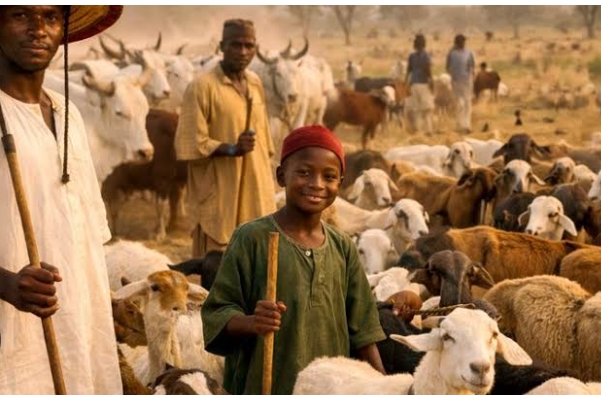
At the Mid-Term Review (MTR) of the Livestock Productivity and Resilience Support Project (L-PRES), the National Coordinator, Dr. Abubakar Sanusi, said the initiative has moved beyond its initial projections, reaching over 1.43 million beneficiaries nationwide—surpassing its original target of 1.43 million. The reach, he noted, includes 546,000 women and 903,000 men, reflecting the programme’s broad-based impact across rural communities.
The project, supported by the World Bank, is designed to strengthen livestock productivity across beef, dairy, poultry, sheep, goat, and feed systems, while also improving resilience and commercialisation within Nigeria’s livestock economy.
Dr. Sanusi explained that interventions under the programme span vaccination campaigns, pasture development, infrastructure upgrades, advisory services, input distribution, and capacity building for farmers. According to him, these efforts are already translating into measurable improvements in productivity indicators, including increased milk yield per cow—from 274.5 litres to 375.9 litres annually—as well as higher carcass weights in cattle, sheep, and goats.
He also revealed that 1,492 farmers have benefited from artificial insemination services, with more than 3,489 cattle already inseminated, while over 101,000 farmers have adopted improved livestock technologies introduced through the project.
Beyond production gains, the initiative is also strengthening human capacity within the sector. More than 6,184 personnel, including extension workers, veterinary officers, and artificial insemination technicians, have received specialised training to improve service delivery across the country.


The World Bank Task Team Leader, Dr. Menniviel Sene, urged implementing partners to accelerate delivery and ensure that outcomes translate into lasting benefits for livestock farmers and rural communities.
Stakeholders at the review meeting—including representatives of the Federal Ministry of Livestock Development, the Nigerian Institute of Animal Science, the Veterinary Council of Nigeria, and the Food and Agriculture Organization—reaffirmed their commitment to sustaining momentum as the project advances into its next phase.
Dr. Sanusi further emphasized that the livestock sector remains a strategic economic frontier capable of generating employment, improving nutrition, expanding exports, and strengthening rural livelihoods. He linked the project’s objectives to the broader agricultural transformation agenda of President Bola Ahmed Tinubu under the Renewed Hope framework.
As implementation progresses, stakeholders say the focus will shift toward consolidating gains, scaling innovations, and ensuring that livestock production becomes a modern, competitive, and commercially viable pillar of Nigeria’s economy.