




By: Lanre Shodimu

President Bola Ahmed Tinubu speaks during the High-Stakes Presidential Panel at the Africa CEO Forum 2026 in Kigali, where he highlighted mechanisation, infrastructure and storage systems as critical pillars for achieving Nigeria’s food sovereignty.

President Bola Ahmed Tinubu has emphasised that mechanisation, infrastructure development and strategic government intervention remain critical to achieving food sovereignty and sustainable agricultural growth in Nigeria.
Speaking during a high-stakes presidential panel at the Africa CEO Forum 2026 in Kigali, Tinubu said the Federal Government must continue to identify critical areas of need for farmers and provide targeted support to boost productivity and profitability across the agricultural sector.

The President noted that infrastructure remains one of the most important drivers of agricultural transformation, stressing that Nigeria must modernise its farming systems and move away from outdated manual methods.
According to him, agriculture can no longer be viewed as a burdensome occupation characterised by crude labour and low returns, adding that mechanisation is already reshaping the sector.
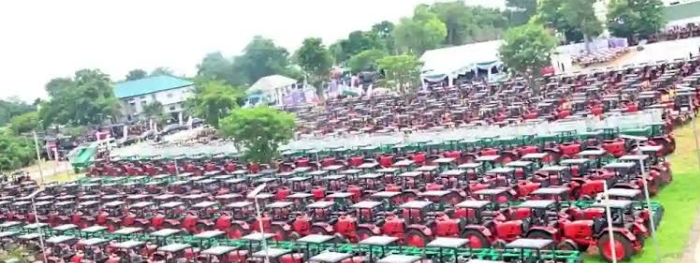
Tinubu disclosed that Nigeria currently has over 6,000 mechanisation zones aimed at improving farming efficiency and expanding food production nationwide.
He also highlighted the need for stronger institutional financing through agencies such as the Bank of Agriculture to ensure farmers have access to credit facilities, modern equipment and improved seedlings capable of increasing yields.

The President stressed the importance of preservation and storage infrastructure, calling for investments in reliable energy systems to support food storage and reduce post-harvest losses.
He said government must also create buyback arrangements to protect farmers whenever market prices become too low and unprofitable.
According to Tinubu, strategic storage systems and silos would help stabilise prices by preserving produce during periods of surplus and releasing them when market conditions improve.
He warned that subsistence farming alone could no longer sustain Nigeria’s growing population or deliver economic prosperity to farmers, insisting that productivity-driven agriculture must become the new national focus.
Highlighting the role of transportation infrastructure in agricultural development, Tinubu referenced the ongoing Sokoto-Badagry Super Highway project, describing it as a major economic corridor that would strengthen trade and connectivity across West Africa.
He explained that the project would link Nigeria with neighbouring countries, including the Republic of Benin and Ghana, thereby improving movement of goods and agricultural produce across the region.
The President further stated that local manufacturers, including major cement producers, were engaged in the road construction process as part of efforts to reduce dependence on imported materials.
According to him, the adoption of concrete road technology instead of imported bitumen would guarantee greater durability and long-term sustainability.
Tinubu maintained that sustained investments in mechanisation, infrastructure, storage facilities and farmer support programmes would significantly enhance Nigeria’s agricultural productivity and strengthen national food sovereignty.