




By Jide Akinseye

Mechanised farming and livestock reforms are increasingly seen as critical to Nigeria’s efforts to boost food production, reduce inflation and strengthen national food security amid growing economic and climate pressures.
As Nigeria battles rising food prices, declining farm productivity and persistent insecurity across key agricultural belts, experts say the country’s latest wave of agricultural reforms could either redefine the sector or become another missed opportunity. While government interventions—from duty-free food imports to mechanisation schemes and livestock reforms—have generated cautious optimism, stakeholders insist that only effective implementation, policy consistency and strong institutional coordination can deliver lasting food security for millions of Nigerians.

Its renewed push to reform the agricultural sector is drawing increasing attention from experts and stakeholders who believe the country stands at a critical turning point in its quest for food security and economic stability.
Despite vast arable land, a youthful population and enormous agro-economic potential, Africa’s most populous nation continues to struggle with rising food inflation, supply shortages and declining agricultural productivity. For millions of Nigerians, the burden of high food prices has become a daily reality, further deepening concerns over hunger and affordability.


Agriculture expert, Imole Okuntimo, believes the country’s latest policy interventions demonstrate growing recognition of the sector’s importance, but warns that implementation remains the biggest challenge confronting Nigeria’s food security ambitions.
According to him, successive governments have often introduced ambitious agricultural programmes that failed to achieve expected outcomes due to weak execution, inadequate funding and poor coordination among institutions.
He noted that Nigeria’s food crisis is being intensified by multiple pressures, including rapid population growth, climate variability, insecurity in farming communities and structural inefficiencies within the agricultural value chain.
These challenges, he explained, have combined to reduce food supply while driving up prices across markets nationwide.
In response, the government has introduced a mix of short-term and long-term measures aimed at stabilising the food system and encouraging domestic production.
One of the immediate interventions is the 150-day duty-free import window for essential food commodities, designed to increase supply and ease pressure on prices.
While acknowledging the temporary relief such a policy could provide for consumers, Okuntimo cautioned that prolonged reliance on imports could weaken local production capacity if not properly managed.
According to him, import waivers should serve only as emergency stabilisation measures rather than permanent substitutes for domestic agricultural growth.
He stressed that the long-term solution lies in improving local productivity, strengthening value chains and creating a more resilient agricultural system capable of meeting national demand.
Beyond crop production, attention is also turning toward reforms in the livestock sector, long considered one of the weakest links in Nigeria’s agricultural economy.
Okuntimo described the National Livestock Master Plan as a potentially transformative initiative capable of modernising the sector and addressing long-standing conflicts associated with open grazing.
He advocated a transition toward ranching systems, improved veterinary services and better feed supply networks to boost efficiency and increase meat and dairy production.
If properly implemented, the reforms could significantly reduce Nigeria’s dependence on imported dairy products while helping to ease tensions between farmers and herders that have disrupted agricultural activities in several regions.
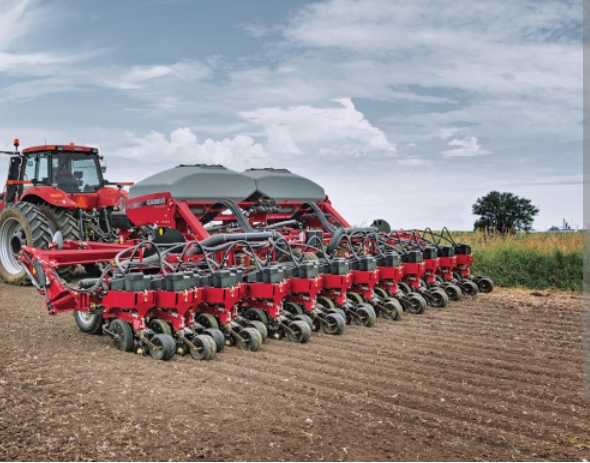
Another major area identified for urgent intervention is mechanisation.
For decades, many Nigerian smallholder farmers have relied heavily on crude tools and labour-intensive farming methods, limiting productivity and discouraging younger generations from entering agriculture.
Okuntimo noted that initiatives such as the lease-to-own agricultural equipment scheme could improve access to modern machinery for rural farmers and agribusiness operators.
According to him, expanding mechanisation would not only increase efficiency but also reduce post-harvest losses, improve yields and make agriculture more commercially attractive.
Stakeholders say this is especially important as Nigeria seeks to reposition agriculture as a viable source of employment and economic diversification amid declining oil revenues.
However, experts maintain that policy announcements alone will not solve the country’s agricultural challenges.
Okuntimo warned that many well-intentioned reforms have historically failed due to inconsistent implementation and lack of continuity.
He called for stronger monitoring and evaluation mechanisms, improved transparency and deeper collaboration between government agencies, private investors, development partners and farmers.
According to him, the success of ongoing reforms will ultimately depend on sustained political will and the ability of institutions to effectively translate policy objectives into measurable outcomes.
He further highlighted emerging opportunities in agro-processing, climate-smart agriculture, digital farming technologies and export-oriented production, noting that Nigeria possesses the resources to become a major agricultural powerhouse if reforms are properly managed.
For many observers, the current moment presents both a challenge and an opportunity.
With food inflation continuing to strain household incomes and insecurity threatening rural livelihoods, pressure is mounting on authorities to ensure that agricultural reforms move beyond policy documents into practical solutions capable of transforming lives.