




By Simeon Shodimu

Nigeria’s decision to restrict key agricultural imports and other goods from countries outside the Economic Community of West African States signals a major policy shift aimed at boosting regional trade and domestic production, while raising fresh concerns over supply gaps and food security.
The sweeping import restriction targeting agricultural items and other essential goods outside the Economic Community of West African States is set to redefine Nigeria’s food supply chain, placing local farmers at the center of a high-stakes push for self-sufficiency.
Nigeria’s latest import restriction policy targeting non-regional trade partners is about to reshape supply chains across agriculture and industry, with far-reaching implications for farmers, food prices, and national food security.
The Federal Government’s decision to ban the importation of 17 categories of goods from countries outside the Economic Community of West African States is sending ripples through Nigeria’s agricultural sector, placing farmers at the center of a major policy shift aimed at boosting regional trade and domestic production.
Effective April 1, the directive restricts imports of several agricultural items—now emerging as the core “news drivers” of the policy—including poultry (live, frozen or processed), pork, beef, bird eggs, vegetable oils, sugar, cocoa products, tomatoes, and non-alcoholic beverages. These products, which form a significant part of Nigeria’s food consumption basket, can now only be sourced within the ECOWAS bloc.
The policy also covers fertilisers, particularly NPK variants, which are critical inputs for farming. By limiting their importation to regional partners, the government is effectively tying agricultural productivity to the manufacturing capacity within West Africa.
Alongside these agricultural items are what policymakers classify as “other” goods—non-agricultural products such as cement, pharmaceuticals, soaps and detergents, packaging materials like cartons and glass bottles, steel products, and even ballpoint pens. While not directly linked to farming, these items play a supporting role in the broader agricultural value chain, particularly in processing, storage, and distribution.
At the heart of the policy is a strategic push to strengthen intra-African trade. Countries such as Ghana, Senegal, Côte d’Ivoire, and Benin are expected to benefit from increased market access, while non-ECOWAS exporters—including the United Kingdom and South Africa—face new barriers.
However, the move has reignited concerns over whether Nigeria and its regional partners can meet domestic demand, particularly for agricultural commodities. The poultry sector illustrates this gap starkly: with an annual demand estimated at 1.5 million metric tons, Nigeria produces less than 600,000 metric tons, leaving a deficit that imports have historically filled.
Before the ban, the United Kingdom accounted for about 47 percent of Nigeria’s poultry imports, while South Africa dominated meat and poultry supply with a 56 percent share. The sudden restriction of these sources raises the risk of supply shortages, price hikes, and increased pressure on local producers.
For Nigerian farmers, the policy presents a double-edged sword. On one hand, restricting imports of agricultural items such as poultry, beef, and vegetable oil could reduce foreign competition, potentially creating a more favorable market for local producers. Farmers may benefit from improved pricing power and increased demand for locally produced food.
On the other hand, the reality is more complex. Many farmers lack the capacity to scale production quickly due to persistent challenges—high feed costs, limited access to credit, poor infrastructure, and insecurity in farming regions. Without significant investment and support, the supply gap may widen rather than close.
Equally critical is the impact of restrictions on “other” goods. The ban on imported cartons, glass bottles, and steel products could increase the cost of packaging and logistics for agro-processors. Similarly, limitations on fertiliser imports could drive up input costs, reducing yields and productivity. These pressures ultimately cascade down to farmers, squeezing margins and discouraging expansion.
The pharmaceutical component of the ban further complicates the picture. Nigeria currently imports over 70 percent of its medicines from countries like India, China, and the United States. With no ECOWAS country matching the manufacturing scale of India in generic drug production, concerns are mounting about potential shortages and rising healthcare costs—factors that indirectly affect agricultural labour productivity and rural livelihoods.
Even in sectors like cement—where Germany, Egypt, and China dominate supply—the restriction may impact rural infrastructure development, including farm roads and storage facilities critical for agricultural efficiency.
Ultimately, the success of the import ban will depend on how quickly Nigeria and the ECOWAS region can ramp up production capacity across both agricultural items and supporting industries. Without coordinated investment, the policy risks triggering inflationary pressures, supply shortages, and deeper food insecurity.
For now, Nigeria’s farmers stand at a crossroads—positioned to benefit from reduced import competition, yet constrained by systemic challenges that could limit their ability to seize the opportunity.
Caption:
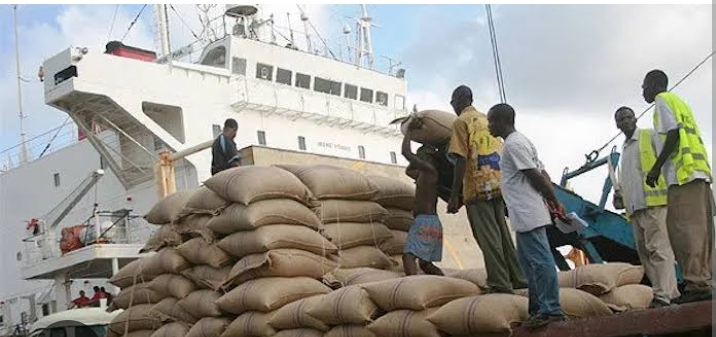
Nigeria’s import ban on key agricultural items shifts opportunity to local farmers but exposes deep production gaps that could threaten food security.