





By Lanre Shodimu

Fresh review from the International Monetary Fund (IMF) suggests that Nigeria’s economy is entering a more fragile phase, as global shocks, particularly from energy markets and supply chains, begin to erode earlier gains.
This however has made the IMF revise Nigeria’s growth forecast downward by 0.3 percentage points to 4.1 per cent for 2026, reflecting what it describes as a “balance of pressures” shaping the economy.
Central to this adjustment is the growing strain on the country’s non-oil sectors, which remain vulnerable to imported inflation and structural bottlenecks.

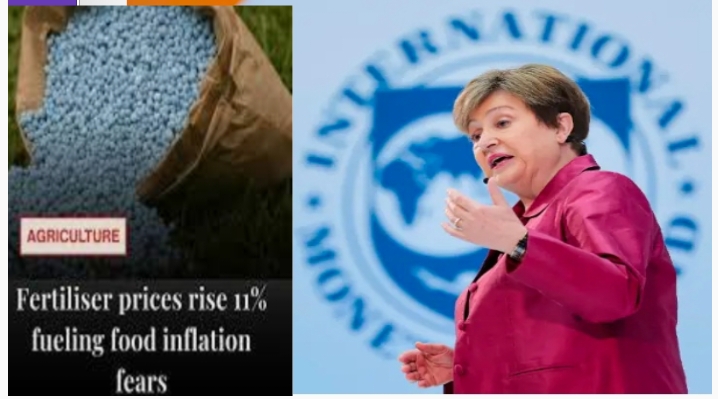
Higher global prices for fuel and fertiliser are emerging as key transmission channels of the crisis.
IMF stated that Nigeria growth is affected by critical inputs, fuel for transport and industry and fertiliser for agriculture, a sector that employs a large share of the population.
It added that while higher crude oil prices offer some support, they are increasingly being offset by rising domestic costs and weakening non-oil activity.
This is according to the World Economic Outlook report released recently by IMF Chief Economist Pierre-Olivier Gourinchas.
The Fund added that Nigeria’s economic outlook is tightening again, with new projections pointing to slower growth, rising inflation risks and mounting external pressures that could test policy resilience over the next two years.
The report further stated that as costs rise, productivity risks falling, with ripple effects across food supply, consumer prices and rural incomes.
It added that Shipping costs have also surged, compounding the burden on import-dependent industries.
Businesses reliant on imported raw materials are facing tighter margins, while consumers are already contending with elevated living costs.
Despite being a major oil producer, Nigeria’s exposure to global energy volatility remains pronounced.
Persistent inefficiencies in refining and distribution mean the country continues to import a significant share of its refined petroleum needs, leaving it vulnerable to global price swings.
As a result, higher oil prices do not translate cleanly into domestic economic stability.
It also noted that while oil revenues could provide some fiscal cushion, they are unlikely to fully offset the drag from weaker non-oil growth. This dynamic reinforces a long-standing challenge of Nigeria’s dependence on crude exports alongside a still-developing domestic production base.
Across Sub-Saharan Africa, price pressures are expected to rise sharply, and Nigeria is no exception.
The IMF warned that food and energy costs could push inflation higher, particularly if supply disruptions persist or currency pressures intensify.
In this context, monetary policy is expected to carry much of the burden.
IMF however suggested that the Central Bank of Nigeria to maintain a tight, data-driven stance, carefully managing interest rates and liquidity to anchor inflation expectations. Exchange rate stability will also be critical, given its direct impact on import costs and investor confidence.
It noted that tighter monetary conditions come with risks. Elevated borrowing costs could dampen private sector investment and slow credit growth, potentially weakening already subdued economic momentum. Policymakers are therefore faced with a difficult balancing act: controlling inflation without choking off recovery.
Beyond domestic challenges, Nigeria is also contending with a less supportive external environment. Global growth is slowing, non-oil commodity prices are softening, and financial conditions are tightening. These trends reduce export earnings outside oil and make external financing more expensive.
At the same time, declining foreign aid is adding to fiscal pressure across the region. Cuts in bilateral support, estimated between 16 and 20 per cent, are expected to persist, limiting the ability of governments to cushion vulnerable populations or invest in growth-enhancing infrastructure.
For Nigeria, where fiscal space is already constrained, this raises the stakes for revenue mobilisation and spending efficiency. The need to broaden the tax base, reduce leakages, and prioritise high-impact investments is becoming more urgent.
Yet, the current challenges also present a strategic inflection point.
Economists argue that Nigeria’s repeated exposure to global shocks underscores the urgency of accelerating structural reforms, particularly in energy, agriculture, and manufacturing. Expanding domestic refining capacity, boosting food production, and strengthening industrial output could help reduce dependence on imports and improve economic resilience.
Regional integration is another critical lever. Deeper trade within Sub-Saharan Africa could provide alternative markets and reduce exposure to global volatility, especially as traditional trade partners face their own economic slowdowns.
For now, however, the immediate outlook remains cautious.
The IMF’s projections suggest that while Nigeria is not heading into a crisis, it is entering a period of constrained growth and elevated risks.
Recovery is expected to resume gradually by 2027, but much will depend on policy discipline, global conditions and the pace of structural adjustment.
In the near term, Nigeria’s economic trajectory will likely be defined by how effectively it navigates inflation pressures, stabilises its currency, and shields its most vulnerable sectors from external shocks.
The message is stark: the buffers are thin, the pressures are rising, and the window for decisive action is narrowing.