




By Simeon Shodimu

As Nigeria grapples with persistent economic vulnerabilities and supply-side constraints, the debate over the most effective pathway to sustainable growth and self-reliance has intensified. At the heart of this discourse is a growing concern among policy experts and private sector advocates that excessive reliance on imports could undermine the country’s long-term industrialisation goals and food security ambitions.
The Centre for the Promotion of Private Enterprise (CPPE), in its reaction to a recent policy proposition by the World Bank outlined in its Nigerian Development Update, cautioned against recommendations advocating increased importation of petroleum products and food as a solution to Nigeria’s supply-side challenges. The centre warned that such a policy direction could have far-reaching negative consequences for the nation’s economy.
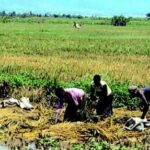
In a statement titled “CPPE Warns Against World Bank Advocacy For Increased Fuel And Food Imports,” signed by its Chief Executive Officer, Muda Yusuf, the organisation noted that a surge in imports could depress farmgate prices, discourage investment in agriculture, erode rural incomes and livelihoods, and ultimately weaken the resilience of Nigeria’s food system.
Yusuf further observed that many advanced economies are moving away from unrestrained trade liberalisation towards strategic protectionism. According to him, governments across these countries are increasingly prioritising domestic production capacity, supply chain resilience, local content development, and economic security.
He described it as paradoxical and concerning that developing economies like Nigeria are being encouraged to adopt policy prescriptions that advanced economies are gradually abandoning. He pointed out that recent global disruptions—including the COVID-19 pandemic and ongoing geopolitical tensions—have prompted major economies to safeguard critical industries through subsidies, tariffs, and localisation policies.
“In contrast,” he argued, “recommending import liberalisation for countries still grappling with structural deficits and fragile industrial bases risks deepening dependence, undermining local capacity, and stalling the industrialisation process.”
Yusuf urged the World Bank to recalibrate its policy advice towards reforms that support industrialisation rather than import expansion. He outlined key priority areas to include expanding domestic refining capacity with guaranteed crude supply to local refineries; implementing targeted interventions to reduce production costs, particularly in energy and logistics; strengthening manufacturing ecosystems and industrial clusters; enhancing agricultural productivity and agro-processing value chains; addressing structural bottlenecks affecting private sector productivity; and promoting backward integration alongside local content development.
He emphasised that sustainable economic transformation is driven by production, value addition, and industrial capability—not import dependence. According to him, the notion that supply-side challenges can be resolved through increased imports contradicts Nigeria’s long-term development aspirations.
“What Nigeria urgently needs,” he concluded, “is a coherent industrial strategy that expands domestic production capacity, enhances manufacturing competitiveness, and deepens value chains across critical sectors. Import-driven solutions risk accelerating de-industrialisation, weakening the real sector, and undermining job creation in an economy with a rapidly growing labour force.”