




By Simeon Shodimu
The Sasakawa Africa Association (SAA) has revealed that Nigeria spends approximately $10bn annually importing key food commodities, including wheat, rice, sugar, fish, and tomato paste, underscoring persistent gaps in the nation’s agricultural productivity.
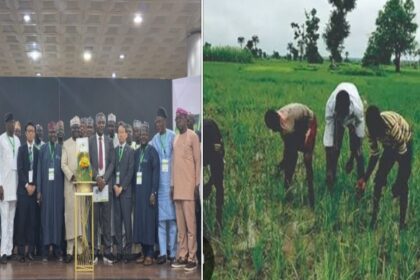
The SAA Nigeria Country Director, Dr. Godwin Atser, made this known on Thursday in Abuja during the 2026 Annual Stakeholders’ Workshop and the commemoration of the association’s 40th anniversary.
Atser attributed the country’s rising food import bill to inadequate domestic production, noting that local output has consistently fallen short of national demand. He emphasised the urgent need to bridge this gap through improved access to modern farming technologies and strengthened agricultural extension systems.
According to him, Nigeria’s current extension service structure is grossly insufficient, with just one extension agent catering to about 10,000 farmers—a ratio he described as a major constraint to agricultural transformation.
He explained that the workshop, themed ‘SAA @ 40: Deepening Impact and Expanding Reach at Scale,’ was designed as a strategic platform to assess the association’s 2021–2025 Strategic Plan and map out a forward-looking roadmap for the sector.
“SAA has been supporting agricultural transformation in Nigeria for 33 years, contributing to improved productivity, enhanced livelihoods, and strengthened extension systems,” Atser said. “This workshop is not merely ceremonial. It is a strategic and data-rich forum for reflection, accountability, and knowledge sharing.”
He added that the gathering would help stakeholders redefine priorities, share experiences, and align strategies to achieve greater impact in addressing the country’s agricultural challenges.
The SAA, he noted, remains committed to empowering smallholder farmers through knowledge transfer, access to improved technologies, market integration, and inclusive extension systems aimed at ensuring sustainable food, nutrition, and income security.
Atser also highlighted emerging challenges such as climate variability, population growth, and shifting economic realities, stressing the need for innovative, resilient, and nutrition-sensitive agricultural practices.
In his keynote address titled ‘The Role of Private Sector in Agricultural Development in Nigeria,’ the Japanese Ambassador to Nigeria, Suzuki Hideo, described smallholder farmers as the backbone of the nation’s food system and rural economy.
He disclosed that agriculture accounts for about 34 per cent of Nigeria’s labour force and contributes roughly 25 per cent to the country’s Gross Domestic Product.
Hideo stressed that advancing mechanisation, reducing post-harvest losses, and strengthening market linkages are critical to unlocking Nigeria’s agricultural potential.
He commended the SAA for its four decades of intervention, noting that the organisation’s consistent efforts and innovative approaches have played a significant role in enhancing agricultural productivity across the country.
“The organisation’s unwavering commitment has significantly transformed Nigeria’s agricultural landscape,” he said.
As stakeholders push for renewed strategies, experts warn that without deliberate investments in productivity, extension services, and value chain development, Nigeria may continue to rely heavily on food imports despite its vast agricultural potential.