




By Simeon Shodimu

The Managing Director and Chief Executive Officer of the Bank of Agriculture, Ayo Sotinrin, has advocated for a strategic partnerships and increased capital mobilisation to facilitate Nigeria’s vast agricultural potential.
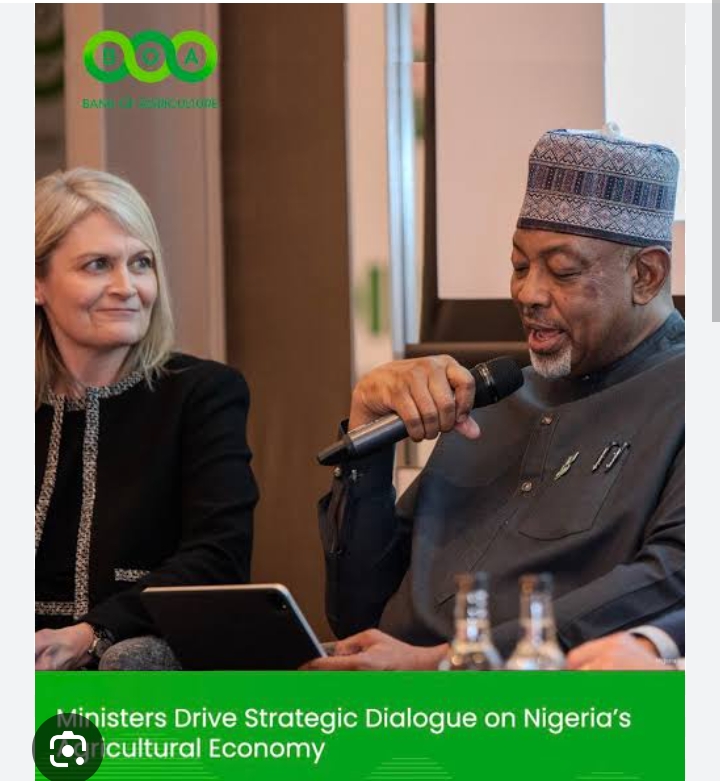
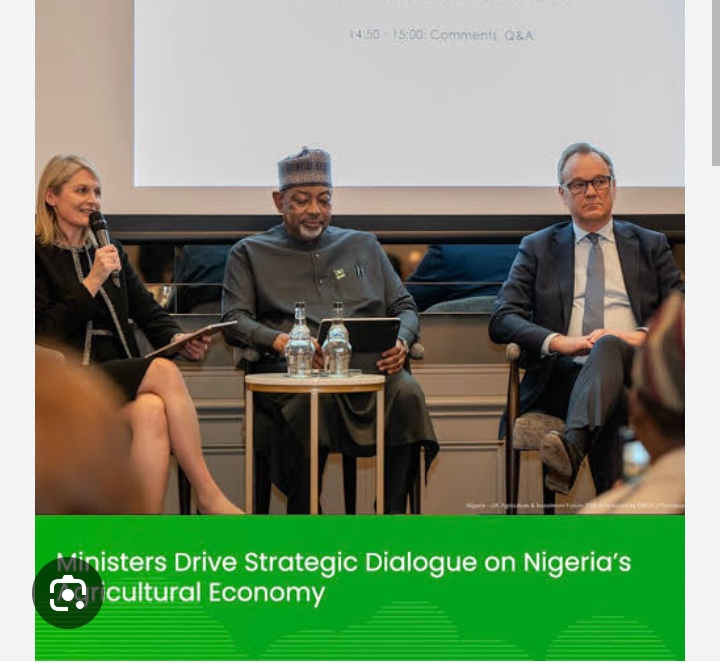
He made the call at the opening address of Nigeria–United Kingdom Agriculture and Investment Forum, held in London, where top government officials, state governors, development finance institutions, and industry leaders gathered to explore investment opportunities in Nigeria’s agricultural sector.
This was contained in a statement issued by Team Lead, Corporate Department, Bank of Agriculture (BOA), Ruth Didam.

the statement reads , “the forum, themed “Bridging the Gap: Financing Climate-Resilient Agriculture in Nigeria,” brought together key stakeholders, including the Minister of Agriculture and Food Security, Abubakar Kyari; and representatives of the UK government, including former Member of Parliament Rt Honourable Mark Simmonds.
Sotinrin stated that Nigeria possesses over 80 million hectares of arable land and a population of more than 220 million people, describing the country as one of Africa’s most promising agricultural frontiers.
He stressed that while the country has land, labour, and market potential, the critical gap remains access to capital.
According to him, the scale of transformation required in mechanisation, irrigation, post-harvest infrastructure, climate-resilient technologies, and digital agricultural services goes beyond the capacity of any single institution, necessitating strong, purpose-driven partnerships.
He highlighted growing global momentum towards climate financing, noting that outcomes from COP30 have reinforced commitments to mobilise over $1.3 trillion annually for developing economies.
“Nigeria’s agricultural sector presents a viable channel for deploying such funds with significant returns across the value chain”.
He said.
Sotirin said that Nigeria possesses over 80 million hectares of arable land and a population of more than 220 million people, describing the country as one of Africa’s most promising agricultural frontiers.
He further stressed that while the country has land, labour, and market potential, the critical gap remains access to capital.
“the large scale of transformation required in mechanisation, irrigation, post-harvest infrastructure, climate-resilient technologies, and digital agricultural services goes beyond the capacity of any single institution, necessitating strong, purpose-driven partnerships.
He said Nigeria’s agricultural sector presents a viable channel for deploying such funds with significant returns across the value chain.
The Nigerian delegation at the forum comprised senior government officials, policymakers, representatives of key agricultural and financial institutions, and captains of industry, reflecting a broad-based commitment to advancing the country’s agricultural transformation agenda through international collaboration.