
By Simeon Shodimu

In an effort to improve agricultural growth and development in Nigeria, the Federal Government of Nigeria has called on investors, financial institutions, and development partners to collaborate with country in building a resilient food system, promoting climate-smart farming, and expanding sustainable agricultural production.
The Minister of Agriculture and Food Security, Sen. Abubakar Kyari, made this known during the Nigeria–United Kingdom Investment Forum held in London, where he showcased Nigeria’s vast agricultural potential and the urgent need for increased private sector participation.
The minister stated that Nigeria’s diverse agro-ecological zones position it to competitively produce a wide range of commodities, including rice, maize, cassava, cocoa, sesame, and sorghum.

Agriculture, according to him remains a cornerstone of the economy, employing nearly 70 percent of the labour force and contributing over 24 percent to the nation’s Gross Domestic Product (GDP).
He described the sector as a key driver of inclusive growth, rural livelihoods, and employment for women and youth, the minister stressed that Nigeria has the natural capacity to meet both domestic and global agricultural demands.
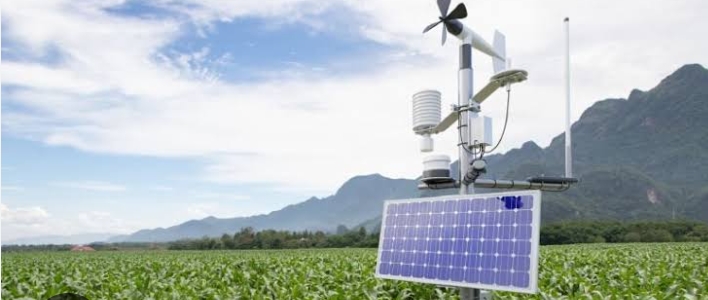
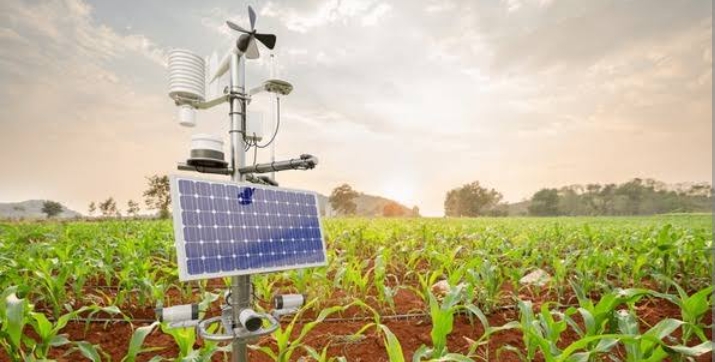
He, however warned that climate change poses a growing threat to agricultural productivity and food security, citing prolonged droughts, erratic rainfall, flooding, and desertification as major challenges. These, he said, underscore the need for urgent transition to climate-resilient agricultural systems.
Abba Kyari noted that inadequate financing as a major constraint, revealing that despite existing credit schemes, access to finance for farmers remains limited. He disclosed that agricultural credit stood at about N3.4 trillion as of April 2025—less than four percent of the sector’s contribution to GDP.
“To build resilient food systems and scale innovation across agricultural value chains, we must unlock significant private capital and strengthen development finance partnerships,” he said.
The minister of Agriculture recalled that President Bola Ahmed Tinubu declared a national state of emergency on food security in July 2023, a move aimed at addressing systemic challenges in the sector.
He added that the establishment of the Presidential Food Systems Coordinating Unit (PFSCU), inaugurated by Vice President Kashim Shettima, has helped align interventions across federal, state, and local governments.
Kyari outlined several government initiatives to boost agricultural productivity and resilience.
These include the distribution of solar-powered irrigation pumps to support all-season farming, development of climate-resilient seed varieties, and the National Agricultural Mechanisation Programme, which has delivered 2,000 tractors and over 9,000 farm implements.
He also highlighted the Nigeria Postharvest Systems Transformation Programme (NiPHaST), designed to improve storage, reduce losses, and strengthen market linkages, as well as the Special Agro-Industrial Processing Zones (SAPZ) initiative aimed at enhancing value addition and agro-processing.
To attract more investment, the government is strengthening key institutions such as the Bank of Agriculture, Nigeria Agricultural Development Fund, and the National Agricultural Insurance Corporation. The National Agricultural Land Development Authority is also being restructured to support large-scale farming and land management.
In addition, the Nigerian Agricultural Quarantine Service is being reinforced to ensure compliance with international standards, thereby boosting investor confidence and facilitating safer agricultural trade.
Kyari identified key investment opportunities in irrigation technologies, mechanization services, seed development, cold storage infrastructure, agro-processing, and agricultural logistics.
He reaffirmed the government’s commitment to creating an enabling environment through policy reforms, climate-focused strategies, and initiatives that support private sector participation.
Inviting UK investors to take advantage of opportunities in Nigeria’s agricultural sector, Kyari emphasized the potential for partnerships through joint investment platforms and innovative financing models aligned with global sustainability standards.
“Nigeria has the market, the potential, and the policy direction to drive agricultural transformation,” he said. “Addressing climate change and building resilient food systems is a shared global responsibility.”
Kyari calls stronger international collaboration and private sector investment to bridge the financing gap and support Nigeria’s transition to sustainable, climate-smart agriculture.