
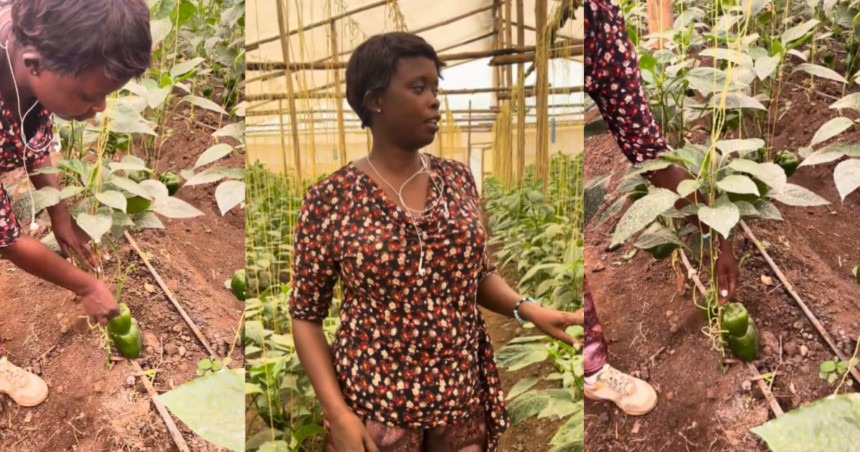
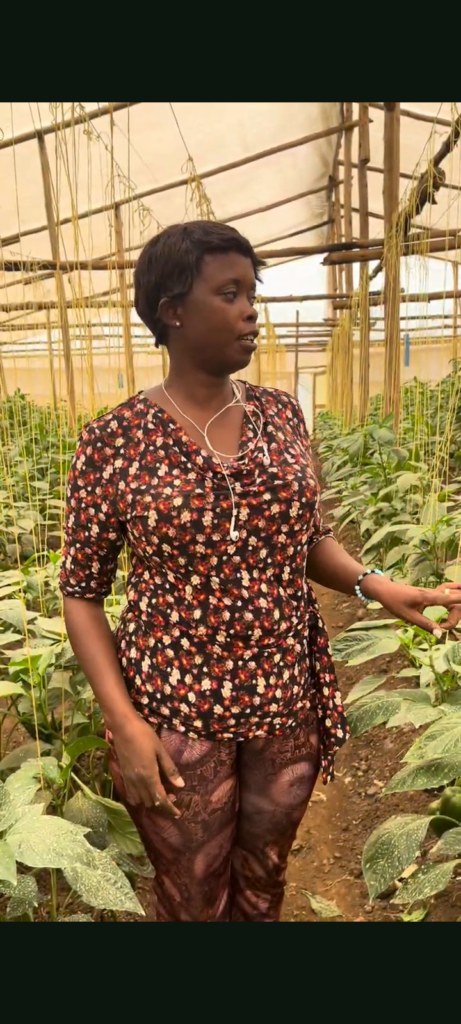
In this interview with Farmlife Media, Rwandan Agronomist, Olore Nebijira shares her experience on green house farming over open -field cultivation and Rwandan Government support to her agric business.

Farmlife Media:
Good afternoon, madam. Can we know you? Please introduce yourself to our audience.
Olore Nebijira:
Good afternoon to you. My name is Olore Nebijira. I am an agronomist here at this farm. We operate a large farm under a cooperative called Kwabiga. We cultivate many different crops, including crops grown in greenhouses.
Farmlife Media:
What kind of plants do we have here right now?
Olore Nebijira:
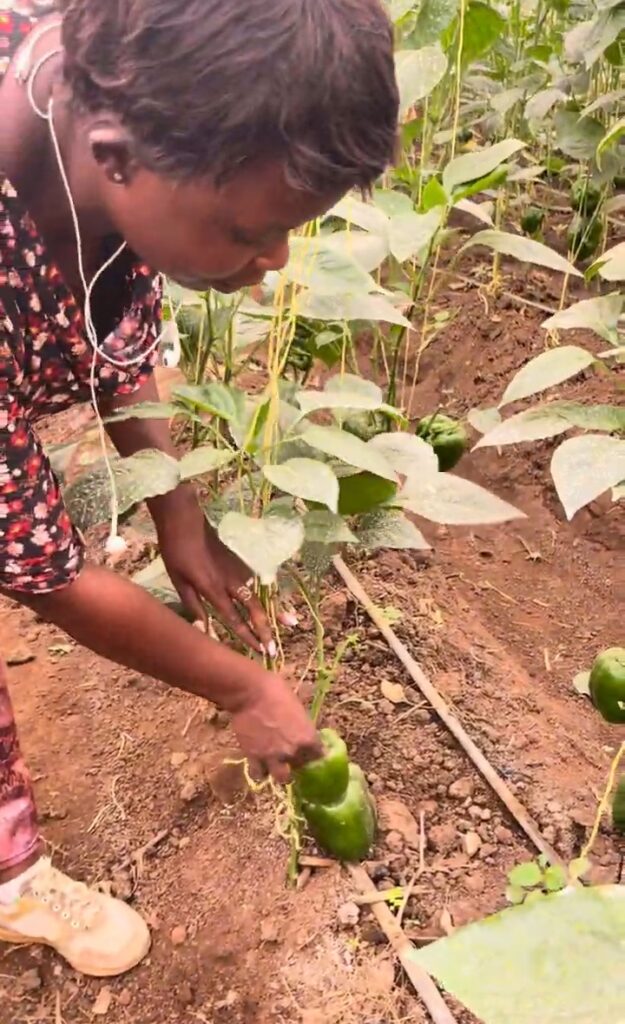
As you can see, we have bell peppers in this greenhouse. We have two varieties: yellow bell pepper and red bell pepper. The red peppers are at the lower section, and some of them have already started changing colour, which indicates they are approaching maturity.

Farmlife Media:
How long does it take to harvest bell peppers?
Olore Nebijira:
It takes about four months before we can begin harvesting. The harvesting period can continue for six to eight months, depending on the crop performance and management.
Farmlife Media:
For farmers who want to go into this type of farming, what does it take to set up a greenhouse like this?
Olore Nebijira:
Greenhouse farming requires a significant investment. You need the greenhouse structure, the installation of drip irrigation pipes, and quality seeds. This particular greenhouse is a large one with nine sections. It is about 15 metres by 60 metres, and we plant approximately 3,500 seedlings here.
Farmlife Media:
How has the Rwandan government supported farmers in setting up projects like this?
Olore Nebijira:
The government has been very helpful through a project called SIDAT. The project provides financial support for greenhouse construction. Farmers prepare their greenhouse project, and the government contributes part of the funding.
This support is very important because building a greenhouse is expensive. Without assistance, a farmer may need around 80 million Rwandan francs to build a greenhouse of this size. SIDAT helps us with funding so that we can start and complete the project.
Farmlife Media:
How long have you been involved in this type of farming?
Olore Nebijira:
I have been farming here for about two years.
Farmlife Media:
Do you have off-takers? How do you sell your produce? Do you export?
Olore Nebijira:
At the moment, we sell only within Rwanda. Our market is the local market; we do not export this produce yet.
Farmlife Media:
Can you explain the harvesting process?
Olore Nebijira:
After about four months, we begin harvesting. When a pepper starts changing colour from green to yellow or red, it shows that it is ready for harvest.
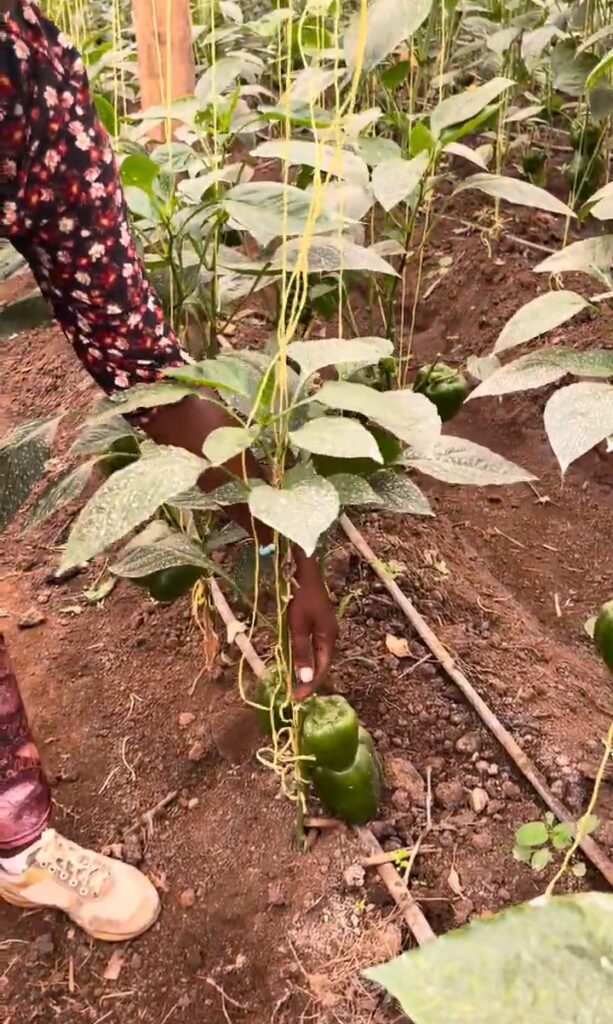
We use scissors or a cutting tool and cut the fruit carefully from the stem to avoid causing wounds that could allow diseases to enter the plant. After harvesting, we place the peppers in crates at the cooperative to prevent damage. The crates are then loaded into vehicles and transported to the market.
Farmlife Media:
What advice would you give to farmers who want to learn greenhouse bell pepper farming?
Olore Nebijira:
I encourage farmers to consider greenhouse farming because it has many advantages over open-field cultivation.
Labour cost is lower: one worker can manage this greenhouse, while open-field farming requires many workers.
Climate change has less effect: rain and excessive sunlight do not directly disturb the crop because the greenhouse is covered.
Disease pressure is lower: in open fields, heavy rain or extreme heat often increases diseases, but greenhouse conditions reduce these problems.
Yield is much higher: from this greenhouse with 3,500 plants, we can harvest about 12 tonnes in a six-month season. In open-field production, the yield may be only 1 to 3 tonnes under similar conditions.
Less field work is required: activities such as weeding and other labour-intensive operations are reduced.
For anyone who wants to succeed in this type of agriculture, proper training, quality seeds, irrigation management, and good greenhouse maintenance are very important.
Farmlife Media:
Thank you very much for speaking with us.
Olore Nebijira:
Thank you very much.