


By: Jide Akinseye

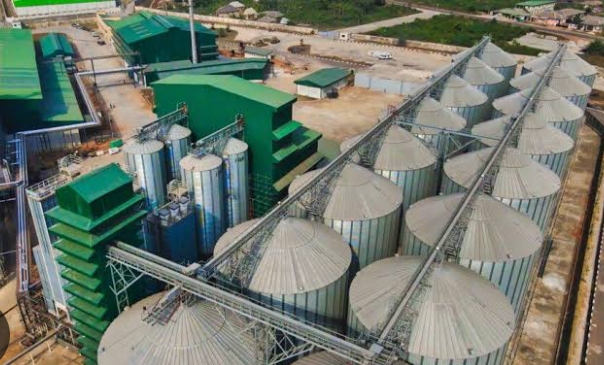
As Nigeria battles rising food prices and growing concerns over food insecurity, the Lagos State Government is intensifying efforts to boost local rice production and reduce dependence on imports. At the centre of this strategy is the Imota Rice Mill, which has produced over 500,000 bags of Eko Rice within one year, reinforcing Lagos’ ambition to build a resilient food economy and strengthen agricultural value chains across the country.
Imota Rice Mill Deepens Lagos’ Push for Food Security, Local Production

The Lagos State Government has disclosed that the Lagos Rice Mill in Imota produced more than 500,000 bags of Eko Rice in the past year, underscoring the state’s growing commitment to food security, agricultural industrialisation, and local rice production.
The revelation came during the 2026 Ministerial Press Briefing held at the Bagauda Kaltho Press Centre in Alausa, Ikeja, where the Commissioner for Agriculture and Food Systems, Abisola Olusanya, highlighted the achievements of the state’s flagship rice project.
Olusanya described the Imota Rice Mill as the largest rice mill in Africa and the third largest in the world, stressing that the facility has become a cornerstone of Lagos State’s broader agricultural transformation agenda.
According to her, the 22-hectare facility, commissioned in 2023, has the installed capacity to produce 2.4 million 50kg bags of rice annually. Beyond production, the mill is also creating significant economic opportunities, with an estimated 1,500 direct jobs and over 254,000 indirect jobs generated across the rice value chain.


The commissioner explained that the state government has continued to improve operations at the facility while expanding collaborations with smallholder farmers nationwide to ensure a steady supply of paddy rice needed for large-scale production.
She noted that Lagos is not only investing in processing infrastructure but is also strengthening primary agricultural production to guarantee sustainability in the sector.
As part of efforts to increase paddy output, the ministry cultivated 100 hectares of rice farmland in Eggua, another 100 hectares in Agonrin, and over 100 hectares in Ganyingbo. The government also distributed agricultural inputs to local rice farmers to improve productivity and enhance yields.
Industry analysts say the development reflects a growing trend among subnational governments seeking to reduce Nigeria’s heavy reliance on imported food and shield residents from the impact of inflation and supply chain disruptions.
In recent years, rising food costs have placed enormous pressure on households across the country, making local food production a strategic economic necessity. Lagos, despite being Nigeria’s commercial nerve centre, remains heavily dependent on food supplies from other states, a situation the government says it is determined to reverse through strategic investments in agriculture and food systems.
Olusanya further revealed that the state launched Eko Fortified Rice in late 2025 as part of initiatives aimed at addressing malnutrition and micronutrient deficiencies, particularly among children and vulnerable groups.
She explained that the fortified rice contains essential vitamins and minerals designed to improve public health outcomes without requiring consumers to alter their eating habits.
“Under the year in review, the Lagos Rice Mill Imota produced over 500,000 50kg bags of Eko Rice and continues to contribute to the Renewed Hope Agenda of Mr. President,” she stated.
The commissioner maintained that the state government would continue investing in agricultural infrastructure, food logistics, aquaculture, and market systems to strengthen local production capacity and ensure stable food supply.
She added that Lagos remains focused on building a resilient and sustainable food economy capable of meeting the demands of its rapidly growing population while supporting national food security objectives.
Observers believe that if sustained, the Imota Rice Mill project could serve as a model for agro-industrial development across Nigeria, demonstrating how large-scale investments in local food production can create jobs, improve nutrition, and reduce dependence on imports in Africa’s most populous nation.