



By: Simeon Shodimu

As Nigeria grapples with rising food prices, limited agricultural financing, and mounting pressure on food production, interventions targeted at smallholder farmers are becoming increasingly critical. In a bid to ease the burden on rural farmers and improve productivity ahead of the 2026 planting season, One Acre Fund Nigeria has commenced the distribution of 9,000 tonnes of agricultural inputs on credit to 88,000 farmers across four states, offering renewed hope for improved harvests and stronger livelihoods.


In a major intervention aimed at boosting agricultural productivity and strengthening food security in Nigeria, One Acre Fund Nigeria has begun the distribution of 9,000 tonnes of agricultural inputs on credit to about 88,000 smallholder farmers across Nasarawa, Niger, Kwara, and Plateau states.
The initiative, currently underway and expected to be completed before the end of May 2026, is designed to help farmers overcome some of the long-standing challenges confronting agriculture in the country, particularly limited access to credit facilities, rising input costs, and inefficient rural distribution systems.

For many smallholder farmers who account for the bulk of Nigeria’s food production, access to quality seeds, fertilisers, and other farming inputs has remained a major obstacle. This challenge has continued to limit productivity and deepen rural poverty, especially amid growing economic pressures and inflationary trends affecting the agricultural sector.
Speaking on the development, the Communications Lead of One Acre Fund Nigeria, Kazi Nanyah, explained that the intervention forms part of the organisation’s broader commitment to improving the livelihoods of smallholder farmers through financing, training, and market support.
According to him, the integrated support model adopted by the organisation combines input credit with agronomic training, digital advisory services, and direct community-based distribution systems to ensure that farmers receive support on time and without unnecessary intermediaries.
He noted that farmers participating in the programme often record significant improvements in productivity, particularly in maize cultivation, with many achieving nearly double their previous yields under similar farming conditions.
Nanyah further disclosed that average household income among participating farmers has increased by approximately 328 dollars per season, reflecting the economic impact of improved farming practices and access to quality agricultural inputs.
He explained that beyond providing fertilisers and improved seeds, the programme also focuses on building climate resilience and strengthening market access for farmers. According to him, the organisation promotes climate-smart agricultural practices, including tree planting and sustainable farming methods, while also connecting farmers to reliable markets to improve their earnings and reduce post-harvest losses.
The intervention has also prioritised inclusiveness, with women and young farmers making up more than 35 per cent of beneficiaries under the programme.
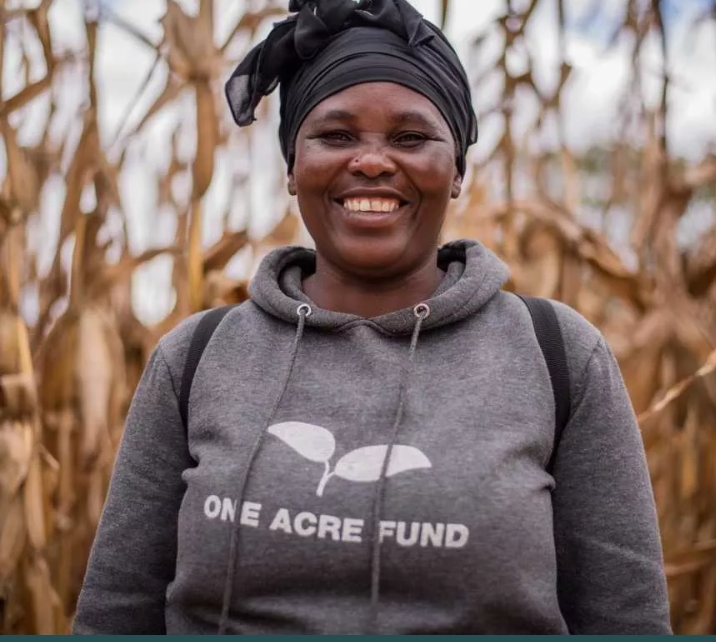
One of the beneficiaries, 24-year-old maize farmer, Keziah Danjuma from Pyatta village in Niger State, described the programme as life-changing. She said access to quality seeds and fertiliser on credit within her community has significantly improved her farming operations and income prospects.
Since commencing operations in Nigeria in 2018, One Acre Fund has expanded its reach to over 600,000 farmers across Nasarawa, Kwara, Niger, and Plateau states, steadily building a reputation for supporting rural farmers with practical solutions tailored to local realities.
Agricultural experts believe that initiatives such as this are essential at a time when Nigeria’s food system continues to face structural challenges, including rising production costs, inadequate rural infrastructure, poor financing systems, and the growing effects of climate change.
Although the 9,000-tonne intervention may appear modest compared to the country’s national demand for agricultural inputs, stakeholders say it represents an important model for addressing bottlenecks that have historically hindered smallholder productivity and food sufficiency.
As the 2026 planting season gathers momentum, the success of such interventions could play a significant role in improving harvests, stabilising food supply, and supporting the livelihoods of thousands of farming households across rural Nigeria.