

By Kemi Akinseye

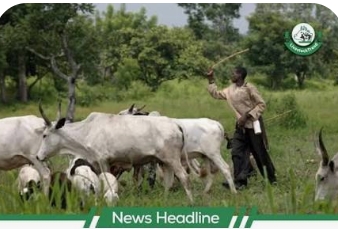
As Nigeria intensifies efforts to balance economic growth with environmental sustainability, the livestock sector is emerging as a key frontier for climate action. With millions dependent on it for livelihoods, the Federal Government is now pursuing reforms that aim to modernise production while cutting emissions and strengthening resilience.
Nigeria is therefore taking decisive steps to reposition its livestock sector within the framework of global climate commitments, as the Federal Government integrates climate-sensitive planning into its development strategy under the National Livestock Growth Acceleration Strategy (NL-GAS).
At a stakeholders’ engagement workshop held in Abuja, the Permanent Secretary of the Federal Ministry of Livestock Development, Chinyere Ijeoma Akujobi, said the initiative signals a transition from subsistence-based practices to a modern, commercially driven livestock system that is efficient, inclusive and resilient.
Akujobi explained that the government’s approach is designed to strike a balance between emission reduction and climate adaptation, ensuring the sector can withstand environmental pressures such as land degradation and erratic weather patterns.
According to her, livestock remains a vital component of Nigeria’s rural economy, contributing between three and five percent to the nation’s Gross Domestic Product and valued at approximately $32 billion. Millions of Nigerians depend on the sector for income, nutrition and employment.
She noted that beyond primary production, the new strategy seeks to unlock opportunities across the value chain, including dairy, meat processing, leather production, egg supply, cold chain logistics and veterinary services.
“This is about transforming an entire ecosystem into one that is globally competitive,” she said, adding that the adoption of climate-smart practices will enhance productivity and efficiency across the board.
Also speaking, the Director of the Technical Office of the Permanent Secretary, Alike Peter, said the plan is focused on accelerating productivity through coordinated interventions spanning the entire livestock value chain. He added that NL-GAS is redefining livestock development as an investment-driven industry rather than a narrow focus on animal husbandry.
Development partners have also pledged support for the initiative. Laura Cramer, Policy Engagement Specialist at the International Livestock Research Institute, said the organisation is ready to provide technical expertise to support Nigeria in designing and implementing a climate-sensitive framework.
Other partners, including GIZ, FAO, the National Council on Climate Change, the Federal Ministry of Environment, Sahel Consulting and members of the ministry’s technical working group, participated in the engagement.

The outcome of the workshop is expected to produce a comprehensive framework that aligns livestock sector growth with Nigeria’s climate goals, while enhancing productivity, strengthening rural incomes and driving sustainable economic development.