
By Simeon Shodimu

Nigeria’s agricultural sector is witnessing a quiet but significant transformation, driven by a new generation of technocrats who are redefining farming through innovation and technology.
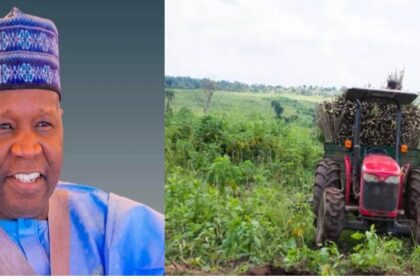
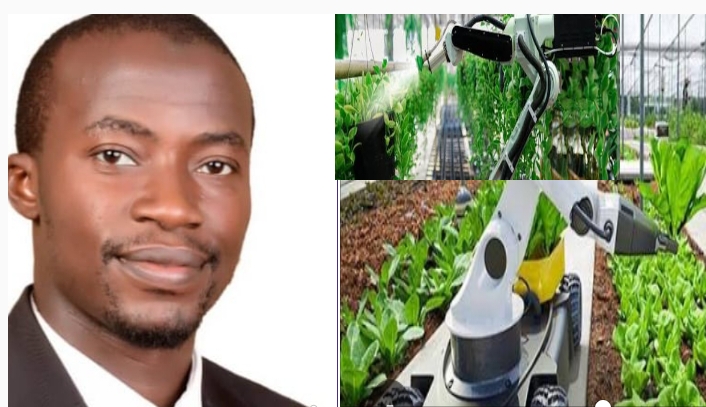
At the centre of this shift is Abdulrazak Najim, the chief executive officer of Noba Africa Agro Allied Limited, whose work is steadily reshaping how farmers access quality inputs, markets, and investment opportunities.
From a sector long plagued by low productivity, poor seed quality, and limited market access, a new narrative is emerging—one that blends science, structure, and strategy.
Noba Africa Agro Allied Limited has positioned itself as a key player in this evolution, building an integrated agribusiness model that connects seed development, commodity sourcing, and agricultural project management into a single, efficient ecosystem.

The result is a business that has already generated billions of naira in revenue while expanding its footprint across Nigeria’s agricultural landscape.
Najim’s approach is rooted in a simple but powerful idea: productivity begins with the seed. In a recent interview, he explained how the company is tackling Nigeria’s long-standing seed gap by introducing improved maize, rice, and soybean varieties that consistently outperform traditional farmer-saved seeds. Tested across Northern Nigeria’s agro-ecological zones, these seeds deliver yield increases of between 20 and 30 percent, offering farmers a practical pathway to higher output without expanding their farmland.
But yield, he insists, is only part of the equation.
The seeds are designed with resilience in mind, capable of withstanding drought, erratic rainfall, and local pest pressures. For farmers who have long battled unpredictable harvests, this consistency represents a critical shift. “Many farmers struggle with uncertain results,” Najim noted, “but our system is built to deliver uniform performance, which is essential for commercial-scale farming.”
Behind this promise lies a meticulous production process.
From sourcing verified breeder seeds to conducting field inspections at key growth stages, the company maintains strict quality control. Off-type plants are removed through roguing to preserve genetic purity, while post-harvest processes such as cleaning, grading, and moisture control ensure that only high-quality seeds reach the market. Each batch undergoes germination and viability testing before distribution, reinforcing the company’s commitment to reliability.
As climate change continues to disrupt traditional farming patterns, adaptability has become a defining factor in agricultural success. Noba Africa’s seeds are engineered to meet this challenge. In drought-prone regions, crops are bred with deeper root systems and improved water efficiency, while flood-tolerant rice varieties are deployed in high rainfall areas. Early maturity cycles, allowing harvests within 90 to 100 days, further help farmers avoid late-season climate shocks. Combined with disease resistance, these innovations reduce dependence on chemical inputs and improve overall yield stability.
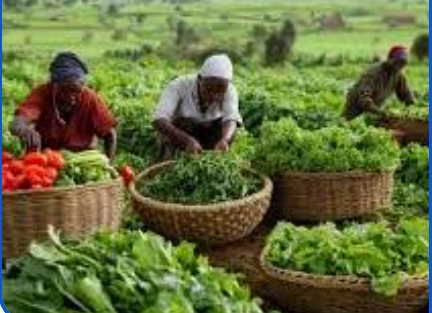
The impact of these interventions is already being felt. Farmers using the company’s seeds report yield increases of up to 30 percent per hectare, alongside improved crop uniformity and reduced labour costs. Perhaps most importantly, the risk of crop failure has declined significantly, encouraging more farmers to invest confidently in their operations. To date, Noba Africa has reached over 10,000 farmers, contributing to rising incomes and stronger rural economies.
Yet, productivity alone does not guarantee profitability. Recognising this, the company has built a structured aggregation model that connects farmers directly to markets.By
By delivering produce to designated collection centres, farmers benefit from efficient grading, reduced post-harvest losses, and improved pricing. Pre-arranged offtake agreements with food processing companies ensure that produce is sold even before harvest, eliminating the uncertainty that often defines agricultural trade in Nigeria.
This integrated approach—linking seeds, markets, and investment—forms the backbone of Noba Africa’s business model. It is a closed-loop system where each component reinforces the other: improved seeds drive higher yields, structured markets ensure efficient sales, and investment capital enables expansion. For farmers, this translates into higher incomes and reduced risk; for investors, it offers access to a more transparent and structured agricultural value chain.
The company’s investment offerings reflect this dual focus. Through an ethical profit-sharing model, investors receive quarterly returns, while a fixed-return option provides predictable earnings over a three-year period. With a minimum entry point of ₦5 million, these options are designed to attract both impact-driven and return-focused investors into the agricultural space.
Risk management, often a major barrier in agribusiness, is addressed through careful planning.
By securing offtake agreements before planting, diversifying across crops and regions, and maintaining control over inputs, the company reduces exposure to volatility. Its aggregation system further enhances efficiency, ensuring that value is preserved across the supply chain.
Looking ahead, the ambition is clear. Within Nigeria, Noba Africa is expanding into key agricultural states, scaling both its farmer network and commodity trading capacity. Beyond national borders, the company is setting its sights on regional markets, including Benin, Ghana, and Togo, where it aims to replicate its integrated model. Over the long term, the goal is to build a continent-wide agricultural value chain platform, supported by processing facilities that enable value addition and strengthen Africa’s position in global agro-trade.
In a sector often defined by challenges, the work of Abdulrazak Najim and Noba Africa Agro Allied Limited offers a different perspective—one where innovation meets execution, and where the future of farming in Nigeria is being actively reimagined.