


By Simeon Shodimu

In the middle of the global concern is the lack of definite statement by the Agency in charge of regulation of Nigeria’s food ecosystem over the safety and suitability of genetically modified foods for human consumption. No doubt, it is high time Nigeria issues a clear policy on the issue in the public interest.
The back and forth posture often exhibited by authorities is indeed not helping Nigerians with the position of things, as the authorities appear to be at loggerheads over the ideal status of foods relative to organic foods.
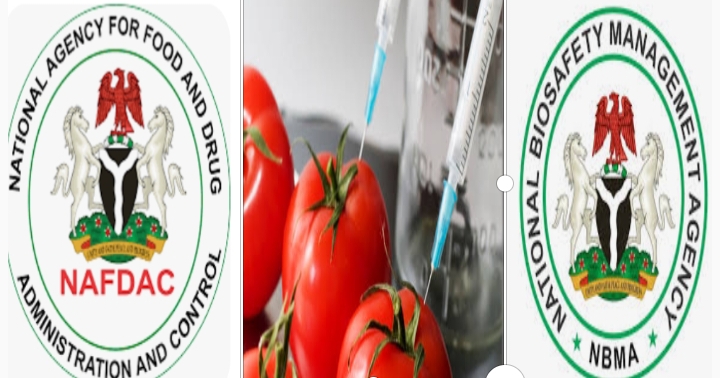
The two of the country’s key agencies in the food and drug ecosystem, the Nigeria Biotechnology Management Agency (NBMA) and the National Agency for Food and Drug Administration and Control (NAFDAC), were, at some point, embroiled in an inter-agency clash over the safety of genetically engineered foods.

NAFDAC’s position is that, insofar as Genetically Modified Organism (GMO) foods have not been expressly certified to be fit for human consumption, the agency would only recommend them for ‘other uses’.
The NBMA, on the other hand, insists that NAFDAC’s comment unjustly undermined its efforts on GMO foods.
In the mist of all these, the Federal Ministry of Health and Social Welfare disclosed plans to ensure that every GM product follows standard regulatory procedures, such as labelling and traceability, to, according to the Ministry, reinforce trust and accountability. That storyline indicates that the government is seeking to regulate GMOs through labelling, thus heightening public anxiety.
In all of these, one wonders why a country blessed with such arable land will insist on application of GMO to boost food production. It remains a puzzle millions of Nigerians are yet to come to terms with.
With the Government’s plan to commence labelling of GMO crops, the government has clearly, and for the umpteenth time, assured citizens that GM crops are safe for consumption. The government seems to have made up its mind or taken a position, irrespective of the impact of that position on the health of its citizenry.
Moreso, Nigerian Government appears to align with advocates genetically modified foods promoted mainly by Western countries, despite some findings indicating that GM crops are not as safe for human consumption as they can gradually harm human health.
Genetically modified crops are plants used in agriculture whose DNA has been modified using genetic engineering methods. In most cases, the aim is to introduce a new trait into the plant that does not occur naturally in the species. Food crops, for example, can be genetically engineered to be resistant to certain pests, diseases, environmental conditions, spoilage, chemical treatments (e.g., herbicide resistance), or just to improve the nutrient profile.
The Director-General of NAFDAC, Prof. Mojisola Adeyeye, on June 29, 2024, said: “In terms of GMOs, we do not think it is safe for our consumption. First, a lot of research has not been done in terms of the safety of GMO products, and the genetics of the seeds have been modified. Until we get very convincing data to show the safety for human consumption…” She, however, added that the GMOs could be used for non-food crops such as timber and for rubber plantations, maintaining that there is no evidence from NAFDAC that the foods were safe for human consumption.
Amid global controversy over the safety and suitability of genetically modified foods for human consumption, it is high time Nigeria issued a clear policy on the issue in the public interest. It is alarming, to say the least, that relevant authorities in the country appear to be at loggerheads over the ideal status of foods relative to organic foods.
For instance, two of the country’s key agencies in the food and drug ecosystem, the Nigeria Biotechnology Management Agency (NBMA) and the National Agency for Food and Drug Administration and Control (NAFDAC), were, at some point, embroiled in an inter-agency brawl over the safety of genetically engineered foods. While NAFDAC insists that, insofar as Genetically Modified Organism (GMO) foods have not been expressly certified to be fit for human consumption, the agency would only recommend them for ‘other uses’.
The NBMA, on the other hand, insists that NAFDAC’s comment unjustly undermined its efforts on GMO foods. And while all these were happening, the Federal Ministry of Health and Social Welfare disclosed plans to ensure that every GM product follows standard regulatory procedures, such as labelling and traceability, to, according to the Ministry, reinforce trust and accountability. That storyline indicates that the government is seeking to regulate GMOs through labelling, thus heightening public anxiety.
The real poser, perhaps, is why a country that is blessed across its length and breadth with arable land and perfect weather conditions for plant cultivation is still fixated on promoting Genetically Modified Foods (GMOs). This is a puzzle that millions of Nigerians have yet to come to terms with.
By announcing plans to commence labelling of GMO crops, the government has clearly, and for the umpteenth time, assured citizens that GM crops are safe for consumption. The government seems to have made up its mind or taken a position, irrespective of the impact of that position on the health of its citizenry.
Also worrisome is the fact that the Federal Government appears to be swallowing hook, line, and sinker the advocacy for genetically modified foods promoted mainly by Western countries, despite some findings indicating that GM crops are not as safe for human consumption as they can gradually harm human health.
Genetically modified crops are plants used in agriculture whose DNA has been modified using genetic engineering methods. In most cases, the aim is to introduce a new trait into the plant that does not occur naturally in the species. Food crops, for example, can be genetically engineered to be resistant to certain pests, diseases, environmental conditions, spoilage, chemical treatments (e.g., herbicide resistance), or just to improve the nutrient profile.
The Director-General of NAFDAC, Prof. Mojisola Adeyeye, on June 29, 2024, said: “In terms of GMOs, we do not think it is safe for our consumption. First, a lot of research has not been done in terms of the safety of GMO products, and the genetics of the seeds have been modified. Until we get very convincing data to show the safety for human consumption…” She, however, added that the GMOs could be used for non-food crops such as timber and for rubber plantations, maintaining that there is no evidence from NAFDAC that the foods were safe for human consumption.
In its response, the NBMA described the NAFDAC boss’s position as one that could undermine the NBMA’s mandate and functions. “The views you expressed appear to discredit the hard work and integrity of the NBMA and its several renowned stakeholders and experts, of which your agency is one,” the NBMA DG wrote. With NAFDAC’s position attracting criticisms from pro-GMO advocates, including NBMA, the exchanges mirrored the sentiments and anxiety of many Nigerians on the adoption or otherwise of these crops that have brought endless fear and uncertainty to farmers, consumers and other stakeholders in the food sector. This uncertainty has, of late, been reinforced by the fact that many countries that had adopted GMOs earlier are opting out, with the reasons for doing so still shrouded in secrecy.
Given the above scenario, it was therefore surprising when Adeyeye last year appeared on a magazine programme on national television, apparently preaching a different gospel altogether.
Amid global controversy over the safety and suitability of genetically modified foods for human consumption, it is high time Nigeria issued a clear policy on the issue in the public interest. It is alarming, to say the least, that relevant authorities in the country appear to be at loggerheads over the ideal status of foods relative to organic foods.
For instance, two of the country’s key agencies in the food and drug ecosystem, the Nigeria Biotechnology Management Agency (NBMA) and the National Agency for Food and Drug Administration and Control (NAFDAC), were, at some point, embroiled in an inter-agency brawl over the safety of genetically engineered foods. While NAFDAC insists that, insofar as Genetically Modified Organism (GMO) foods have not been expressly certified to be fit for human consumption, the agency would only recommend them for ‘other uses’.
The NBMA, on the other hand, insists that NAFDAC’s comment unjustly undermined its efforts on GMO foods. And while all these were happening, the Federal Ministry of Health and Social Welfare disclosed plans to ensure that every GM product follows standard regulatory procedures, such as labelling and traceability, to, according to the Ministry, reinforce trust and accountability. That storyline indicates that the government is seeking to regulate GMOs through labelling, thus heightening public anxiety.
The real poser, perhaps, is why a country that is blessed across its length and breadth with arable land and perfect weather conditions for plant cultivation is still fixated on promoting Genetically Modified Foods (GMOs). This is a puzzle that millions of Nigerians have yet to come to terms with.
By announcing plans to commence labelling of GMO crops, the government has clearly, and for the umpteenth time, assured citizens that GM crops are safe for consumption. The government seems to have made up its mind or taken a position, irrespective of the impact of that position on the health of its citizenry.
Also worrisome is the fact that the Federal Government appears to be swallowing hook, line, and sinker the advocacy for genetically modified foods promoted mainly by Western countries, despite some findings indicating that GM crops are not as safe for human consumption as they can gradually harm human health.
Genetically modified crops are plants used in agriculture whose DNA has been modified using genetic engineering methods. In most cases, the aim is to introduce a new trait into the plant that does not occur naturally in the species. Food crops, for example, can be genetically engineered to be resistant to certain pests, diseases, environmental conditions, spoilage, chemical treatments (e.g., herbicide resistance), or just to improve the nutrient profile.
Related News
Certificates without competence: time to scrap special centres
Nigeria secures UAE investors’ backing for national carrier
Victor Moses leads Chelsea’s first-ever visit to Nigeria next month
The Director-General of NAFDAC, Prof. Mojisola Adeyeye, on June 29, 2024, said: “In terms of GMOs, we do not think it is safe for our consumption. First, a lot of research has not been done in terms of the safety of GMO products, and the genetics of the seeds have been modified. Until we get very convincing data to show the safety for human consumption…” She, however, added that the GMOs could be used for non-food crops such as timber and for rubber plantations, maintaining that there is no evidence from NAFDAC that the foods were safe for human consumption.
In its response, the NBMA described the NAFDAC boss’s position as one that could undermine the NBMA’s mandate and functions. “The views you expressed appear to discredit the hard work and integrity of the NBMA and its several renowned stakeholders and experts, of which your agency is one,” the NBMA DG wrote. With NAFDAC’s position attracting criticisms from pro-GMO advocates, including NBMA, the exchanges mirrored the sentiments and anxiety of many Nigerians on the adoption or otherwise of these crops that have brought endless fear and uncertainty to farmers, consumers and other stakeholders in the food sector. This uncertainty has, of late, been reinforced by the fact that many countries that had adopted GMOs earlier are opting out, with the reasons for doing so still shrouded in secrecy.
Given the said scenario, it was therefore surprising when Adeyeye last year appeared on a magazine programme on national television, apparently preaching a different gospel altogether.
“GMOs are genetically modified foods when it comes to food, and they are not bad for us, depending on what type of foods they are and whether the safety considerations have been taken… The National Biosafety Management Agency (NBMA) is the agency charged with ensuring the safety of foods that have GMOs. We work in collaboration with them. They are mandated to ensure that the foods that have GMOs are of quality, they are safe, and they are efficacious. Without them certifying that they have done their due diligence in their laboratory or for desk review or whatever, we cannot approve,” she stated.
Amid global controversy over the safety and suitability of genetically modified foods for human consumption, it is high time Nigeria issued a clear policy on the issue in the public interest. It is alarming, to say the least, that relevant authorities in the country appear to be at loggerheads over the ideal status of foods relative to organic foods.
For instance, two of the country’s key agencies in the food and drug ecosystem, the Nigeria Biotechnology Management Agency (NBMA) and the National Agency for Food and Drug Administration and Control (NAFDAC), were, at some point, embroiled in an inter-agency brawl over the safety of genetically engineered foods. While NAFDAC insists that, insofar as Genetically Modified Organism (GMO) foods have not been expressly certified to be fit for human consumption, the agency would only recommend them for ‘other uses’.
The NBMA, on the other hand, insists that NAFDAC’s comment unjustly undermined its efforts on GMO foods. And while all these were happening, the Federal Ministry of Health and Social Welfare disclosed plans to ensure that every GM product follows standard regulatory procedures, such as labelling and traceability, to, according to the Ministry, reinforce trust and accountability. That storyline indicates that the government is seeking to regulate GMOs through labelling, thus heightening public anxiety.
The real poser, perhaps, is why a country that is blessed across its length and breadth with arable land and perfect weather conditions for plant cultivation is still fixated on promoting Genetically Modified Foods (GMOs). This is a puzzle that millions of Nigerians have yet to come to terms with.
By announcing plans to commence labelling of GMO crops, the government has clearly, and for the umpteenth time, assured citizens that GM crops are safe for consumption. The government seems to have made up its mind or taken a position, irrespective of the impact of that position on the health of its citizenry.
Also worrisome is the fact that the Federal Government appears to be swallowing hook, line, and sinker the advocacy for genetically modified foods promoted mainly by Western countries, despite some findings indicating that GM crops are not as safe for human consumption as they can gradually harm human health.
Genetically modified crops are plants used in agriculture whose DNA has been modified using genetic engineering methods. In most cases, the aim is to introduce a new trait into the plant that does not occur naturally in the species. Food crops, for example, can be genetically engineered to be resistant to certain pests, diseases, environmental conditions, spoilage, chemical treatments (e.g., herbicide resistance), or just to improve the nutrient profile.
Guardian online of April 2, 2026 reported that
Director-General of NAFDAC, Prof. Mojisola Adeyeye, on June 29, 2024, said: “In terms of GMOs, we do not think it is safe for our consumption. First, a lot of research has not been done in terms of the safety of GMO products, and the genetics of the seeds have been modified. Until we get very convincing data to show the safety for human consumption…” She, however, added that the GMOs could be used for non-food crops such as timber and for rubber plantations, maintaining that there is no evidence from NAFDAC that the foods were safe for human consumption.
In its response, according to Guardian report, the NBMA described the NAFDAC boss’s position as one that could undermine the NBMA’s mandate and functions. “The views you expressed appear to discredit the hard work and integrity of the NBMA and its several renowned stakeholders and experts, of which your agency is one,” the NBMA DG wrote. With NAFDAC’s position attracting criticisms from pro-GMO advocates, including NBMA, the exchanges mirrored the sentiments and anxiety of many Nigerians on the adoption or otherwise of these crops that have brought endless fear and uncertainty to farmers, consumers and other stakeholders in the food sector. This uncertainty has, of late, been reinforced by the fact that many countries that had adopted GMOs earlier are opting out, with the reasons for doing so still shrouded in secrecy.
Given the above scenario, it was therefore surprising when Adeyeye last year appeared on a magazine programme on national television, apparently preaching a different gospel altogether.
“GMOs are genetically modified foods when it comes to food, and they are not bad for us, depending on what type of foods they are and whether the safety considerations have been taken… The National Biosafety Management Agency (NBMA) is the agency charged with ensuring the safety of foods that have GMOs. We work in collaboration with them. They are mandated to ensure that the foods that have GMOs are of quality, they are safe, and they are efficacious. Without them certifying that they have done their due diligence in their laboratory or for desk review or whatever, we cannot approve,” she stated.
But in the midst of all these, the question that many are asking is: Is it labelling of GM crops that Nigeria need at this time or a policy that espouses whether or not the country should entertain the crops in view of the fact that the preponderance of information, mostly in the negative, has constantly trailed the initiative? Importantly, Nigerians believe that, rather than labelling, the government should be proactive in promoting safe food production, given the country’s vast arable land for organic food production to feed the nation and guarantee food security.
While they continue to perform below par in ensuring the mass production of food, the country’s agricultural institutions should be empowered to experiment and conduct further research to develop higher yields. Also, leaders, policymakers, and stakeholders in Nigeria and across Africa must be wary of foreign interests that are capable of harming the continent rather than promoting their own interests, since Nigeria and, indeed, Africa have more than enough resources to produce organic food in commercial quantities.
Indeed, it is time for research institutes to popularise their best works on how the country can sustainably feed its people with organic foods and also become self-sufficient in them. Rather than put Nigerians in harm’s way, the government should prioritise improved seedlings and foster the production of organic foods for Nigerians’ well-being.