
By Lanre Shodimu
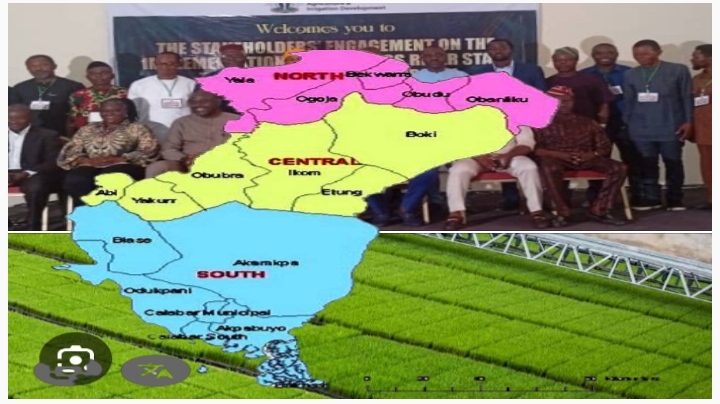
As Parts of efforts by the state’s agricultural exports at aligning with the requirements of the European Union Deforestation Regulation (EUDR), no fewer than 17,000 cocoa, oil palm and coffee farmers in 17 local government areas of Cross River State are set to be registered under the newly introduced Cross River State Traceability System.
Introduced in 2023, the EUDR is a set of rules designed to end deforestation linked to the production of certain commodities, including cocoa, coffee and oil palm. The regulation requires that agricultural products exported to the EU be traceable to exact farm boundaries, legally produced and verifiably free from deforestation.
The State Commissioner for Agriculture, Johnson Ebokpo, made this disclosure at the stakeholders’ engagement in Calabar marking the commencement of the programme’s implementation.
According to Ebokpo, the large-scale farmer registration is aimed at aligning the state’s agricultural exports with the requirements of the European Union Deforestation Regulation (EUDR), which mandates that commodities entering the EU market must be deforestation-free and fully traceable to their farm origins.
He said that the state’s objective is to deploy credible technology to capture farmland data, integrate geolocation mapping, strengthen aggregation structures and strategically position Cross River as a trusted origin in global markets.
“Our aspiration is to become Nigeria’s national traceability hub,” the commissioner added.
Country Field Team Lead of Pula Advisors, Dr. Adewole Bello, confirmed that compliance data would be collected from the targeted 17,000 farmers across 17 local government areas of the state.
He disclosed that the Mavuno Tech digital platform would be deployed for the exercise, with geo-coordinates used to precisely identify farm boundaries and ensure full compliance with EUDR standards.
According to Bello, the exercise will ensure that each registered farm is traceable to its exact location, legally verified and certified as deforestation-free before produce enters export markets.
The Director General of the Cross River Geographic Information Agency, Williams Archibong, on his part promised full institutional backing for the programme, noting that the agency, as custodian of all geospatial data in the state, would provide the necessary technical infrastructure.
He promised stakeholders that the agency is “100 per cent behind the exercise,” emphasizing that accurate geospatial mapping would guarantee transparency from farm to export destination.
The Cross River State Traceability System is therefore positioned as both an environmental safeguard and an economic strategy to protect farmers’ access to premium international markets.
Tribune online of March 5, 2026, in it’s report titled “Cross River govt to enroll 17,000 farmers in landmark traceability drive”. further stated that with the 17,000 farmers expected to be onboarded in the first phase, the state government says the initiative represents one of the most ambitious traceability efforts in Nigeria’s agricultural sector, aimed at boosting export competitiveness while preserving forest resources.