

By: Lanre Shodimu

Farmlife Media’s visionary commitment to providing extensive coverage of farmers, agropreneurs, agricultural innovators, and other key players in Nigeria’s agricultural sector is aimed at spotlighting individuals whose ideas, investments, resilience, and innovations are helping to reshape the country’s food system.
As part of this commitment, Farmlife Media presents its Top 100 Renowned Agropreneurs, celebrating Nigerians who are making remarkable contributions to agriculture and demonstrating that the sector can be transformed through innovation, science, technology, and entrepreneurship.
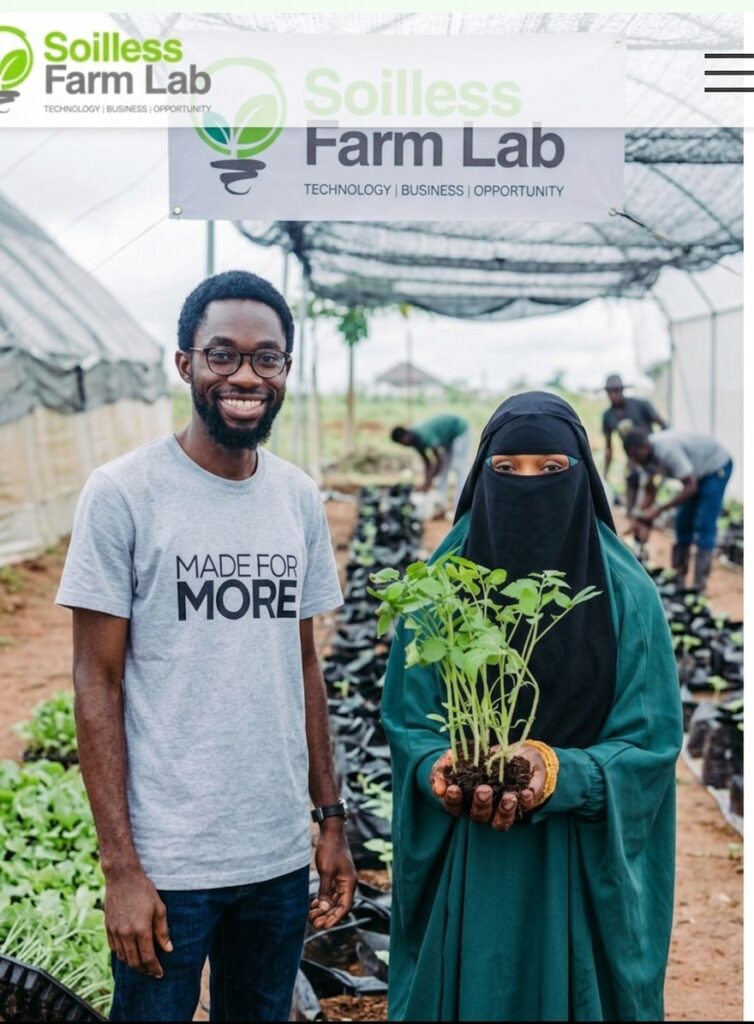
Among those making a notable impact is Samson Ogbole, the renowned Nigerian agropreneur popularly known as the “Wizard Farmer.” Through his pioneering work in soilless agriculture, particularly aeroponics, Ogbole is challenging conventional ideas about how and where food can be produced.

His work represents a new generation of agricultural entrepreneurship—one that combines farming with science, technology, research, and business to address some of the challenges confronting food production in Nigeria.
From Biochemistry to AgricultureInterestingly, Ogbole did not begin his career as a conventional farmer. Trained as a biochemist, he approached agriculture from a scientific perspective, seeing farming not merely as an occupation but as a system that could be studied, questioned, improved, and transformed.That scientific mindset would later become one of his greatest advantages.His journey took a significant turn during his national service at the International Institute of Tropical Agriculture (IITA) in Ibadan, Oyo State. It was there that he encountered aeroponics and began to appreciate the possibilities of producing crops without relying on conventional soil-based farming.Aeroponics is a soilless cultivation technique in which plant roots are suspended in the air and supplied with nutrients through a carefully controlled mist or nutrient solution.
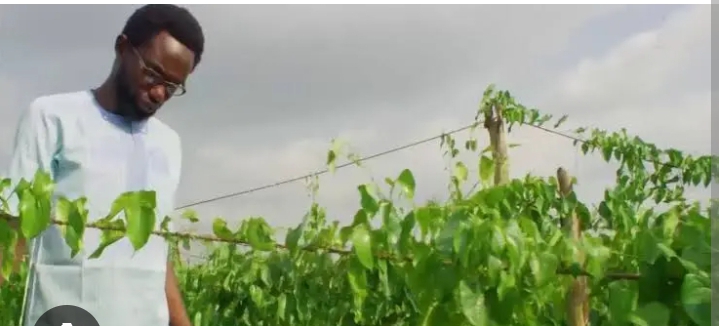
For Ogbole, the concept opened up an entirely different way of thinking about agriculture.Growing Crops in the AirThe phrase “growing crops in the air” may sound unusual to many people, but it is at the heart of the agricultural innovation Ogbole has championed.Unlike conventional farming, where crops depend on soil for physical support and access to nutrients, aeroponic systems provide plants with the nutrients and water they need without requiring their roots to be buried in the ground.
This approach has significant implications for food production, particularly in areas where fertile agricultural land is limited or where urbanisation is placing increasing pressure on available farmland.Ogbole believes that agriculture must evolve to meet the realities of a growing population and changing environment.His philosophy is captured in his belief that food production should not be seasonal because hunger is not.The statement reflects a fundamental challenge facing food systems: people need food every day, yet conventional agricultural production can be heavily influenced by seasons, weather conditions, soil quality, and access to farmland.
A Different Approach to Food Production:
Ogbole’s journey into soilless farming began in 2014, and by 2016, he had further developed his work around innovative methods of crop production.He told CNN that soil-free farming makes it possible to cultivate crops “any time of the year.”The potential advantage is particularly important for a country like Nigeria, where food production is often affected by seasonal variations, changing weather patterns, inadequate irrigation infrastructure, and other challenges.Through soilless agriculture, Ogbole is demonstrating that crop production does not necessarily have to be restricted to large expanses of conventional farmland.Instead, agricultural production can be adapted to different environments and incorporated into urban spaces.
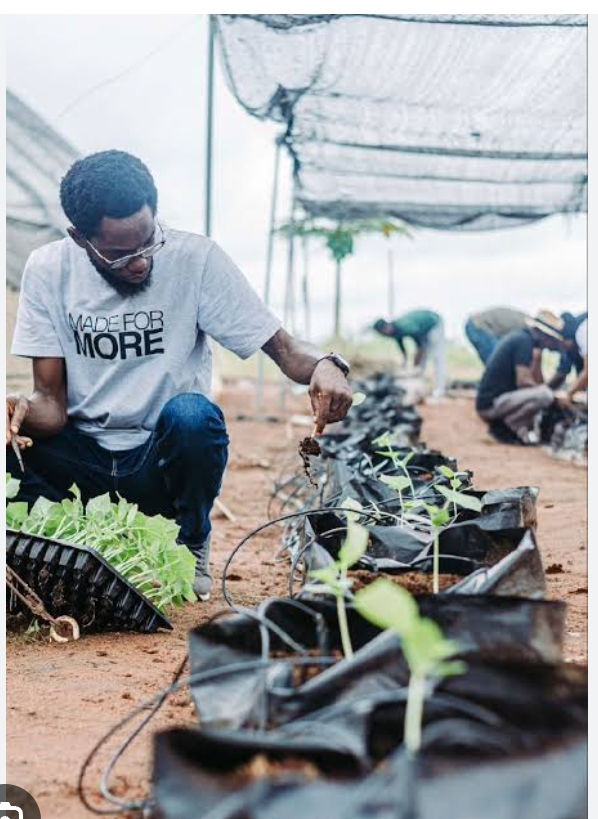
Taking Agriculture into the CitiesOne of the most compelling aspects of Ogbole’s work is its potential application in urban agriculture.As Nigerian cities continue to expand, the availability of agricultural land around urban centres is increasingly under pressure. At the same time, transporting food from distant rural farms to major cities can add costs and increase pressure on food distribution systems.Soilless farming offers another possibility: producing certain crops closer to where people live and consume them.For Ogbole, this means agriculture can become part of the urban landscape.Rooftops, controlled environments, small plots, and other spaces that may not traditionally be regarded as farmland could potentially be used for food production through appropriate technologies.
This is particularly relevant to young Nigerians who may want to enter agriculture but do not have access to large parcels of land.Addressing Soil and Agricultural Challenges.
Another important consideration in soilless agriculture is the challenge of soil-borne diseases and pathogens.Because aeroponic systems do not rely on conventional soil, they can reduce exposure to certain soil-related problems when the system is properly designed and managed.
The approach can also provide greater control over the growing environment, allowing farmers to carefully manage water, nutrients, and other conditions required for plant development.For Ogbole, technology therefore provides an opportunity to rethink some of the limitations associated with traditional farming.Rather than abandoning conventional agriculture, his work demonstrates how innovative methods can complement existing systems and create additional avenues for food production.Making Agriculture Attractive to Young NigeriansBeyond technology and crop production, Ogbole’s work also speaks to the question of how agriculture can be made attractive to Nigeria’s younger generation.For decades, agriculture has sometimes been perceived as labour-intensive, traditional, and financially uncertain. Ogbole’s approach presents a different image—one in which farming can involve laboratories, technology, data, engineering, entrepreneurship, and innovation.“We’re bringing technology into agriculture so that the youth can actually see this as a viable option,” he explained.This emphasis on technology is significant.For many young Nigerians who are familiar with smartphones, digital platforms, automation, and modern technology, introducing these elements into agriculture could help change perceptions about farming and encourage more young people to consider the sector as a serious career and business opportunity.Experience and ResearchOgbole’s agricultural journey has also been linked to research and institutional experience.He has served as a Research Supervisor at the International Institute of Tropical Agriculture (IITA) in Ibadan, Oyo State.
He has also contributed to the Yam Improvement for Income and Food Security in West Africa (YIIFSWA) project at IITA.These experiences have strengthened the connection between his agricultural entrepreneurship and scientific research.Rather than viewing farming simply as the production of crops, Ogbole’s approach places emphasis on understanding the science behind production and applying knowledge to improve efficiency and productivity.Redefining the Nigerian FarmerPerhaps one of the most important aspects of Samson Ogbole’s story is the way he challenges the traditional image of the Nigerian farmer.
He represents a new category of agricultural entrepreneur—one who combines scientific knowledge, business thinking, technology, experimentation, and farming.His story demonstrates that one does not necessarily have to be born into farming to become an agricultural innovator.A background in science can provide useful tools for understanding agriculture. Technology can provide new production methods. Entrepreneurship can turn those ideas into viable ventures.Together, these elements can create a more dynamic agricultural sector.An Innovation-Driven FutureNigeria’s food security challenge requires more than simply increasing the amount of land under cultivation. It also requires improving productivity, reducing waste, expanding access to technology, strengthening value chains, and encouraging innovative approaches to production.
This is where innovators such as Samson Ogbole become particularly relevant.His work in aeroponics and soilless agriculture challenges Nigerians to think differently about where food can be produced and what modern farming can look like.From a trained biochemist who encountered an unfamiliar agricultural technology during his national service to an agropreneur popularly celebrated as the “Wizard Farmer,” Ogbole’s journey is a story of curiosity, experimentation, persistence, and innovation.As Farmlife Media celebrates its Top 100 Renowned Agropreneurs, Samson Ogbole stands out as an example of how the intersection of science, technology, entrepreneurship, and agriculture can create new possibilities for Nigeria’s food system.His crops may be growing in the air, but the bigger idea behind his innovation is firmly rooted in the future of Nigerian agriculture.