



By: Kemi Akinseye

As climate change, food inflation, post-harvest losses and declining farm productivity continue to threaten Nigeria’s food security, stakeholders are increasingly turning to technology for solutions. In Akwa Ibom State, a coalition of researchers, engineers, innovators and technology experts believes artificial intelligence could become the game changer capable of transforming agriculture from a largely manual and unpredictable venture into a modern, data-driven industry. With the launch of Project TAT AI, the group says Nigeria may be standing at the threshold of a new agricultural revolution.
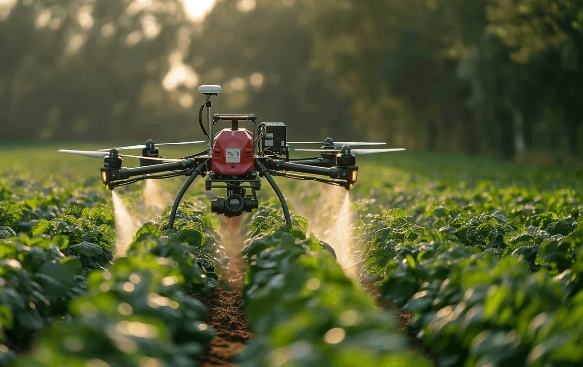
Artificial intelligence is steadily emerging as one of the most powerful tools capable of transforming Nigeria’s struggling agricultural sector, with experts insisting that technology-driven farming may hold the key to achieving sustainable food sufficiency in the country.
This vision came into sharper focus following the signing of a Memorandum of Understanding (MoU) between the Ibom Innovation Network and five partner institutions to launch the Transforming Agriculture Through Artificial Intelligence initiative, otherwise known as Project TAT AI.
The initiative, unveiled in Akwa Ibom State, is designed to bridge the long-standing gap between scientific innovation and practical farming by deploying cutting-edge technologies directly into commercial agricultural operations.
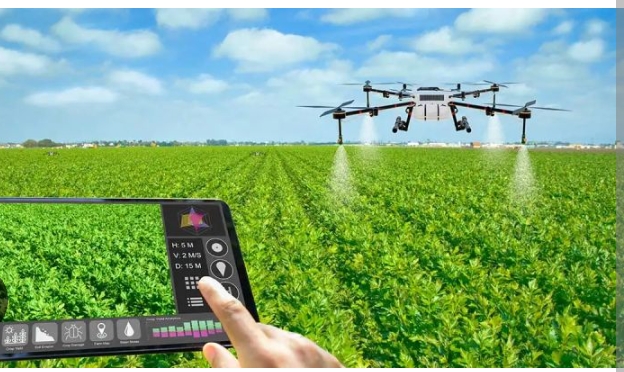
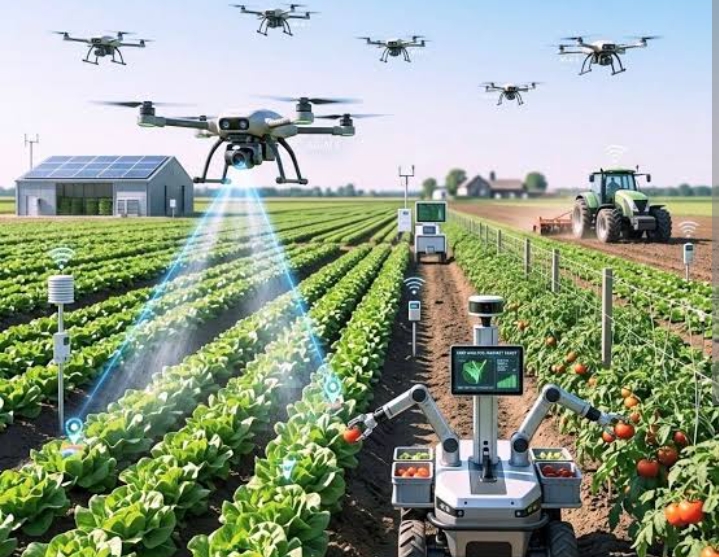
The coalition behind the project includes engineers, academic researchers, technology incubation experts and professional engineering bodies, all united by a common goal — modernising Nigeria’s agricultural system through artificial intelligence, robotics, and smart farming technologies.
For decades, Nigerian farmers have battled erratic weather conditions, poor infrastructure, inadequate storage systems and declining access to labour. These challenges, compounded by rising insecurity and climate pressures, have continued to reduce productivity and deepen concerns over food insecurity across the country.
President of the Ibom Innovation Network, Hanson Johnson, said the country can no longer afford to depend on outdated farming methods in an era where technology is rapidly redefining global agriculture.
According to him, the project represents a decisive shift away from what he described as “farming by chance” toward a more intelligent, predictive and resilient agricultural system.
“We are moving beyond the era of farming by chance. By integrating AI with mechanical engineering, we are providing farmers with the tools to predict, adapt, and scale. This is not just about technology. It is about economic resilience for the entire region, and it is long overdue,” Johnson stated.
He explained that Project TAT AI has identified two major weaknesses within Nigeria’s food production chain where technology can deliver immediate and measurable results.
The first challenge is the growing shortage of affordable labour during harvest periods, a development that often leaves farmers unable to harvest crops quickly enough before spoilage sets in.
To address this problem, the project plans to deploy autonomous robotic harvesting systems specifically designed to operate effectively within Nigeria’s tropical climate conditions.
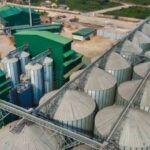
The second major challenge is post-harvest storage, where enormous quantities of food are lost due to poor transportation systems, inadequate preservation facilities and weak storage infrastructure.
To tackle this, the initiative will introduce internet-enabled sensors and climate-controlled storage systems capable of monitoring environmental conditions and preserving agricultural produce for longer periods.
Experts say post-harvest losses remain one of the greatest threats to Nigeria’s food security, with substantial portions of harvested crops wasted before reaching consumers.
Director of the TETFund Centre for Computational Intelligence at the University of Uyo, Uduak Asuquo, said the future of agriculture can no longer be separated from emerging digital technologies.
According to him, artificial intelligence and the Internet of Things have moved beyond experimental concepts and are now essential tools for global food production.
“IoT and AI are no longer experimental approaches. They are essential technologies for global food security. When you deploy soil heat maps and atmospheric intelligence on a farm, you are not conducting a science experiment. You are giving a farmer a fighting chance,” he said.
Stakeholders within the engineering community also described the project as a practical demonstration of how innovation can be applied to solve real national problems.
Chairman of the Akwa Ibom chapter of the Nigerian Institution of Mechanical Engineers, Bassey Asanga, noted that the initiative aligns with the core responsibility of engineering professionals to develop practical solutions capable of improving livelihoods and supporting national development.
Similarly, Head of the Department of Mechanical Engineering at Akwa Ibom State University, Bassey Nkanang, stressed that farmers themselves must remain central to the success of the initiative.
He warned that no technological system can succeed in isolation from the practical experience and indigenous knowledge possessed by local farmers.
“We are calling on young innovators, farmers, and partners to identify with this initiative. The people who work this land every day hold knowledge that no algorithm can generate on its own. We need them at the table, not waiting on the sidelines,” he said.
The project also seeks to encourage innovation among young Nigerians by protecting their intellectual property and creating pathways for commercialising homegrown technologies.
Manager of the Technology Incubation Centre Uyo, Iniobong Elshaddai, assured young innovators that their ideas would be protected and supported.
“We will protect their intellectual property and fast-track their innovations toward commercialisation. The era of young Nigerians inventing things that benefit everyone except themselves is over,” she said.
The organisers disclosed that the first public showcase of innovations emerging from Project TAT AI will take place during Akwa Ibom Tech Week 2026 scheduled for November at the Ibom Hotels and Golf Resort.
Chairperson of the planning committee, Enoabasi Emah, described the initiative as the type of collaboration needed to reposition Nigeria’s economy for the future.
Analysts believe that if successfully implemented, the project could become a model for technology-driven agriculture across Africa, helping Nigeria reduce food waste, increase productivity, create jobs and strengthen national food security in an increasingly uncertain global economy.