



By Lanre Shodimu

In a decisive move to confront rising food insecurity and reduce the nation’s dependence on costly imports, the Senate has advanced a set of strategic legislative measures aimed at transforming Nigeria’s agricultural landscape. The proposed laws, targeting food storage, local production, and value chain coordination, signal a renewed push toward self-sufficiency and economic resilience.
The Nigeria’s Senate has therefore taken a significant step toward strengthening the country’s food system, adopting committee reports on three critical bills designed to boost local agricultural production and curb reliance on imports.
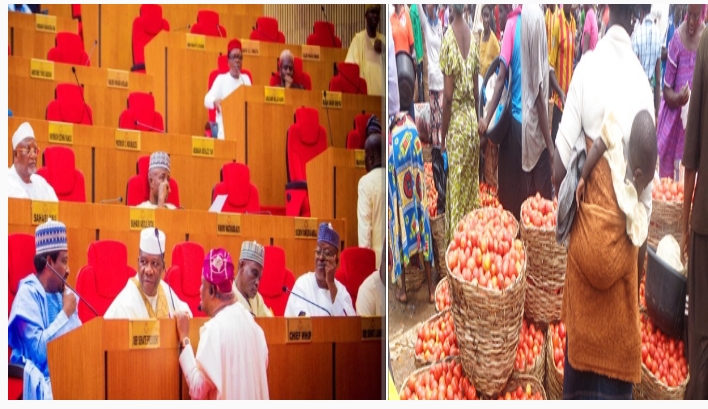
The reports were presented during plenary by Senator Saliu Mustapha, representing Kwara Central and Chairman of the Senate Committee on Agricultural Production Services and Rural Development. He outlined the broad economic and social impact the proposed legislation could have if fully implemented.

At the heart of the legislative push are three key bills: the National Food Reserve Agency Bill and the Mandatory Cassava Inclusion in Flour Production Bill—both sponsored by Mustapha—as well as the National Rice Council Board Bill sponsored by Senator Adamu Aliero of Kebbi Central.
According to Mustapha, the bills represent strategic interventions aligned with President Bola Ahmed Tinubu’s Renewed Hope agenda, particularly in achieving national food security, generating employment, and strengthening the agricultural value chain.
He explained that the National Food Reserve Agency Bill is designed to establish a coordinated system for grain storage across the country, helping to stabilise market prices and provide a buffer against food shortages.
The Mandatory Cassava Inclusion in Flour Production Bill, on the other hand, seeks to enforce a minimum of 20 per cent cassava content in flour production. This measure is expected to significantly reduce Nigeria’s dependence on imported wheat while promoting local cassava farming and processing industries.
Addressing challenges in the rice sector, Mustapha highlighted the country’s heavy financial burden, noting that Nigeria spends an estimated $2 billion annually on rice imports. To tackle this, the proposed National Rice Council Board Bill aims to coordinate rice production, processing, and distribution nationwide, thereby enhancing efficiency and reducing import dependency.
“The goal is to build a full agricultural value chain, from farm to reserve, to processing,” Mustapha stated, underscoring the integrated approach of the legislative proposals.
He added that the combined impact of the bills would not only strengthen food security but also improve economic stability and promote national self-sufficiency.
Following deliberations, the Senate unanimously passed the bills. They will now be transmitted to the House of Representatives for concurrence before being forwarded to the President for assent.