



By Jide Akinseye

In a bold move to reduce import dependence and unlock the economic potential of Nigeria’s agricultural sector, the Federal Ministry of Agriculture and Food Security has unveiled a comprehensive strategy to revitalise the nation’s palm oil industry. The initiative reflects a shift toward sustainable, private sector–driven investment aimed at boosting local production, enhancing value addition, and positioning Nigeria as a competitive player in the global palm oil market.
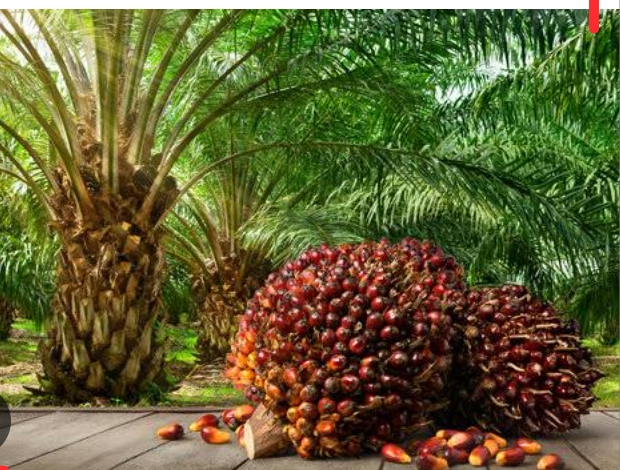
The Federal Ministry of Agriculture and Food Security has launched a coordinated initiative to revive Nigeria’s palm oil industry, targeting up to $500 million annually in import substitution. The programme adopts a public-private investment model anchored on large-scale plantations and integrated downstream processing.
Developed in collaboration with Mass Industrial Development and Logistics Limited and key industry stakeholders, the initiative is designed to bridge Nigeria’s palm oil supply gap, stimulate agro-industrial growth, and generate employment across the value chain.
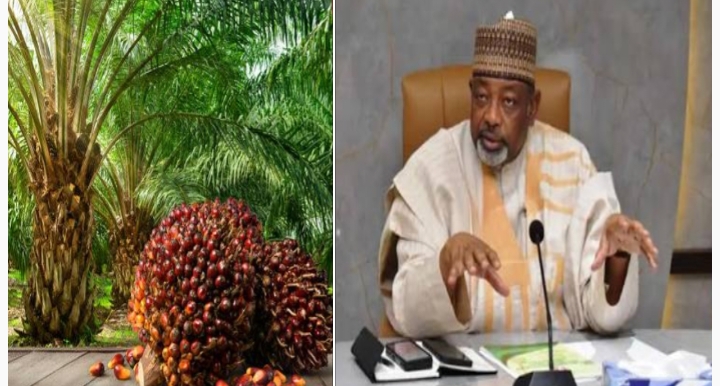
The Minister of Agriculture and Food Security, Abubakar Kyari, represented by his Senior Technical Assistant, Ibrahim Alkali, explained that the programme will operate under a public-private partnership framework. He emphasised that the government’s role will focus on providing policy direction, regulatory support, and institutional backing without resorting to public borrowing.
Nigeria currently spends between $500 million and $600 million annually on palm oil imports due to a significant production shortfall. According to the minister, the new initiative is structured to reverse this trend and reposition the sector as a major driver of economic growth. He stressed the need for decisive action, noting that “Nigeria must move from intention to implementation.”
Under the plan, the first phase will see the establishment of seven integrated oil palm estates, each spanning 10,000 hectares across participating states. These estates will combine cultivation with modern milling and refining facilities, as well as storage, logistics infrastructure, and residential communities capable of supporting over 2,000 families per location.
The second phase will focus on expanding downstream processing and manufacturing of palm-based products, with the goal of enhancing value addition and strengthening export competitiveness.
Financial projections presented during the stakeholders’ meeting indicate strong investment potential, with expected internal rates of return ranging from 18% to 25% and payback periods estimated between five and seven years. Officials highlighted robust domestic demand and access to regional markets as key drivers of the project’s viability.
Kyari also noted that Nigeria possesses over three million hectares of land suitable for oil palm cultivation, much of which remains underutilised. He pointed out that existing plantations suffer from low productivity due to ageing trees and limited access to improved inputs.
He called on state governments to play a critical role by facilitating land access, enacting supportive policies, investing in infrastructure, and fostering community engagement. According to him, states stand to benefit from increased investment inflows, higher internally generated revenue, and improved rural livelihoods.
In his remarks, the Permanent Secretary of the ministry, Marcus Olaniyi Ogunbiyi, represented by Abba Waziri, Director of Farm Input Support Services, stated that the initiative followed the ministry’s validation of the National Oil Palm Development Strategy after extensive consultations with stakeholders.
He also commended Emmanuel Obiorah Anyaralu, Managing Director of Mass Industrial Development and Logistics Limited, for his role in initiating the joint development framework.
Anyaralu expressed confidence that the programme would transform Nigeria’s palm oil ecosystem, increase farmers’ incomes, and strengthen the country’s position in both domestic and international markets.
The stakeholder meeting, held in Abuja, brought together state commissioners, investors, development partners, and value chain operators to secure sub-national support for what officials describe as a commercially viable pathway to restoring Nigeria’s competitiveness in the global palm oil industry.