




By Simeon Shodimu
As Nigeria continues to grapple with food security challenges and a widening agricultural financing gap, agribusiness small and medium-sized enterprises (SMEs) are stepping up calls for improved access to capital. With many operators constrained by limited funding and weak managerial structures, stakeholders are increasingly turning to targeted capacity-building programmes to unlock growth and attract investment into the sector.
Agribusiness small and medium-sized enterprises in Nigeria are ramping up efforts to secure better access to funding, as development institutions introduce targeted interventions to tackle longstanding financing and capacity constraints within the sector.
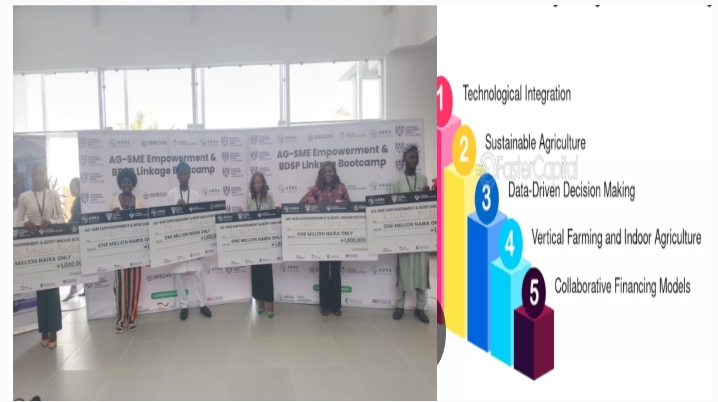
A recent capacity-building initiative spearheaded by the Enterprise Development Centre brought together key partners, including the Small and Medium Enterprises Development Agency of Nigeria, the Alliance for a Green Revolution in Africa, and Kaduna Business School, to enhance the financial and managerial capabilities of agribusiness SMEs.
The programme featured a three-day bootcamp and pitch competition held in Lagos, where participating entrepreneurs underwent intensive training aimed at boosting investment readiness, operational efficiency, and access to finance.
Participants engaged in technical and managerial development sessions covering key areas such as business strategy, financial management, bookkeeping, and investment planning—equipping them with the tools needed to scale their operations and attract external funding.
At the conclusion of the programme, eight agribusiness SMEs received grants of N1 million each to support business expansion. In addition, beneficiaries will benefit from three months of post-programme advisory support provided by business development consultants under the initiative.
Speaking on the programme, Dr. Stanley Ibeku, Lead for Research, Monitoring and Evaluation at the Enterprise Development Centre, explained that the initiative was designed to address both funding challenges and skill gaps that continue to hinder growth in Nigeria’s agribusiness sector. He emphasized that many SMEs struggle to attract investment due to weak business structures and poor financial discipline.
Also commenting, Dr. Nnenna Ugwu, Head of Alumni Relations and Support Services at the Centre, noted that participants were selected based on the strength of their business ideas and demonstrated growth potential. She added that the bootcamp aimed to identify promising entrepreneurs and provide structured support to refine their operations and improve their financing prospects.
One of the beneficiaries, Chief Executive of Dainty Foods, Ms. Damilola Awojobi, described the programme as transformative, noting that it reshaped her approach to business management. She said the experience enhanced her understanding of record-keeping, cash flow management, and investment planning.
Another participant, Dale Junaid, said the training significantly improved his grasp of financing options and strengthened his ability to develop compelling investment pitches.