

By Lanre Shodimu

Stakeholders in Nigeria’s feed industry and Black Soldier Fly Larvae (BSFL) Sector, have called for policy reforms, increased investment, and stronger research coordination to accelerate the adoption of Black Soldier Fly Larvae (BSFL) as an alternative protein source for animal feed.
The appeal was made at a National Roundtable on Black Soldier Fly Larvae Development in Nigeria, held at the International Livestock Research Institute (ILRI) in Ibadan, Oyo State.
The event, with the theme: “Aligning Science, Enterprise, and Policy to Scale Insect-based Feed Solutions,” brought together policymakers, researchers, regulators, private investors, and BSFL farming entrepreneurs to map out strategies for integrating insect protein into Nigeria’s agricultural system.

The Country Representative of the institute, Dr. Tunde Amole, in his opening remarks described BSFL as a sustainable solution to Nigeria’s growing livestock feed crisis.
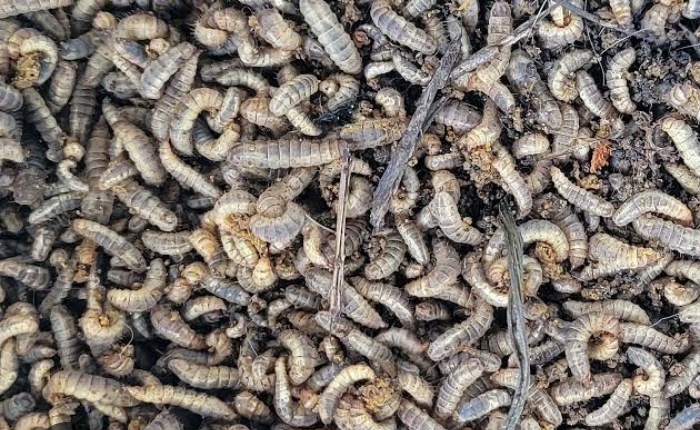
Black soldier fly larvae according to him can feed on organic waste including market and kitchen refuse and develop into high-protein feed within 10 to 14 days.
“It contains about 40 to 45 per cent protein, making it a viable alternative to some protein source feed ingredients in poultry, fish, and pig feed ration if produced sustainably,” Amole said.
He noted the growing interest by feed manufacturers, stressing that supply, not demand remains the major constraint.
“The question now is who can produce at commercial scale,” he added.
He also highlighted Nigeria’s comparative advantage, citing its tropical climate and abundant organic waste, which support year-round production without the need for expensive temperature control systems.
He emphasised on the need for standardisation to ensure consistency in nutrient quality and safety across producers.
Speaking at the event also is, a Senior Scaling and Innovation Expert from the institutes’ headquarters in Nairobi, Kenya, Dr. Ijudai Jasada, identified fragmentation within the BSFL value chain as a major barrier to scale. “We need a coordinated system that connects all actors and reduces inefficiencies,” he said.
Stakeholders at the event reached a consensus that ILRI should take the lead in establishing and championing a national platform on BSFL.
Jasada said plans are underway to establish a national coordination platform to improve collaboration, attract investment, and support long-term growth of the sector.
He added that the goal is to integrate insect-based feed into Nigeria’s mainstream feed industry by 2030, while creating employment opportunities for women and youth.
On capacity development, Prof. Cordelia Ifeyinwa Ebenebe of the Nnamdi Azikiwe University, Awka, Anambra State, acknowledged the training efforts by development partners and institutions but warned that Nigeria’s regulatory framework for insect-based feed remains underdeveloped.
large-scale adoption.
He pointed out key challenges, including variability in nutrient composition, digestibility concerns linked to chitin content, and relatively high production costs.
Industry operators also highlighted operational constraints. A BSFL producer, Mr. Kolawole Ogunleye, said large-scale production remains difficult due to limited access to equipment, financing, and infrastructure. “The process is labour-intensive, and most of the equipment is still imported,” he said.
The Country Representative of New Generation Nutrition (NGN), Mr. John Amole, described insect protein as a growing but still underutilised solution in Nigeria.
He noted that although insect meal has been approved as a feed ingredient, it has yet to gain widespread market acceptance. “There is interest, but the ecosystem is still developing, and there are no guaranteed off-takers,” he said.
Sharing international experience, Ms Talash Huijbers of InsectiPro, Kenya, highlighted the success of circular economy models that convert organic waste into protein and fertiliser.